
A cat that wanders off and never returns is one of the most common and distressing experiences for pet owners. Seven distinct causes — ranging from biological drives to household disruptions — explain the vast majority of feline disappearances. Understanding each one is the first step toward preventing it.
In brief
- —Unneutered cats may roam for days during mating season
- —Stress from home changes can push cats to leave
- —Microchip and GPS trackers cut the risk of permanent loss
Exploration and mating instincts: the two most common biological drivers
Cats are hardwired for curiosity and territorial patrol. Even well-fed, well-loved indoor-outdoor cats may wander several blocks — or more — in a single outing, drawn by new smells and unfamiliar terrain. Over time, these excursions can carry them farther than they intended, leaving them disoriented in territory they no longer recognize.

For cats that are not spayed or neutered, hormonal drive compounds the problem significantly. During mating season, males in particular may travel long distances and stay away for days at a time. That roaming also raises their exposure to fights with other cats, injuries, and the risk of becoming permanently lost.
A collar with an ID tag and a microchip are the baseline protections against both scenarios. For cats with a strong wandering habit, a GPS tracker offers real-time location data if they stray beyond their usual range.
A behavior rooted in feline biology
Domestic cats retain many of the territorial and survival instincts of their wild ancestors. Unlike dogs, they are not pack animals and do not depend on a social group for security, which makes independent roaming a natural — rather than exceptional — behavior. That biological independence is what makes disappearances both common and, in many cases, preventable with the right environmental adjustments.
Territorial threats and disorientation send cats further from home
A cat that feels outmatched in its own territory will often choose flight over confrontation. The arrival of a dominant or aggressive cat in the neighborhood — or pressure from dogs and other animals — can be enough to push a resident cat to abandon familiar ground entirely. This dynamic is particularly common in areas with dense feral cat populations.
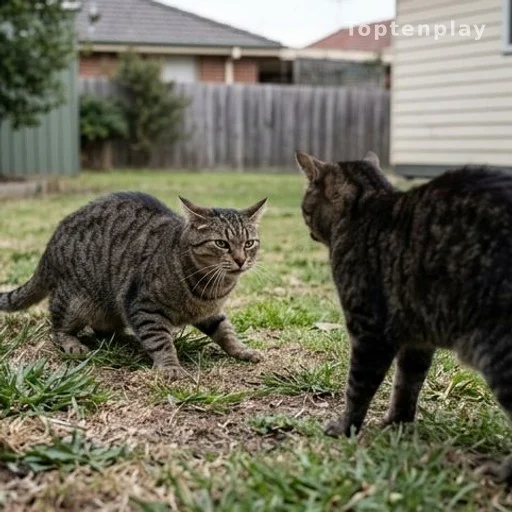
Even cats with strong navigational instincts can become confused by sudden disruptions: a loud noise, a moving vehicle, or a blocked route can break their mental map of the area. Once disoriented, they may be unable to retrace their steps or may become trapped in a garage, shed, or enclosed space nearby.
Providing a secure indoor retreat and safe outdoor escape routes — covered porches, cat houses, or a purpose-built catio — reduces both the pressure to flee and the risk of getting lost. If a cat does go missing, checking hidden spots under decks and behind sheds at dawn and dusk, when cats are most active, is recommended.
Suggested Posts

AI financial advice: biased, inconsistent and sometimes just wrong
Artificial intelligence tools give personal finance advice that can be inaccurate, inconsistent and demographically biased — and the results vary significantly depending on which…