Compression socks and slip-on shoes: the full flight attendant-approved outfit
Andrea Fischbach outlines a specific set of clothing choices she considers optimal for air travel. The list includes loose, breathable layers such as joggers or leggings, a long-sleeve top or lightweight sweater, slip-on shoes — loafers or lace-free sneakers — and compression socks.
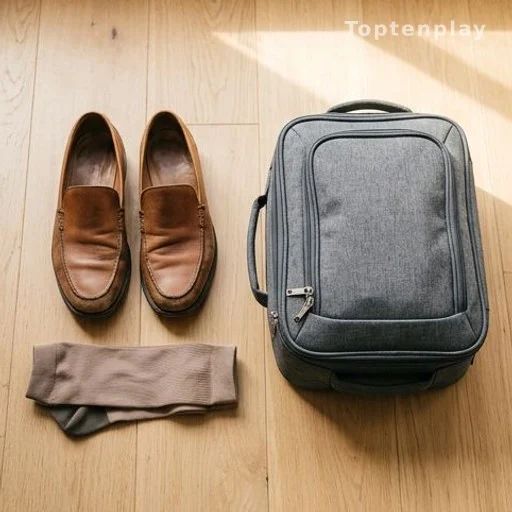
Compression socks serve a dual purpose: they actively support circulation during the flight and counteract the swelling that pressurized cabins tend to produce. For long-haul passengers in particular, they represent a straightforward health measure.
Slip-on shoes address a practical bottleneck: security screening. Lace-up boots and complex footwear slow passengers down at checkpoints and make moving through a cramped cabin more cumbersome. Easy-to-remove shoes eliminate that friction entirely.
Bulky belts and chunky jewelry: accessories that create unnecessary delays
Beyond clothing, Fischbach flags accessories as an underestimated source of friction during air travel. Large belts, chunky jewelry, and lace-up boots all require removal at security checkpoints, adding time and stress to the boarding process.
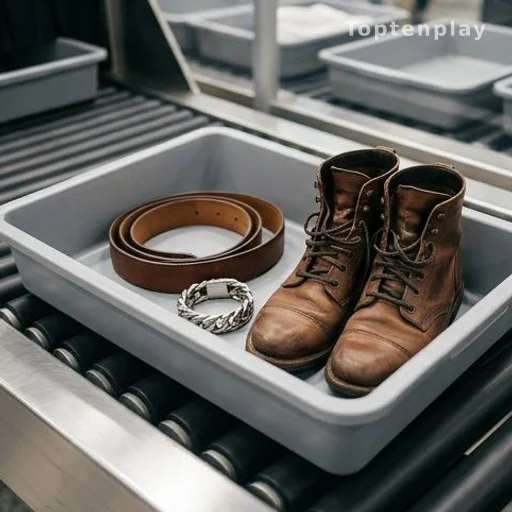
In a crowded security lane, these small delays compound. They also make moving through a narrow aircraft cabin more awkward, particularly when passengers need to reach overhead bins or pass other travelers.
The recommendation is to opt for minimal, easy-to-remove accessories — or leave statement pieces in checked luggage altogether. The priority, according to Fischbach, is freedom of movement at every stage of the journey, from the terminal to the seat.