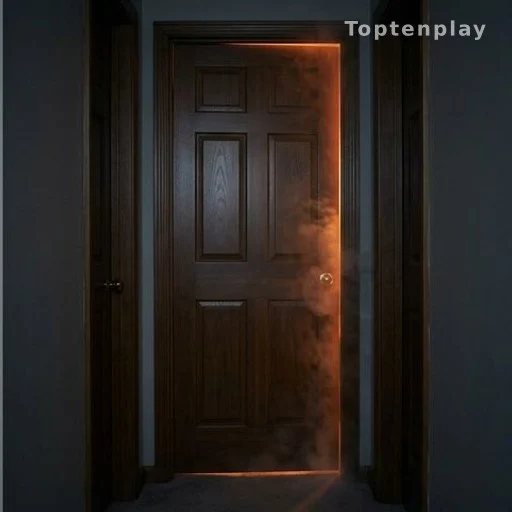
By slowing the fire’s progression, a shut door keeps temperatures significantly lower inside the room. This directly reduces the risk of fatal burns and smoke inhalation, two of the most common causes of death in residential fires.
Critically, this delay is not just a matter of comfort — it is the difference between having time to escape and being trapped. A closed door can prevent flames from rapidly engulfing a bedroom, preserving a survivable environment long enough for occupants to reach safety or for emergency services to intervene.
Carbon monoxide: the odorless killer a closed door helps block
House fires do not only kill through flames. They also produce carbon monoxide (CO), a colorless, odorless gas that is fatal when inhaled in sufficient quantities. Because it cannot be detected by smell or sight, CO is particularly dangerous during sleep.

A closed bedroom door slows the infiltration of carbon monoxide into the room, keeping the air safer for a longer period. This additional time can be decisive — both for the occupant to wake and react, and for emergency responders to reach the scene.
This is precisely why fire safety guidance consistently recommends combining a closed door with functioning smoke detectors. A smoke alarm provides the early warning; the closed door buys the time needed to act on it.
A habit backed by fire safety organizations
Fire safety campaigns in several countries have long promoted the practice of sleeping with the bedroom door closed. Studies and fire tests have demonstrated that a closed door can keep room temperatures dramatically lower during a blaze compared to an open door, extending the survivable window inside a room by several minutes. The advice applies to all types of residential doors.