
That sense of calm and normalcy is precisely what makes the puzzle effective. According to the source, familiar surroundings and recognizable objects convince viewers that everything is exactly as it should be. The brain, satisfied by the overall picture, stops looking for anything out of place.
On the wall, a clock quietly marks the time. It is the kind of detail that registers in the background of a scene — present, but not demanding attention. And that, it turns out, is exactly where the mistake is hiding.
How the brain fills in the blanks
The human brain processes visual scenes in fractions of a second by relying on prior knowledge and expectations rather than examining every detail. This efficiency is useful in everyday life but creates systematic blind spots. Inattentional blindness — the failure to notice unexpected elements while focused on a broader scene — is a well-established concept in cognitive psychology.
The letter B where the number 8 should be
The hidden error is straightforward once you know where to look: on the clock face, the number 8 has been replaced by the letter B. The two characters share a similar shape — two rounded loops stacked vertically — which is enough to fool a brain moving at speed.
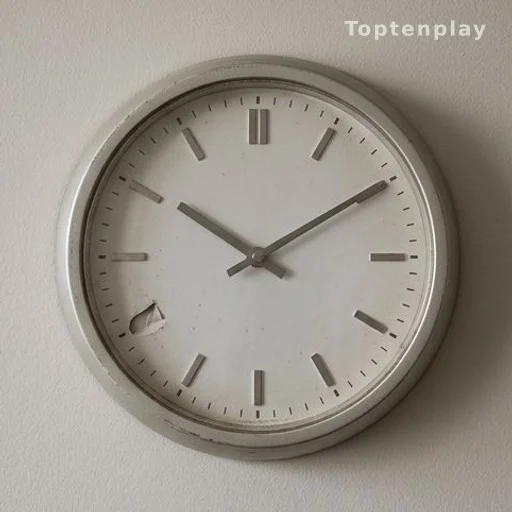
As the source explains, "when we see a clock, our minds quickly assume that the numbers are correct." That assumption does the rest of the work. The brain fills in what it expects to find, and the substitution slips through undetected.
The difference only becomes apparent when a viewer slows down and examines each numeral individually rather than reading the clock face as a whole. For most people, that deliberate second look does not happen naturally — it has to be prompted.