Suivez-nous
28 May 2026

Swiss Meringue Buttercream: The foolproof technique for a perfect texture

Illustration image © TopTenPlay
Symbolbild © TopTenPlay

Publicité

The Essential Ingredients For A Successful Swiss Meringue

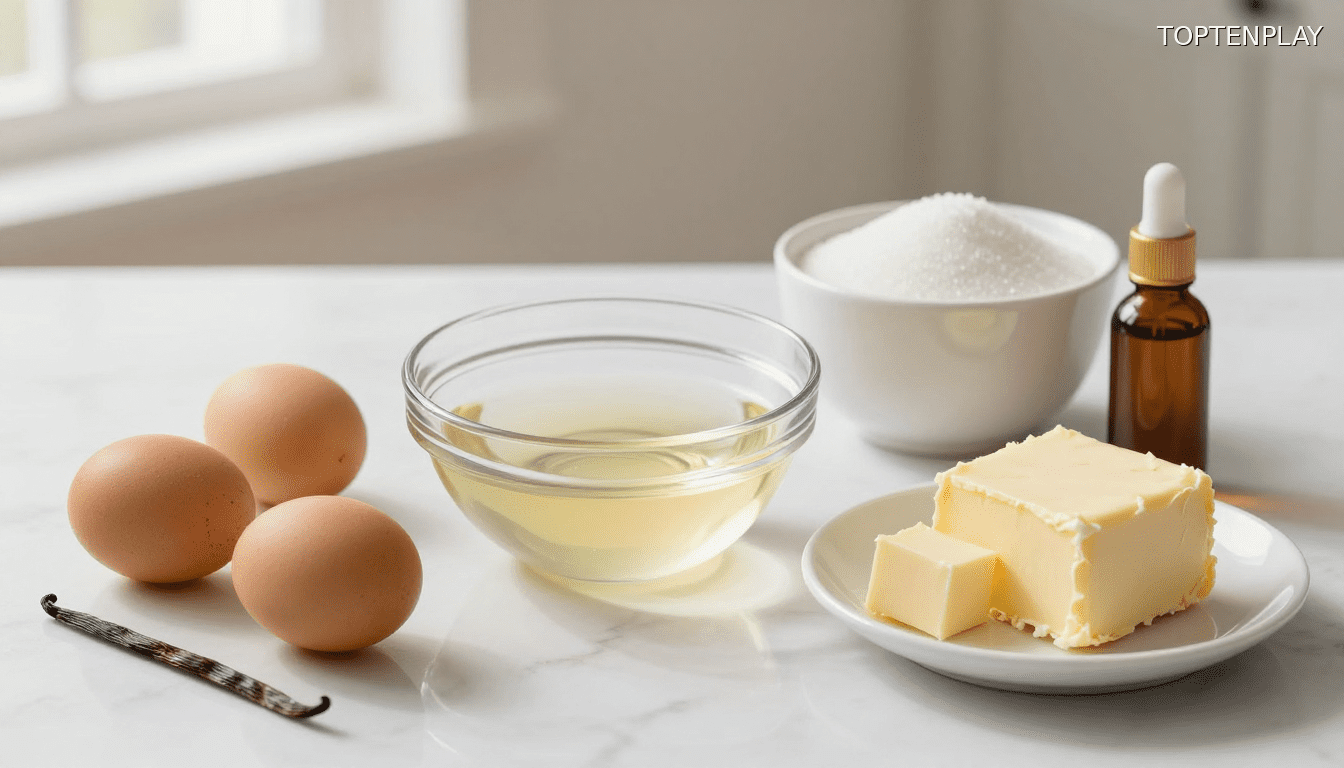
Four egg whites, 250 grams of sugar, 340 grams of unsalted butter, and a teaspoon of vanilla extract: this minimalist list actually hides a chemical balance of formidable precision. Swiss meringue buttercream relies on a critical ratio that tolerates no approximation. Every gram counts, every ingredient plays a decisive structural role.

The four egg whites constitute the airy foundation of this exceptional preparation. Their foaming power, combined with the 250 grams of sugar, creates a stable meringue that will withstand the incorporation of butter without collapsing. This protein-to-sugar ratio guarantees a texture that is both firm and silky, the signature of professional creams.

The unsalted butter, with its meticulously measured 340 grams, then transforms this meringue into a cream of incomparable smoothness. At room temperature and cut into pieces, it emulsifies perfectly with the sugar base. This substantial amount distinguishes Swiss meringue from lighter versions: it provides that creamy richness that melts instantly in the mouth.

Publicité

The vanilla extract, used sparingly, enhances the whole without ever overpowering the natural delicacy of the butter. This final aromatic touch harmonizes the flavors and reveals the sophistication of the preparation. The quality of the ingredients, more than their quantity, determines the exceptional character of this cream that transforms any pastry into a creation worthy of a chef.

Illustration image © TopTenPlay
Symbolbild © TopTenPlay

Butter Preparation: A Crucial Detail Often Overlooked

The temperature of the butter determines the success or failure of this exceptional cream. Butter that is too cold refuses to emulsify, creating a disastrous grainy texture. Too soft, it liquefies the meringue and destroys its airy structure. Room temperature represents the critical balance point: the butter must be soft to the touch without being oily, generally reached after two hours out of the refrigerator.

Cutting it into pieces speeds up and uniformizes the incorporation. These butter fragments melt gradually upon contact with the whipped meringue, allowing for a homogeneous emulsion without lumpy areas. This preparatory step, often rushed by hurried amateurs, makes the difference between a professional cream and an approximate preparation.

Publicité

The 340 grams of unsalted butter provide that characteristic silky texture of high-end buttercreams. Salted butter, sometimes used by mistake, completely unbalances the taste profile and interferes with the perceived sweetness of the meringue. Unsalted butter, rich in pure fat, creates a stable emulsion that resists temperature variations.

This meticulous butter preparation directly conditions the stability of the final emulsion. Correctly prepared butter integrates in three minutes of beating, producing a shiny and firm cream. Neglecting this step transforms a simple recipe into a battle lost in advance against the laws of culinary physics.

Illustration image © TopTenPlay
Symbolbild © TopTenPlay

The Precise Dosage Of Sugar And Whites

This mastery of butter is not enough without a perfectly structured airy base. The 250 grams of sugar and the 4 egg whites form the skeleton of this cream, determining its hold and final lightness. This ratio of 62.5 grams of sugar per white constitutes the scientific formula for a stable Swiss meringue that resists the massive incorporation of fat.

Publicité

Sugar acts as a stabilizer by capturing the water contained in the whites, creating a concentrated syrup that coats the whipped proteins. This chemical bond prevents the foam from collapsing when the butter is added. With less than 250 grams, the meringue lacks body and liquefies upon contact with fats. Beyond that, it becomes grainy and too sweet, masking the delicacy of the butter.

Publicité
Partager sur Facebook