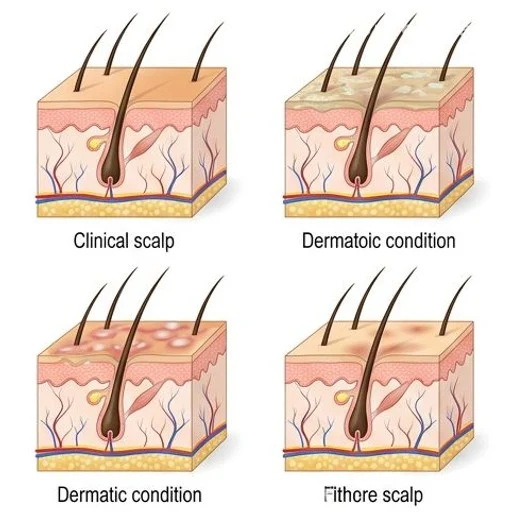
Seborrheic dermatitis is among the most frequent culprits, producing red, flaky patches that can ooze and crust over. Psoriasis, a chronic autoimmune condition, causes thick, scaly plaques that may also become crusted. Folliculitis — inflammation of the hair follicles triggered by bacterial or fungal infection — leads to pustules that eventually crust as they heal.
The most contagious of these causes is impetigo, a bacterial infection caused by Staphylococcus aureus or Streptococcus pyogenes. Though more common in children, it also affects adults. It begins as red sores or blisters that burst and leave behind a thick, golden-yellow crust. The condition spreads easily through close contact and is more likely to develop if the scalp has cuts or abrasions.
Why scalp infections are easy to overlook
Scalp conditions are often hidden by hair and dismissed as minor irritations, which can delay appropriate treatment. Bacterial infections like impetigo are highly contagious and can worsen rapidly if left untreated. Access to dermatology care remains limited in many regions, making self-assessment skills and safe home care strategies particularly important.
Warning signs that mean you should not wait for your appointment
While many scalp conditions can be managed at home in the short term, certain symptoms signal that professional care is needed without delay. According to the source, fever, fatigue, or swollen lymph nodes may indicate that an infection has spread beyond the scalp and into the body — a situation that requires prompt medical assessment.

Other red flags include persistent or worsening itching, redness, swelling, or pain; a crust that continues to spread rather than stabilize; and increasing warmth or visible pus around the affected area. Significant hair loss in the affected zone is also listed as a reason to seek care sooner rather than later.
The source recommends consulting a doctor if the crust has not improved after more than one week despite basic home care. Tracking the size of the affected area — in centimeters or inches — and photographing it regularly can help a healthcare provider assess progression more accurately, even during a remote consultation.