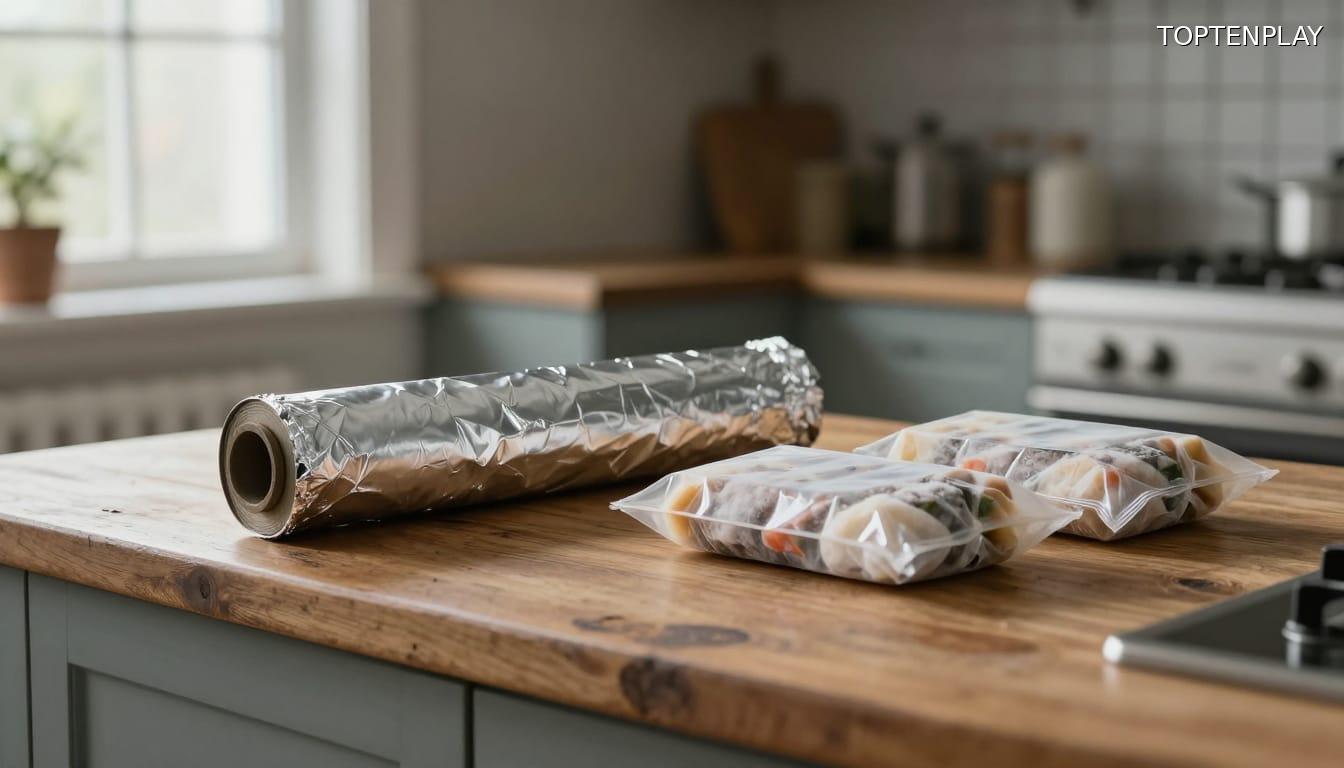
Aluminum in the Freezer: A Culinary Tradition Rooted in Our Kitchens
There are gestures that we never question. Taking out the roll of aluminum foil before sliding a dish into the freezer is one of them. This ritual spans generations without losing steam: we learned it from our parents, who in turn learned it from theirs. No manual, no demonstration — just a domestic obviousness passed down in silence.
Its success is easily explained. Aluminum foil is accessible, economical, and adapts to any shape of food. It folds around a roast, wraps leftover lasagna, covers a whole poultry. This feeling of immediate effectiveness — a few gestures, and the food seems protected — is enough to convince. Millions of households use it instinctively, without ever questioning this inherited reflex.
Yet, behind this reassuring familiarity lies a more nuanced reality. Because while aluminum is undeniably useful, useful does not mean infallible. The question is not whether it works — it works — but to understand precisely under what conditions it truly keeps its promises.
This is where the science of preservation comes into play, and an honest analysis of its true assets is required. Because using aluminum well starts with understanding what it actually protects — and how.
What Aluminum Foil Really Does Well: Its Recognized Assets
Understanding what aluminum actually protects starts with a simple scientific observation: two invisible enemies silently degrade frozen foods — light and oxygen.
In this specific area, aluminum foil excels. Its opaque surface completely blocks light, while its ability to mold tightly to food reduces air pockets from the moment of packaging. The result: oxidation — the chemical process responsible for the rancid or “old” taste found in poorly preserved foods — is significantly slowed down.
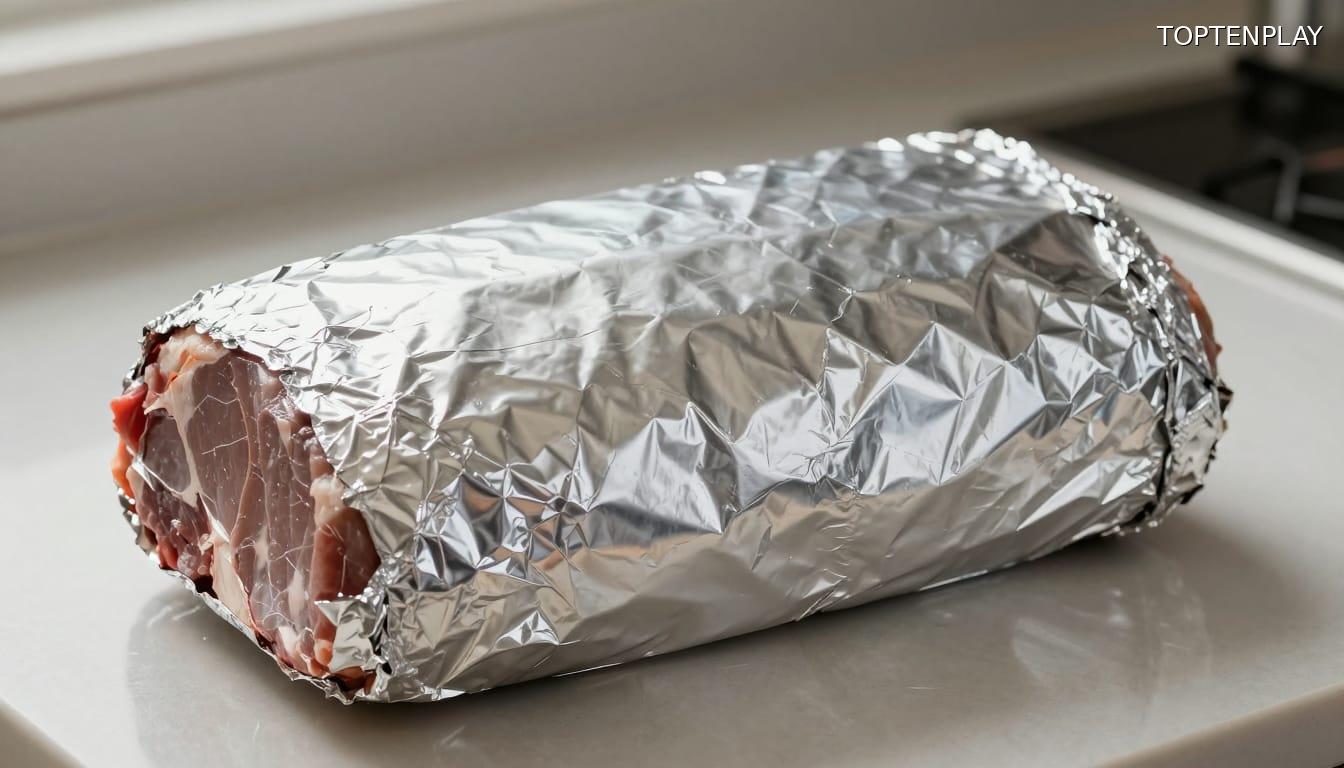
Large cuts of meat are its ideal playground. Thick steaks, roasts, whole poultry: these dense foods benefit fully from the mechanical protection and barrier effect offered by aluminum. Its malleability allows it to precisely follow every contour, thus limiting contact with the surrounding air.
Two other use cases deserve highlighting. For short-term freezing — a few days at most — aluminum effectively fulfills its role without giving time for defects to set in. As an outer layer, applied over airtight packaging, it adds extra mechanical protection against shocks and thermal variations.
These merits are real, documented, and should not be minimized. But they also outline the precise contours of its limits — those that domestic tradition has never really passed down.

The Limits No One Tells You: When Aluminum Disappoints You
These contours deserve to be clearly named — because domestic tradition has long masked them.
Aluminum foil has a structural weakness that is often ignored: it is not airtight. Contrary to appearances, its surface allows moisture to pass through. Over time, this invisible leak deprives food of its natural water, causing what professionals call “freezer burn” — those dried-out, gray, or whitish areas that irremediably alter texture and flavor.
Storage duration is the decisive factor. Beyond a few days, the limits of aluminum used alone become noticeable: aromas fade, meat loses its tenderness, and thawing reveals a quality far below expectations. Delicate foods — fish, fruit, cooked dishes in sauce — are particularly exposed to this silent degradation.
The problem worsens with incorrect use: loose wrapping, poorly tightened folds, insufficient overlapping. Every imperfection becomes an entry point for air and moisture.
Aluminum does not fail because it is bad, but because we ask more of it than it can offer. Knowing its limits precisely is exactly what allows it to be used effectively — and to avoid disappointment when it’s time to eat.
Using Aluminum in the Freezer Correctly: The Golden Rules to Remember
Knowing the limits of aluminum is precisely what allows it to be transformed into a high-performance tool — provided it is assigned the right role.
The first rule is time: reserve aluminum for short-term freezing, ideally less than a few days. Beyond that, its structural flaws accumulate and food quality inevitably suffers.
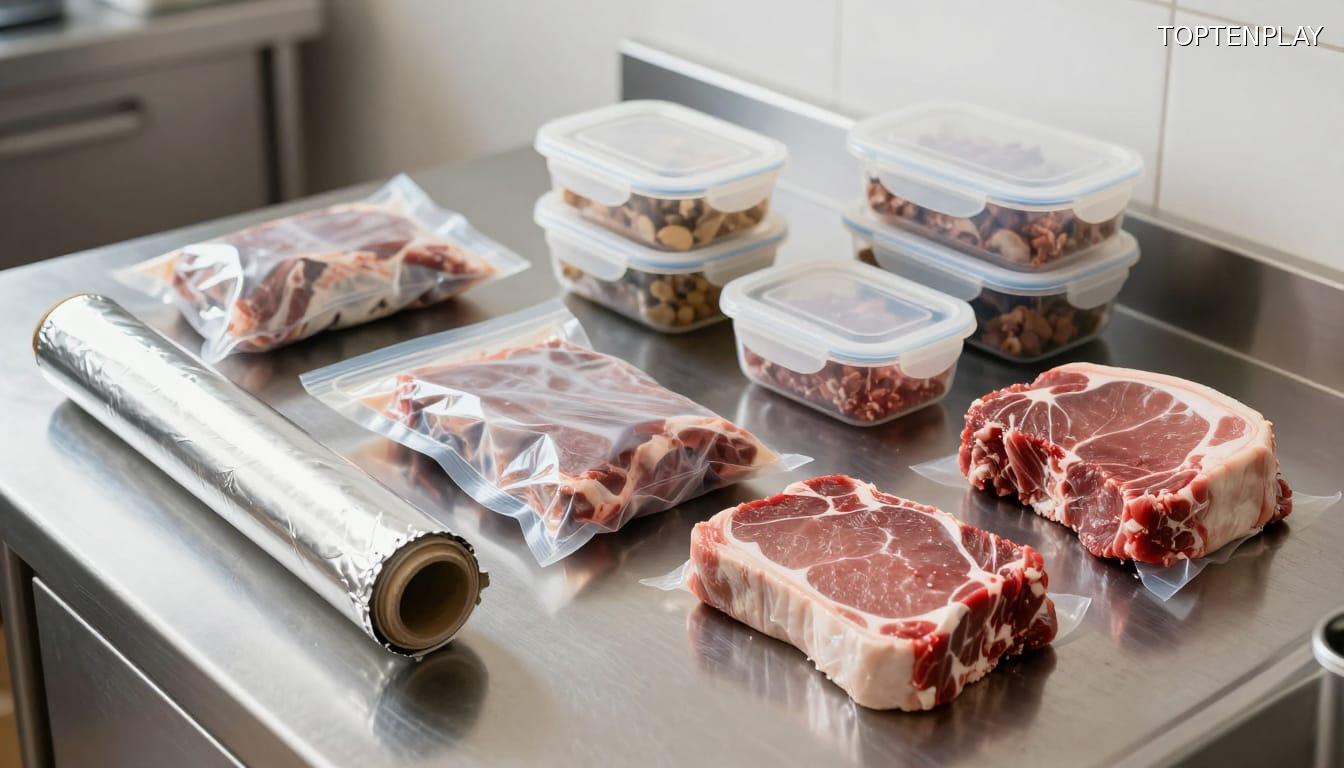
The second rule is layering. Alone, aluminum remains vulnerable. Combined with a first airtight package — vacuum bag, plastic wrap, or closed container — it becomes a formidable protective layer, effectively blocking light and mechanical shocks while reinforcing overall sealing.
The third rule concerns the choice of food. Large cuts of meat — thick steaks, roasts, legs of lamb — remain its natural specialty. On the other hand, delicate foods like fish, fruit, or dishes in sauce deserve packaging solutions better suited to their fragility.
Finally, application matters as much as the material itself: tight wrapping, carefully folded edges, double thickness if necessary. Every detail of execution determines the final effectiveness.
Aluminum remains a valuable ally in the kitchen — provided you entrust it only with what it excels at, and fill its gaps with the right packaging partners.