📌 Coconut Peanut Chicken: the 25-minute recipe with express ginger and peanut butter marinade
Posted 25 January 2026 by: Admin
The Spicy Marinade: Asian Flavor Fusion
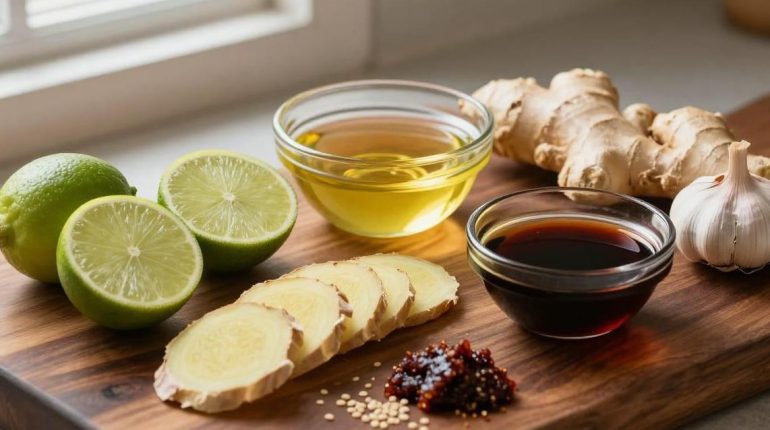
It all starts with a simple gesture: crushing a garlic clove, chopping 4 cm of fresh ginger, squeezing two limes. This aromatic trinity constitutes the flavor foundation of this coconut-peanut chicken that defies traditional culinary classifications.
In the bowl, a map of spices takes shape: 2 teaspoons of Terre Exotique Creole curry blend bring their fragrant warmth, while half a spoon of chili puree distills its controlled strength. Sesame oil and sweet soy sauce enter the scene to build that umami depth characteristic of Asian cuisines. Eight ingredients assembled with precision, with no apparent hierarchy, yet each occupies an irreplaceable function.
The marinade requires an hour of waiting. Sixty minutes during which the chicken fillets absorb this liquid alchemy, their fibers gradually soaking up the lemony, spicy, and salty notes. This suspended time is not a constraint but a necessity: it allows the flavors to penetrate the meat, transforming a neutral ingredient into a vector of culinary identity.
This Creole-Asian fusion is not a matter of chance but of proven flavor logic: the acidity of the lime tenderizes the proteins, the ginger amplifies without dominating, and the Creole curry dialogues with the soy sauce to create a balance between spicy heat and sweet gentleness.
Peanut Butter: The Signature Ingredient
The creaminess of this recipe is no accident. It comes from a radical choice: 200 grams of unsweetened peanut butter, a substantial quantity that radically transforms the very nature of the sauce. Where other recipes rely on reduction or the addition of cream, this version opts for the natural density of peanut paste.
Peanut butter acts as an emulsifying agent when it meets the 500 milliliters of coconut milk. This encounter produces a velvety, almost creamy texture without resorting to artificial thickeners. The fat from the peanuts binds with the proteins of the plant milk, creating a stable suspension that generously coats the chicken pieces.
The absence of sugar in the peanut butter is a crucial technical detail. It preserves the delicate balance established by the marinade, avoiding any drift toward a cloying sweetness. The toasted flavor of the peanuts then fully emerges, dialoguing with the smoky notes of the sesame oil and the salty depth of the soy sauce.
This coconut-peanut association fundamentally distinguishes the recipe from traditional curries. It doesn’t just coat: it structures, densifies, and characterizes. Every bite carries this creamy signature that transforms a fusion dish into a creation identifiable among a thousand.
Express Cooking: 15 Minutes Flat
The apparent sophistication of this fusion dish hides a pragmatic reality: 15 minutes of cooking are enough to transform the marinade and peanut butter into a finished dish. This brevity is not a compromise, but a mastered technical characteristic.
The chicken pre-marinated for an hour requires only a quick sear over high heat. The heat seizes the fillets, creating a light caramelization on the surface while the inside remains moist. The addition of coconut milk and peanut butter follows, without prolonged simmering time. The sauce thickens naturally under the effect of the heat, the fats emulsify, and the aromas fuse.
This flash cooking preserves the integrity of the flavors. The ginger retains its pungency, the lime its acidic liveliness, and the Creole curry its distinct spicy notes. The 10 minutes of initial preparation are added to the 15 minutes of cooking for a total of 25 minutes of active handling – excluding passive marinating time.
The ratio between time investment and the flavor complexity obtained repositions this recipe in the weekday evening repertoire. It is no longer a culinary feat reserved for weekends but fits into the constraints of an ordinary Tuesday. The spring onions and the classic onion, added at the end of cooking, provide the final touch without prolonging the process.
The Freshness Finish: Onions and Herbs
The balance of a rich dish lies not in moderation, but in counterpoint. The 500 ml of coconut milk and 200 g of peanut butter create an enveloping creaminess that requires a precise aromatic corrective: three onions with distinct functions.
The small classic onion, minced and sautéed at the start of cooking, constitutes the aromatic base. Its light caramelization brings a melting sweetness that dissolves into the sauce. The two spring onions act differently. Finely sliced, they retain their crunch and characteristic pungency when they join the preparation at the very end of cooking.
This stratification of onions – one melted, the others sharp – introduces an essential textural dynamic. Each bite alternates between the silky peanut-coconut cream and the vegetal bite of the spring onions. Their chlorophyll freshness cleanses the palate between forks, preventing the flavor saturation that a flat sauce would induce.
The contrast is not only established in the mouth. Visually, the green rounds of the spring onions scattered over the chicken break the beige uniformity of the sauce. They signal the presence of a liveliness that tempers without blandness, stimulates without aggression. This final touch transforms a potentially monotonous dish into a balanced composition, where richness and lightness coexist without neutralizing each other.