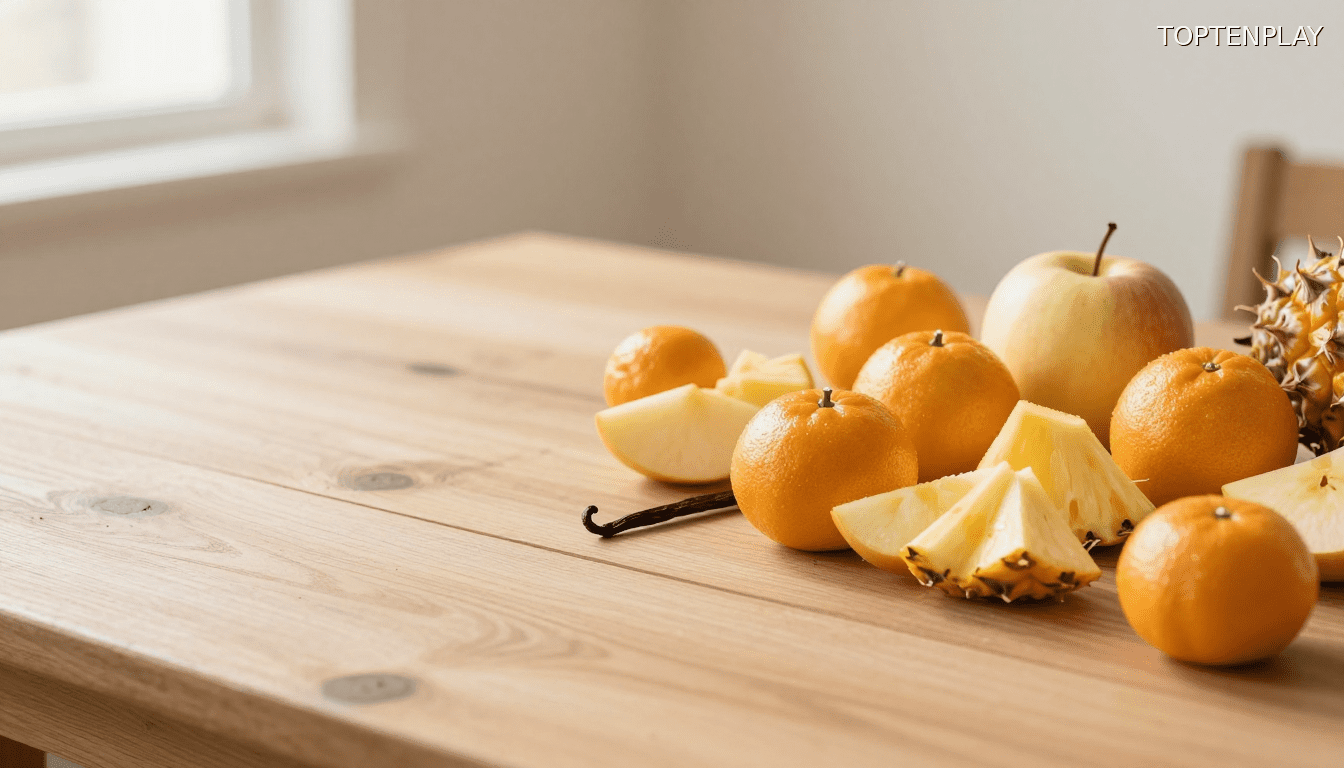
A Trio Of Sunny Winter Fruits For An Original Dessert
Far from traditional cherry clafoutis, this recipe boldly breaks the rules. Clementines, apples, and pineapple come together in the same mold, creating a unique association that blends winter freshness with exotic notes. The preparation begins with the careful cutting of the fruits: peeled clementines turn into juicy segments, pineapple slices become generous chunks, while the apples, peeled and cored, provide their melting texture.
This bold combination relies on a subtle balance between the acidity of the citrus, the crunch of the apples, and the sweetness of the pineapple. But the ingredient that truly sublimates the whole remains the vanilla beans, incorporated directly into the batter. Its warm and fragrant notes envelop the fruit with a gourmet touch, transforming this clafoutis into a sophisticated dessert. This recipe proves that sometimes a few original associations are enough to reinvent a classic of French pastry, while maintaining the simplicity of execution that makes this timeless dessert so charming. An approach that already holds great promise for the rest of the preparation.

A Simple Preparation That Focuses On Texture
This promise comes to life as soon as the batter is assembled. Preheat the oven to 180°C while you crack the eggs into a bowl, adding the sugar. The whisk becomes your ally: mix vigorously until you obtain a perfectly homogeneous mixture, a sign that the ingredients are harmonizing. This initial step conditions the final success, as it creates the airy base that will welcome the fruit.
The gradual incorporation of flour, baking powder, and vanilla beans requires patience. Each addition must blend into the preparation before the next, thus avoiding unwanted lumps. But the real secret lies in the next step: the addition of Greek yogurt. This signature ingredient radically transforms the texture, providing that creamy smoothness that distinguishes this clafoutis from classic versions.
Mix until you obtain a perfectly smooth batter, with no traces of flour or resistance to the whisk. This fluid consistency guarantees even baking and that melting texture characteristic of successful clafoutis. Greek yogurt, thicker than traditional milk, keeps the fruit suspended while maintaining the desired softness. Your batter is now ready to reveal its potential in a properly prepared mold.

Mastered Baking For An Optimal Result
The springform pan becomes the stage for the transformation. Butter it generously, then flour it lightly: this double protection prevents the batter from sticking to the sides and facilitates impeccable unmolding. Then pour the smooth preparation into the mold, making sure to distribute the mass well. That’s when the fruits enter the scene: harmoniously arrange the clementine segments, apple pieces, and pineapple over the entire surface. Their uniform distribution guarantees that every slice will contain this fruity combination.
The oven preheated to 180°C (gas mark 6) offers the ideal temperature for moderate baking. Bake your clafoutis and let the magic happen for 40 to 45 minutes. This precise window is not accidental: it allows the batter to set without drying out, the fruits to lightly candy while retaining their juiciness, and the surface to brown subtly. Resist the temptation to open the oven before the end of the allotted time, at the risk of compromising the rise.
The check is done with a knife: the blade must come out almost dry from the center of the clafoutis. This moderate temperature baking preserves the softness obtained thanks to the Greek yogurt, avoiding the trap of drying out that threatens preparations cooked too high or too long. The result? A melting texture that fully reveals the flavors of the three fruits, sublimated by vanilla.