Strap Problems And Their Solution
Slipping straps represent one of the most exasperating daily malfunctions. This small technical flaw transforms an ordinary day into a succession of mechanical gestures: pulling up, adjusting, repositioning. Behind a simple slip lies a true war of attrition against gravity, where every arm movement becomes a risk factor.
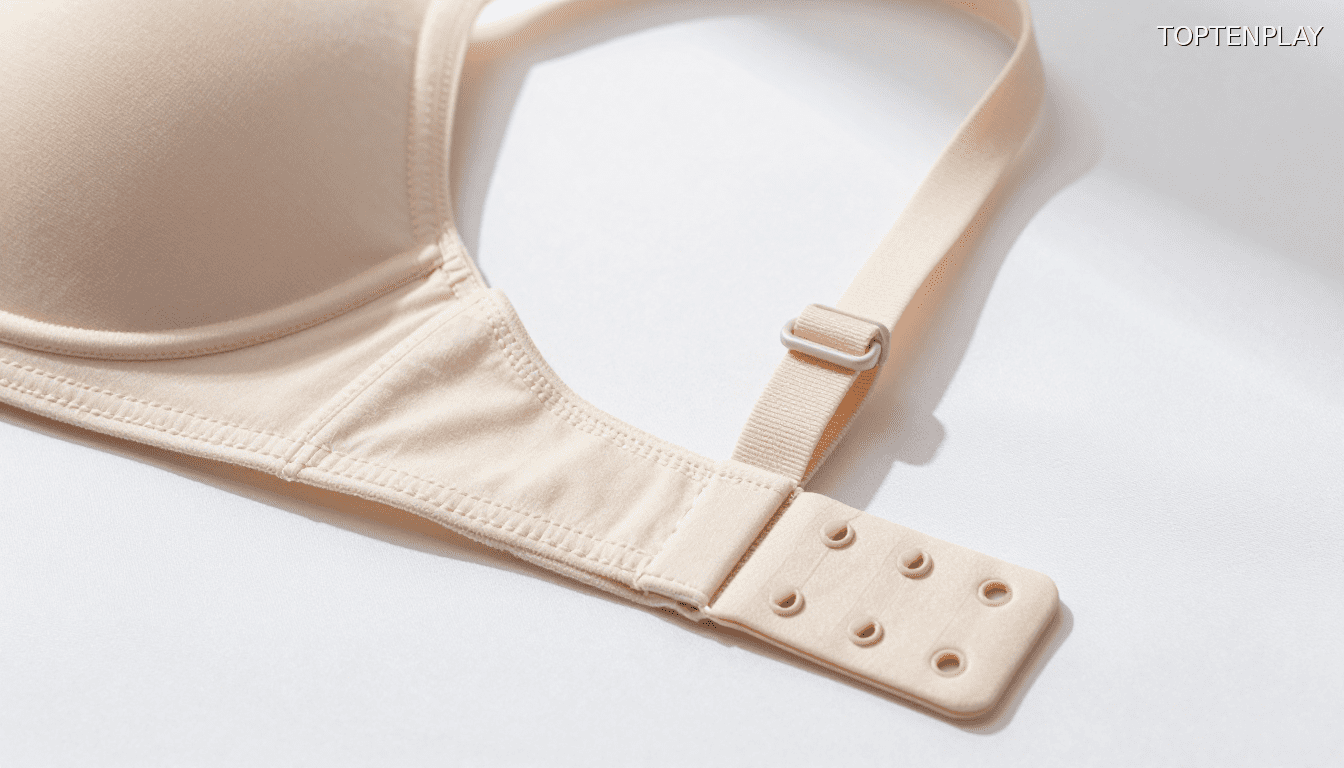
The technical reality is simple: when straps are too loose or poorly positioned, they abandon their support function. The weight of the cup is no longer correctly distributed, creating a structural imbalance that affects not only comfort but also the silhouette under clothing. Narrow or sloping shoulders aggravate this mechanical phenomenon.
Solutions exist, however, without requiring costly intervention. Tightening the straps to the maximum is the first step, but rarely the most effective. The little-known trick consists of crossing the straps in the back, thus creating a central anchor point that prevents any lateral movement. Small transparent silicone clips, discreet under clothing, also offer formidable stabilization for less than five dollars.
Some women swear by the invisible knot technique: a simple quick stitch at the junction between the strap and the back permanently transforms the bra’s fit. This permanent modification takes three minutes and guarantees absolute peace of mind.

Managing Underwires And Structural Discomfort
Beyond the straps, the underwire represents the second critical point where comfort collapses. This metal wire meant to provide support quickly becomes an instrument of torture when it shifts, pokes, or crushes. Dull pain under the chest, red marks on the ribs, constant friction: all signals that the underwire is working against the body rather than with it.
The technical problem often stems from an incorrectly sized cup. When the underwire does not perfectly follow the natural contour of the breast, it creates localized pressure points. The fabric between the cup and the torso then forms unsightly gaps, revealing a faulty fit that compromises aesthetics under tight clothing. These gaps betray a bra that has lost its primary function.
Visible lines constitute the other structural plague. Even a perfectly fitted bra can draw unwanted contours under certain thin fabrics. This involuntary transparency drastically limits clothing choices and forces permanent compromises between comfort and appearance.
The solution involves several simple adjustments. Slightly bending the ends of the underwires with pliers softens aggressive angles. Sewing a piece of fleece or cotton at the contact point eliminates friction. For gaps, tightening the elastic band under the cup brings the underwire closer to the body. As for visible marks, wearing a seamless bra under problematic clothing permanently resolves this aesthetic constraint without sacrificing necessary support.

Saving Without Replacing Your Lingerie
Faced with recurring defects, the immediate reflex is to buy new. However, this logic of perpetual replacement generates considerable expenses for an often identical result. A quality bra costs between 30 and 80 dollars, multiplied by the different models needed according to outfits. The financial accumulation quickly becomes unsustainable, especially since new purchases frequently reproduce the same problems after a few washes.
The alternative lies in targeted repair rather than systematic replacement. A stretched elastic can be replaced for three dollars and twenty minutes of sewing. A slipping strap is stabilized with a transparent hook for one dollar. An irritating underwire is neutralized with salvaged fleece. These minimal interventions extend the lifespan by three to five years for a derisory investment.