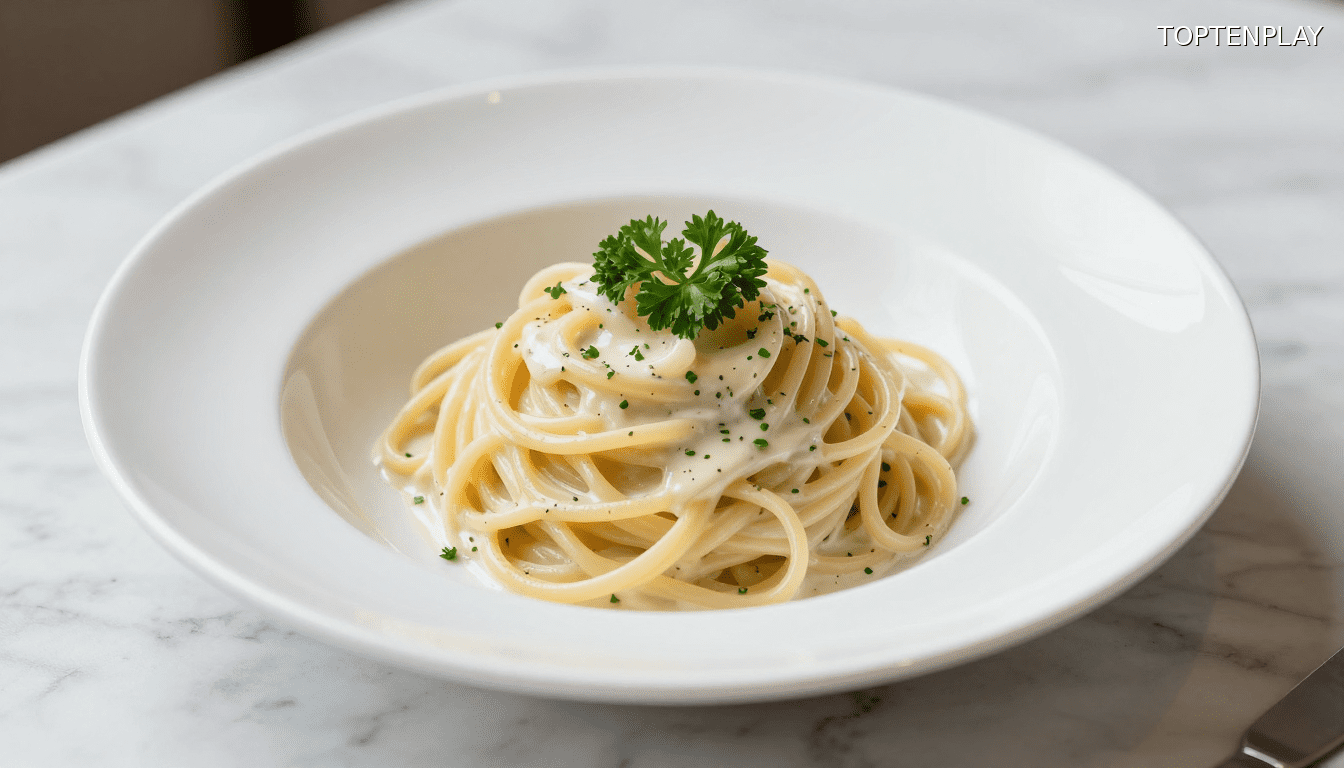
A Refined and Accessible Dish for Your Dinners
Forty minutes flat. That’s all it takes to serve creamy seafood linguine worthy of a gourmet table. Behind the sophisticated appearance of this dish lies a joyful reality: no complex techniques, no hard-to-find ingredients, just an intelligent assembly that transforms simple products into a spectacular plate.
The secret lies in the balance. Smooth cream, tender seafood, and bright lemon zest compose a gustatory score where each element plays its note without overwhelming the others. This recipe for four people deconstructs the misconception that refined dishes require hours in the kitchen or Michelin-starred chef skills.
The numbers speak for themselves: twenty minutes of preparation, twenty minutes of cooking. Between minced shallots, pink shrimp, and velvety cream, time flies effortlessly. The dish is built in logical steps, each contributing to the final harmony. Marine freshness meets milky richness, all enhanced by that touch of citrus that makes all the difference.
This accessibility sacrifices nothing to elegance. On the contrary, it proves that a memorable dinner does not require technical prowess but rather a good understanding of combinations that work. And in this marriage between Italian pasta and treasures of the sea, everything works remarkably well.

The Secrets of a Perfectly Balanced Creamy Sauce
This gustatory harmony rests on a precise aromatic base. In melted butter, minced shallot and chopped garlic reveal their fragrances in two to three minutes over medium heat. This foundational step creates the base upon which the entire sauce will be built. Nothing spectacular in appearance, but this first aromatic layer determines the final depth of the dish.
The incorporation of 250 ml of heavy cream then transforms the seafood juices into a velvety sauce. Over low heat, the cream gradually thickens, taking on the marine flavors concentrated in the pan. The optional parmesan—forty grams grated—intensifies the creaminess without stealing the show from the seafood. It melts discreetly, reinforcing the silky texture.
But the revolutionary element remains the lemon zest. This finely grated half-peel accomplishes what many seasonings fail to do: it balances the richness without weighing it down. The lemony freshness cuts through the cream, creating that invigorating contrast that prevents the palate from becoming saturated. Without this zest, the sauce would remain delicious but one-dimensional.
The reserved cooking water acts as a final adjustment. Its natural starch binds the sauce to the pasta with an efficiency that cream alone could not guarantee. A few spoonfuls are enough to transform a thick sauce into a perfect coating that adheres to each linguine. This professional technique makes all the difference between a successful dish and an exceptional one.

Cooking Seafood: Timing and Precision
This sophisticated sauce requires impeccably prepared marine products. The maritime trio—two hundred grams of peeled shrimp, one hundred and fifty grams of cooked mussels, and one hundred grams of calamari rings—joins the flavored pan for a flash cooking of three to four minutes maximum. This tight timing is the dividing line between melting flesh and a rubbery texture that no one wants.
Shrimp reveal their optimal cooking by their characteristic pink hue. Calamari, on the other hand, becomes slightly opaque without ever contracting or hardening. This brevity preserves the natural tenderness of seafood, often compromised by excess heat. Contrary to popular belief, short cooking is the key to an irreproachable texture, not the other way around.