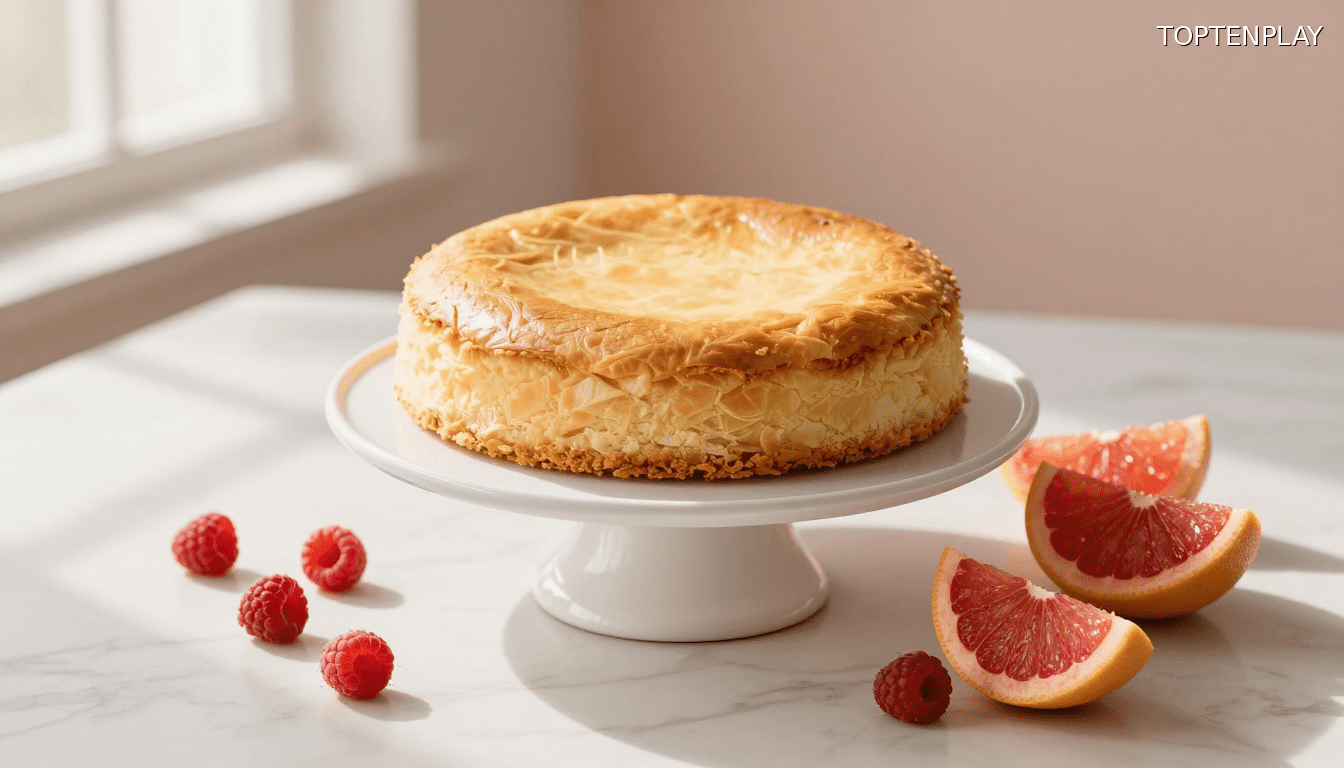
Cyril Lignac’s Signature Recipe For New Year’s Eve
In 2024, Cyril Lignac unveiled his version of the Savoy cake, transforming this classic into an ideal gourmet dessert for the festivities. The chef reinvents tradition by accompanying it with a raspberry coulis and grapefruit segments, a bold combination that perfectly balances the natural sweetness of the biscuit with a touch of refreshing acidity.
The technique relies on mastering whipped egg whites. Whisk 4 egg whites with 80g of icing sugar until you get the famous “bird’s beak” – that characteristic peak that signals the ideal texture. Then incorporate 4 egg yolks, followed by 40g of flour and 40g of potato starch. The chef’s signature tip: “Proceed in two stages to avoid lumps”. This method guarantees a perfectly smooth and homogeneous batter.
Add a grated lemon zest and mix gently with a spatula to preserve the air trapped in the whites. Pour into a buttered and sugared cake tin, then bake at 180°C for 25 minutes. While baking, prepare the coulis: heat 150g of raspberry puree with 40g of sugar, stir in half a sheet of previously softened gelatin and some lemon juice.
The result? An airy dessert that marries Savoyard tradition and contemporary creativity, ready to enhance your holiday tables.

Technical Secrets For A Perfect Result
The success of the Savoy cake relies on precise movements that transform simple ingredients into an airy dessert. The critical point: preserving the air in the egg whites. Use whites at room temperature, never cold, and whisk them at moderate speed until you get a texture comparable to shaving foam. Over-beating or under-beating irremediably compromises the final structure.
Incorporating the whipped whites requires absolute gentleness. Proceed with a spatula using bottom-to-top movements, never circular. Every sudden gesture expels the trapped air and dooms the cake to fall after baking. This step determines the characteristic lightness of the biscuit.
The oven must be preheated to 180°C. Insufficient temperature prevents the batter from solidifying correctly, causing the dreaded collapse. Scrupulously respect the 25 minutes of baking without opening the door prematurely. To check for optimal baking, insert a toothpick in the center: it must come out dry.
The temperature of the ingredients also conditions the result. Cold whites whip with difficulty and quickly lose their volume. This attention to every detail distinguishes a successful cake from a culinary failure. Professionals know it: in pastry, technical precision takes precedence over improvisation.

The Heritage Of A 14th Century Royal Dessert
Behind this fluffy cake lies a fascinating history. The Savoy biscuit is said to have been born in the 14th century under the hands of Pierre de Yenne, master cook to Count Amadeus VI. This creation intended for the Savoyard nobility has crossed the centuries without losing its gastronomic prestige.
Its fundamental peculiarity radically distinguishes it from the sponge cake: the total absence of fat. Unlike cakes that incorporate butter, the Savoy biscuit draws its incomparable lightness solely from whipped egg whites. This refined composition – flour, starch, eggs, and sugar – produces an airy texture impossible to reproduce otherwise.