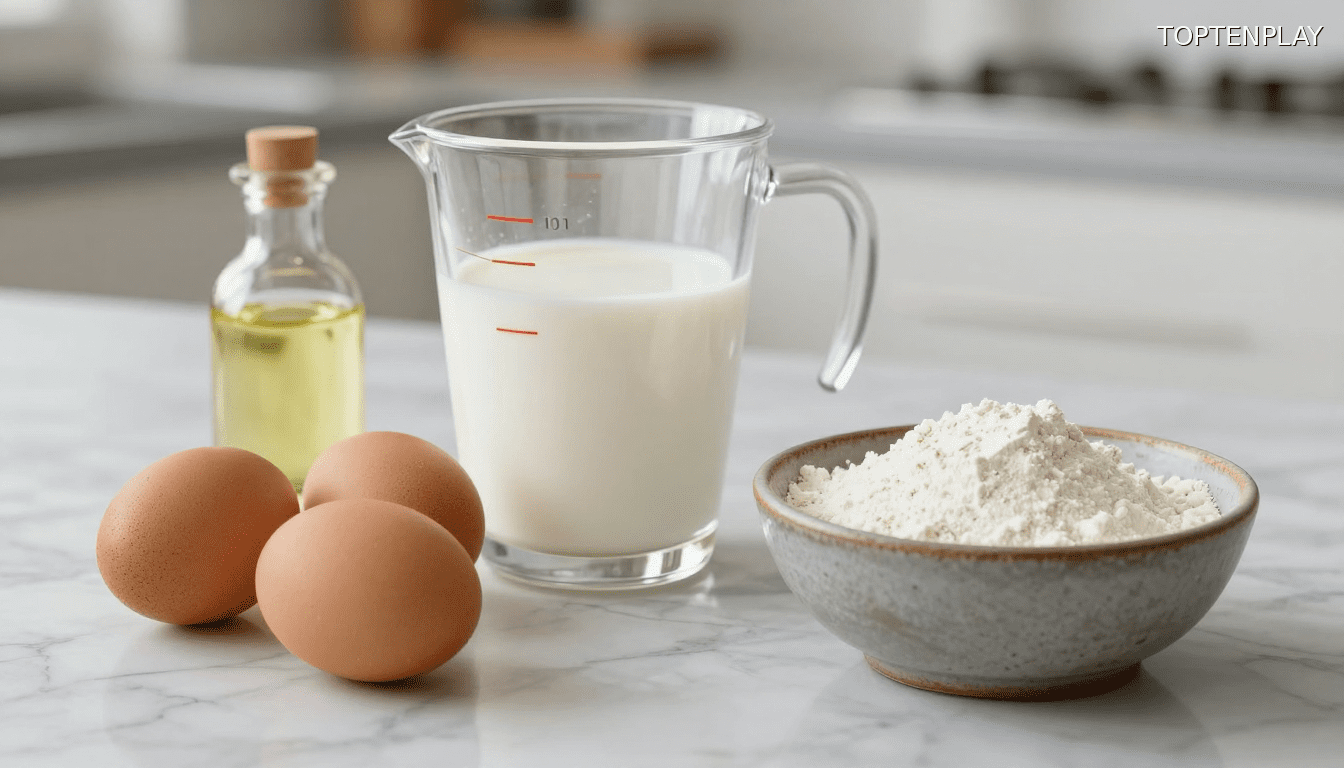
The Essential Ingredients For A Perfect Fluffiness
The success of a plain fluffy cake relies on a precise mathematical formula: 3 eggs, 200 g of sugar, 250 ml of milk, 100 ml of vegetable oil, and 300 g of flour. These proportions are not left to chance. They constitute the exact balance between structure and tenderness, between hold and melt.
The egg-sugar trio forms the airy base. Eggs provide the protein structure and necessary emulsion, while sugar retains moisture and guarantees that characteristic texture. The milk-oil liquid duo ensures the sought-after fluffiness: milk hydrates the crumb, while oil makes it silky and extends its freshness well beyond a butter-based version.
Regarding structure, the 300 g of flour combine with the packet of baking powder to create the cake’s architecture. The yeast releases carbon dioxide when heated, creating those thousands of small bubbles that give it that airy lightness. The often-neglected pinch of salt plays a crucial role: it reveals the flavors and balances the sugary sweetness.
Finishing options – classic sugar or vanilla sugar for sprinkling – add that crunchy touch on the surface that contrasts deliciously with the melting heart. This minimalist recipe hides a precise science of textures.

The Step-By-Step Preparation Technique
The order of incorporating ingredients determines the final texture. Start by beating the eggs with the sugar until you get a frothy and whitened mixture – this emulsion step captures the air necessary for lightness. The volume should double, a sign that the egg proteins have correctly trapped the air bubbles.
Then add the liquids – milk then oil – in a continuous stream while mixing. This progressive incorporation avoids breaking the fragile emulsion. The oil is integrated last because its slippery texture coats the particles and softens the structure.
The dry mix comes at the end: sift the flour with the baking powder and the pinch of salt, then fold them in gently with a spatula or wooden spoon. Mix just enough to make the lumps disappear, without overdoing it. Overworking the gluten would turn the fluffiness into an elastic and rubbery texture.
The baking powder reacts immediately upon contact with liquids. It releases a first wave of carbon dioxide when cold, then a second in the oven under the effect of heat. This double action explains why the batter must be put in the oven quickly after preparation – every minute of waiting decreases the rising potential.
The final consistency resembles a thick cream that flows slowly from the spatula. Too liquid, the cake will collapse; too compact, it will remain dense.

The Secrets Of Optimal Baking
Preheat the oven to 180°C – the ideal temperature to guarantee an even rise without burning the crust. An oven that is too hot sets the surface before the heart cooks, creating a domed and cracked top. Too lukewarm, the batter spreads instead of rising.