📌 Oozing cheese potato croquettes: the foolproof technique for a melting heart and a perfectly crispy crust
Posted 20 March 2026 by: Admin
The Recipe That Wins Everyone Over: Why Cheese Croquettes Are a Hit
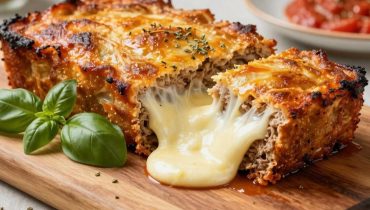
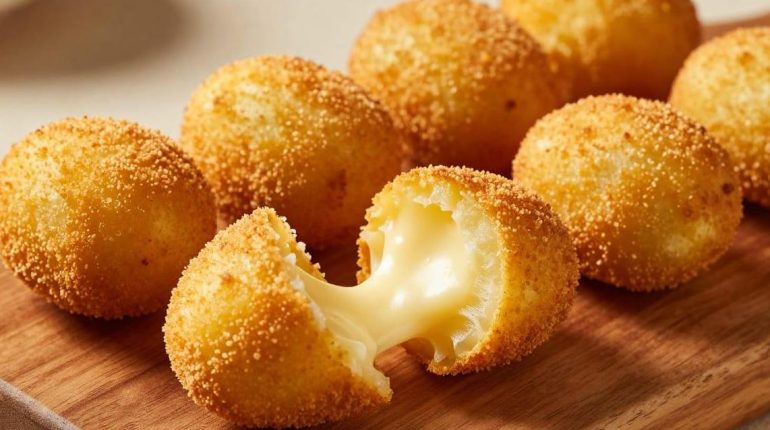
Few culinary preparations provoke such immediate consensus as cheese potato croquettes. Their success is based on a simple but formidably effective principle: the radical contrast between a golden, crunchy shell and a melting heart that stretches at the first bite.
This duality of textures transforms every tasting into a sensory experience. The crispy exterior gives way under the tooth to reveal a smooth mash, while the oozing cheese creates that irresistible stringy effect. A perfect balance between tradition and accessible indulgence.
Their versatility is another major asset. These golden bites are equally at home as an appetizer, a side for grilled meat, a refined starter, or even a main course with a simple salad. This adaptability to all culinary contexts explains why they are among the most prepared recipes.
The economic aspect reinforces their popularity: with 500g of potatoes, 100 to 150g of cheese, an egg, and breadcrumbs, you get four generous portions for just a few euros. A family recipe par excellence, infinitely customizable according to taste: adding herbs, varying cheeses, incorporating ham or spices.
This combination of technical accessibility, controlled budget, and spectacular results explains why these croquettes appeal to beginners and experienced cooks alike. All that remains is to master the technique to guarantee success every time.
The Step-By-Step Technique For Successful Croquettes
The success of these croquettes relies on a precise methodology, accessible even to novices. The first decisive step: obtaining a perfectly dry mash. After cooking 500g of peeled potatoes in salted water for 15 minutes, draining must be thorough. Once mashed while still hot, they absorb the egg and two spoons of breadcrumbs to form a homogeneous and manageable dough.
Shaping is the critical moment. Each portion of mash is flattened in the palm, receives its cube of cheese in the center, and then closes hermetically around it. This meticulous closure prevents any leakage during cooking. Forming regular balls or cylinders guarantees uniform cooking.
Coating in breadcrumbs can be done in a double pass to maximize crunchiness. This protective layer creates the much-sought-after golden barrier while preserving the melting interior.
Three cooking methods are available: traditional frying for an ultra-crispy result, the pan with regular rotation for a lighter version, or the oven at 200°C for 20 minutes to limit fat. Whichever option is chosen, the temperature must remain moderate to avoid burning the outside before the cheese melts.
From start to tasting, 45 minutes are enough. A controlled timing that makes this recipe ideal even for busy evenings, provided each step is followed without haste.
Chef’s Secrets For A Perfect Texture
Beyond the basic technique, a few adjustments separate a correct croquette from a memorable success. Moisture is enemy number one: a mash that is too liquid irremediably compromises the hold. After draining, letting the excess water evaporate for a few minutes makes all the difference.
Refrigerating for 15 to 20 minutes before cooking transforms the preparation. This often-neglected step allows the dough to firm up, facilitating handling and drastically reducing the risk of bursting during cooking. Cohesion is strengthened, shaping stabilized.
On the flavor side, the discrete addition of grated Parmesan directly into the mash amplifies the cheesy character without making it heavy. A hint of freshly grated nutmeg enhances the potatoes without dominating, while garlic powder brings depth.
The choice of cheese determines the final experience. Mozzarella guarantees that spectacular stringy effect when cut, cheddar offers a pronounced taste, while raclette or reblochon create an intense indulgence for enthusiasts. Some chefs even combine two cheeses to play with textures and aromas.
Two critical points remain: the hermetic sealing of the cheese and the control of the cooking temperature. A heat that is too high burns the shell before the heart heats up, a heat that is too low softens the structure. Thermal balance makes the difference between success and disappointment.
Customization And Sides: Gourmet Variations
These mastered fundamentals open up a world of possibilities. The basic recipe lends itself to countless variations without compromising its structure. Adding finely diced ham to the mash transforms the croquettes into a more substantial version, perfect as a main course accompanied by a simple green salad.
For palates seeking character, incorporating smoked paprika or Espelette pepper wakes up the recipe without distorting it. The vegetarian version gains interest with chopped spinach or previously sautéed mushrooms, creating an alternative just as tasty as the original.
Sauces further multiply the experience. A yogurt sauce with lemon and fresh herbs brings freshness, while a homemade tomato sauce or garlic mayonnaise enriches the tasting. Some prefer a cheese sauce for double the indulgence.
On a practical level, these croquettes keep for two days in the refrigerator in an airtight container. Freezing before cooking proves particularly clever: shaped and breaded, they wait in the freezer for their moment, ready to cook directly without thawing for an optimal result. Reheating in the oven at 180°C restores all the crunchiness to already cooked versions.
Nutritionally, each portion provides about 350 calories divided between 40g of carbohydrates, 15g of lipids, and 10g of protein. A reasonable balance for such a gourmet preparation, especially served with fresh raw vegetables or a crunchy salad that harmoniously completes the plate.