📌 Homemade crispy chicken: the cornstarch technique that changes everything
Posted 22 January 2026 by: Admin
A Simple Recipe With Accessible Ingredients
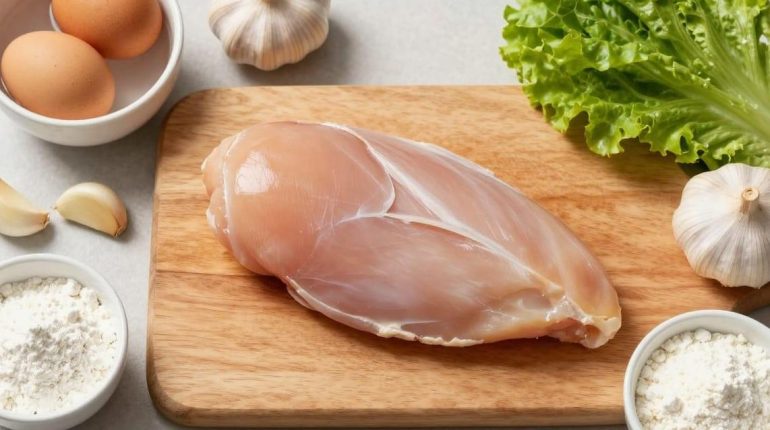
Reproducing fast-food crispiness at home requires no exotic ingredients. This chicken strips recipe relies on eight everyday items: two chicken fillets, three eggs, two cloves of garlic, two tablespoons of spices and cornstarch, frying oil, a spoonful of salt, and fresh lettuce. A minimal arsenal for a maximal result.
The two chicken fillets form the protein base, cut into regular strips to ensure even cooking. The three eggs play a strategic role in the coating, creating the adhesive interface between the meat and the crispy layer. The seasoning is limited to two spoons of spices customizable to preference – paprika, black pepper, cumin, or Cajun mix – and a spoon of salt to enhance the flavors.
This economic accessibility democratizes a preparation often perceived as complex. No need for Japanese panko breadcrumbs or hard-to-find buttermilk: cornstarch and eggs are enough to generate that addictive texture that cracks under the tooth. Lettuce, often neglected in industrial versions, brings the final touch of balance between indulgence and freshness.
The Double Coating Technique For Optimal Crispiness
The secret of these strips lies in a precise alchemy between eggs and cornstarch. The three beaten eggs form the first adhesive barrier that traps the chicken’s moisture while serving as cement for the outer layer. The cornstarch, applied in two generous tablespoons, generates during frying that golden and glassy film characteristic of the best crispy preparations.
Incorporating two crushed garlic cloves directly into the egg mixture transforms a simple coating into an aromatic vector. This subtle infusion permeates the meat with every bite without overpowering the palate. Unlike wheat flour which absorbs oil and softens quickly, cornstarch creates a crystalline structure resistant to moisture, preserving the crunch even after several minutes out of the fryer.
Oil temperature is the decisive factor: too low, the breading absorbs fat and becomes soft; too high, it burns before the chicken cooks. Between 170 and 180°C, the coating solidifies instantly on contact with the oil, sealing in the internal juices while developing that audible crust at the first bite. This double mechanism – protection by the eggs, crispiness by the cornstarch – explains why this technique surpasses classic breading in texture and hold.
Mastered Cooking For Golden-To-The-Core Strips
Once the perfect coating is achieved, everything is decided in the three to four minutes of frying. The chicken immersed in oil at the ideal temperature must produce a steady sizzle without violent splashes, a sign that the Maillard reaction is occurring without carbonization. The strips require constant monitoring: too long, the meat dries out losing its tenderness; too brief, the center remains translucent and unfit for consumption.
The visual test remains infallible: when the breading turns a uniform caramel gold, without pale or brown areas, removal is necessary. A probe thermometer inserted into the core should display a minimum of 74°C to ensure safe cooking of the chicken. Draining on paper towels for thirty seconds removes excess surface oil without compromising the crispy structure, unlike racks which create softening condensation zones.
The cross-section of a well-executed strip reveals three distinct layers: a crunchy blonde crust, an intermediate zone where the egg-garlic marinade has cooked into a protective layer, and a pearly white core releasing its juices under pressure. This architecture testifies to thermal mastery where each layer has received exactly the necessary heat. Serving immediately preserves this ephemeral textural contrast that defines the recipe’s success.
Vitamin-Rich Plating With Fresh Lettuce
The thermal and textural contrast now stands as the recipe’s signature. The still-steaming strips find their setting on a bed of crunchy lettuce, whose washed and spun leaves provide a chlorophyll freshness that tempers the richness of the frying. This association is not decorative but functional: each bite of crispy chicken followed by a chilled leaf resets the taste buds and prevents the palate fatigue typical of fried foods.
Lettuce also fulfills a strategic nutritional role in the dish’s balance. Where the strips concentrate proteins, lipids, and complex carbohydrates from the breading, the vegetable provides fiber, water-soluble vitamins, and minerals without significant calories. This complementarity transforms a fast-food snack into a complete plate where the pleasure-health ratio is optimized without compromising on taste intensity.
The final presentation plays on chromatic oppositions: the amber gold of the crust contrasts with the tender green of the leaves, creating a visual composition that stimulates the appetite even before the first taste. A few drops of lemon on the lettuce or a light sauce on the side allows for personalizing the experience without masking the coating and cooking work that preceded it. This vegetable detail elevates the recipe beyond a simple snack to a thoughtful culinary proposition.