The Fatal Error Everyone Makes (And How To Avoid It)
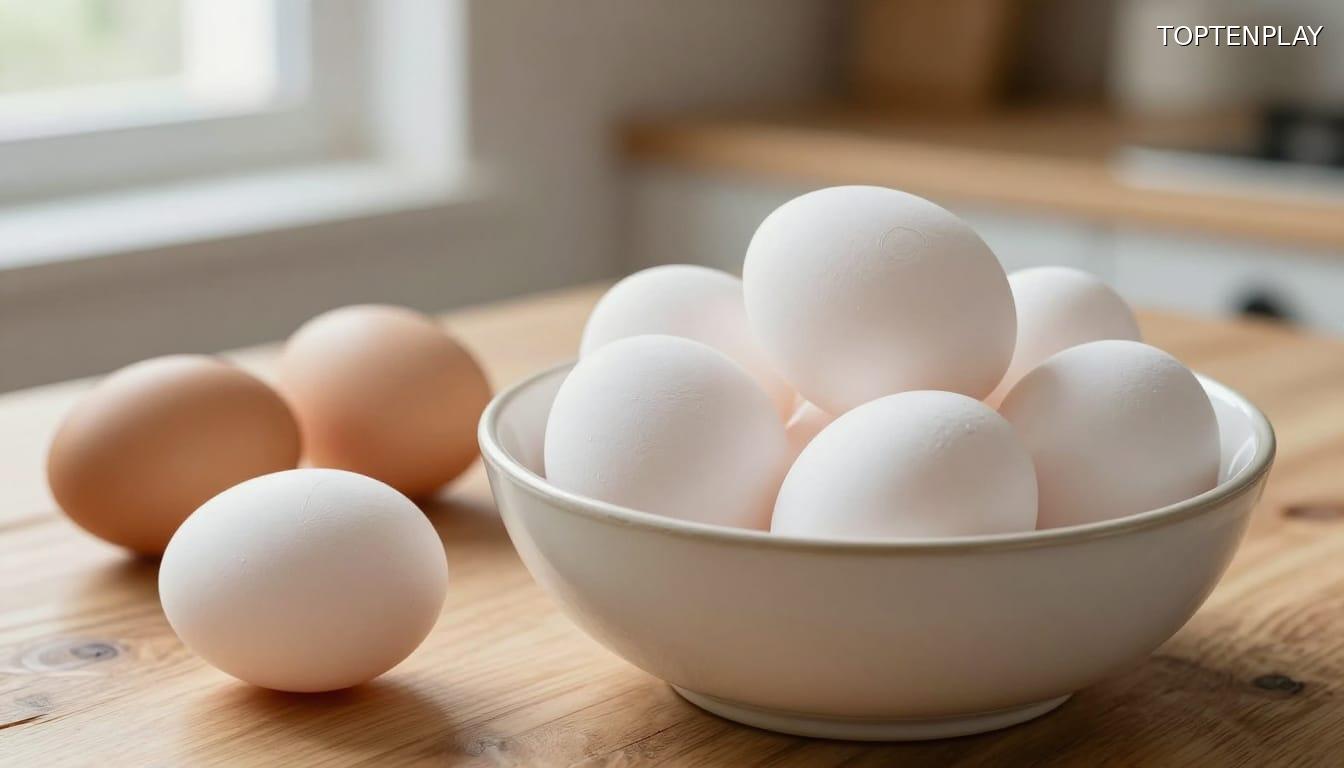
Most cooks get it wrong even before turning on the heat. The main obstacle to easy peeling lies not in the peeling technique, but in the choice of eggs. A counter-intuitive truth emerges from professional kitchens: ultra-fresh eggs are your worst enemies for hard boiling.
Science explains this anomaly. Freshly laid eggs have a low pH which causes a formidable adhesion between the white and the internal shell membrane. This chemical bond transforms every peeling attempt into a battle lost in advance, leaving unsightly craters on the surface.
Chefs reveal their secret: favor eggs that are 7 to 10 days old. This maturation period modifies the pH and naturally releases the membrane-white adhesion. Store-bought eggs, often stored for a few days before distribution, are perfectly suitable. On the other hand, those just harvested from the farm, symbols of highly valued freshness, almost systematically guarantee failure.
This revelation overturns established beliefs. Paradoxically, absolute freshness, a quality sought for so many products, here becomes a technical handicap. Waiting a week radically transforms the experience, offering incomparable results without changing your peeling gesture.
But the choice of eggs is only the first stone of a complete method that also abandons traditional cooking techniques.
The Revolutionary Technique That Changes Everything: Steam Rather Than Water
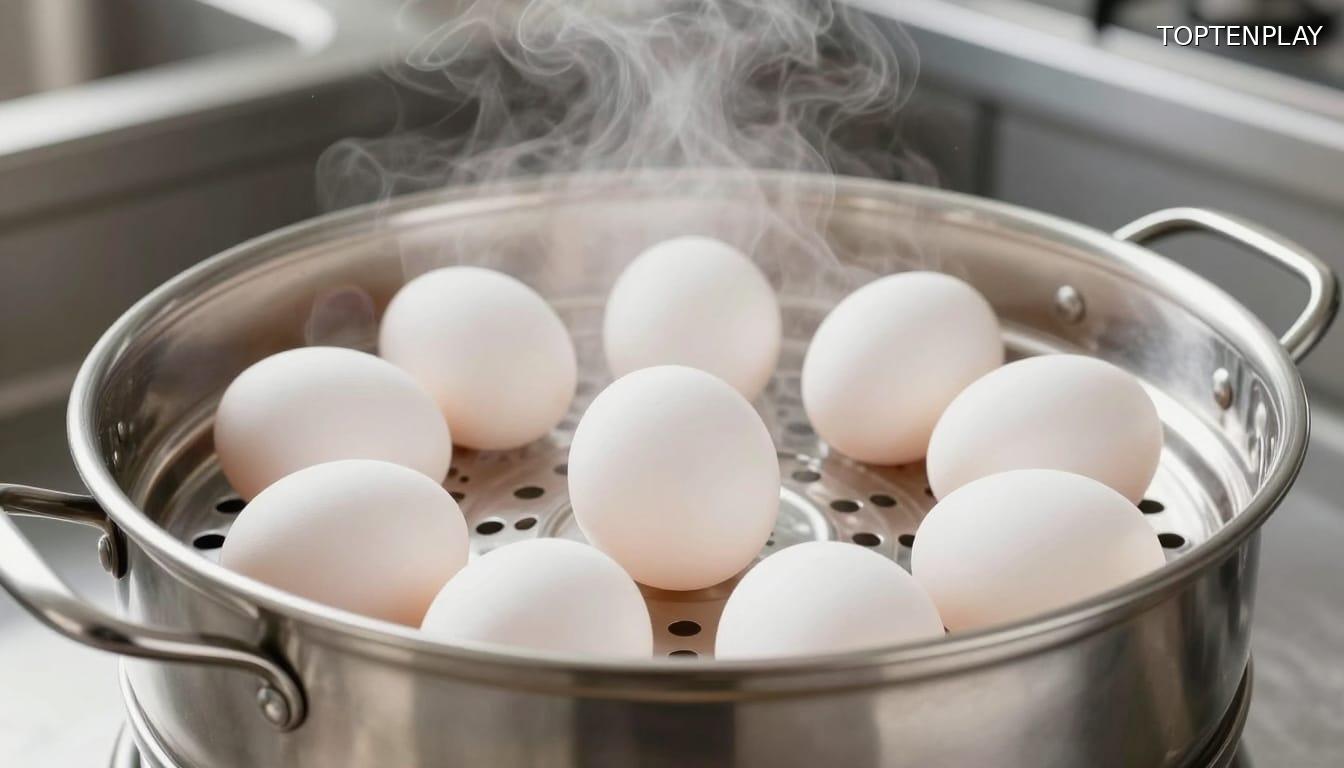
Beyond the choice of eggs, the cooking method itself requires a complete overhaul. Professional chefs have abandoned the traditional pot of boiling water for steaming, a revolutionary technique that radically transforms the results.
This approach fundamentally modifies the interaction between heat and the shell. Steam heats more uniformly and in a more controlled manner than boiling water, creating ideal conditions for a clean separation between the cooked white and the internal membrane. Professional cooks systematically use this technique in their brigades, guaranteeing impeccable eggs for salads, appetizers, and cold preparations.
Scientific validation joins culinary experience. Steam cooking eliminates the brutal thermal shocks caused by direct immersion in boiling water, a neglected factor that frequently damages the protein structure of the white and strengthens adhesion to the shell. The stable temperature of the steam preserves the integrity of the egg while ensuring even cooking.
This second step completes the judicious choice of mature eggs. Together, these two principles constitute the pillars of a professional approach that definitively eliminates peeling frustrations.
However, even with correctly chosen and steamed eggs, a final gesture determines the success or failure of the operation.
Thermal Shock: The Secret Weapon Of Professional Cooks
This decisive final gesture occurs immediately after cooking. Chefs transfer their cooked eggs without delay into an ice water bath, causing a brutal thermal shock that completes the membrane-egg white separation process initiated by the steam.
Timing is critical here. Immersion must occur within fifteen seconds following the end of cooking, while the white remains hot enough for the rapid thermal contraction to create a liberating space between the shell and the flesh. Gradual cooling at room temperature sabotages this essential mechanical effect.
The science behind this technique reveals a simple physical reality: the egg white contracts faster than the internal membrane during brutal cooling. This difference in speed generates a micro-space facilitating peeling, transforming a frustrating operation into a fluid gesture. Food chemistry laboratories have measured this differential contraction, empirically validating what professional brigades have been practicing for decades.
The ice bath thus completes the winning trilogy: mature eggs, controlled steam, immediate thermal shock. These three pillars constitute the complete arsenal of professional cooks, definitively eliminating chance from the equation.
This complete method now guarantees reproducible results, radically transforming the experience of any cook faced with the preparation of hard-boiled eggs.
The Guaranteed Result: Impeccable Eggs Every Time
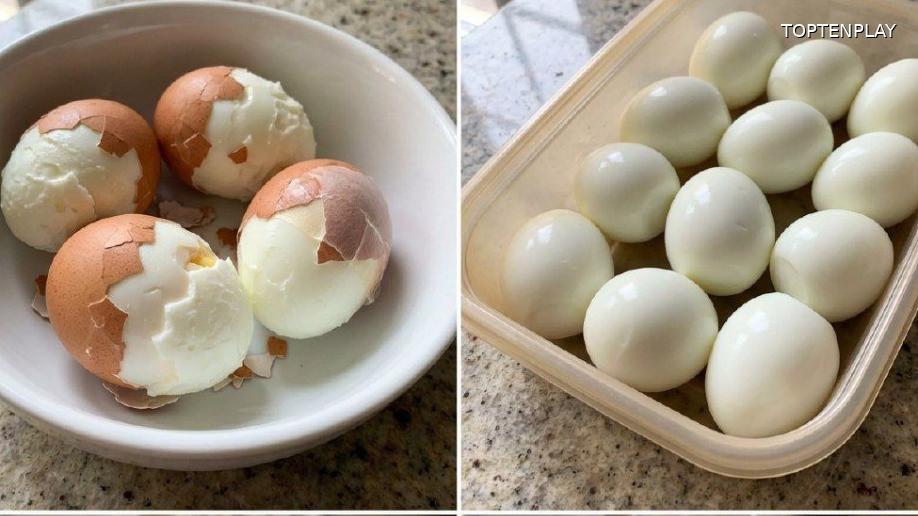
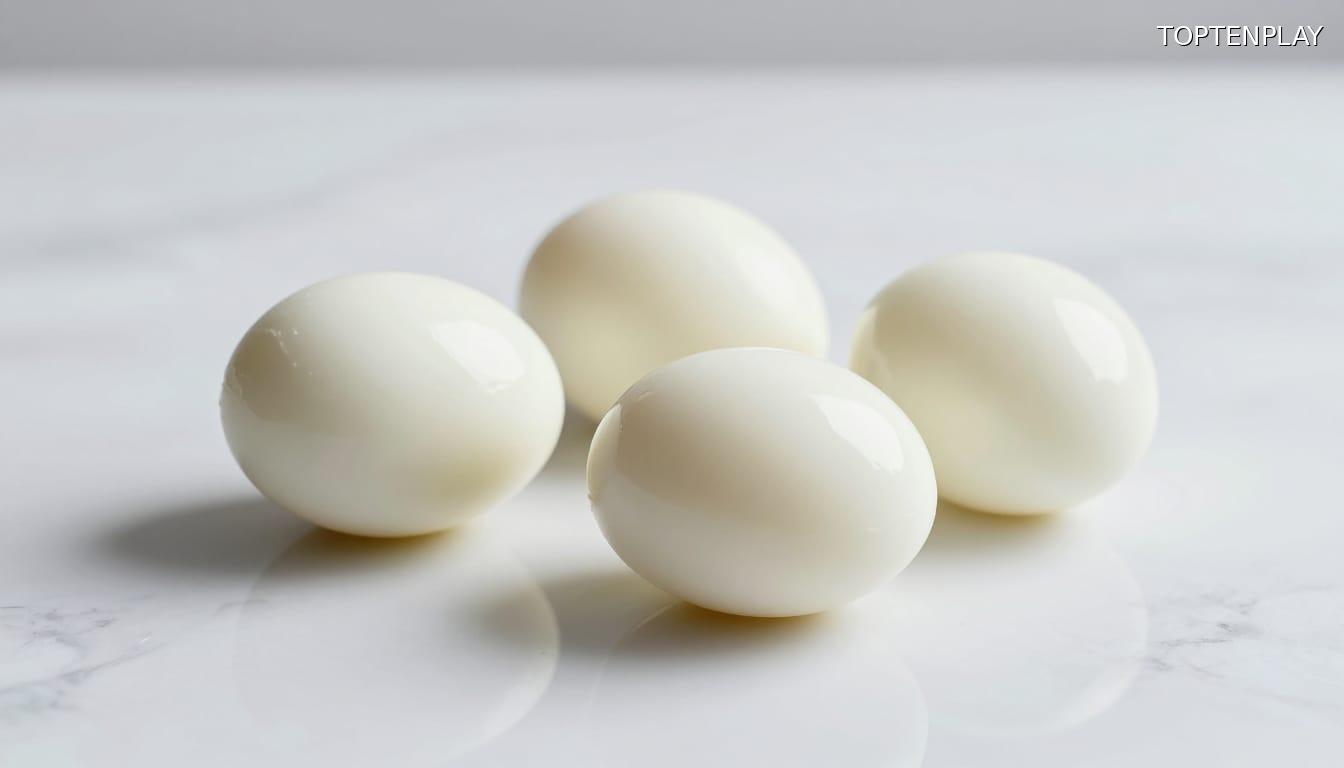
This method keeps its promise with remarkable consistency. The eggs reveal a smooth and immaculate surface, devoid of those unsightly craters that previously testified to laborious peeling. The shell now detaches in entire sections, taking the recalcitrant membrane with it without tearing the white flesh.
Reproducibility is the major asset of this approach. Unlike approximate techniques passed down by oral tradition, this scientifically validated trilogy eliminates randomness. Each cooking produces identical results, transforming a gesture of uncertainty into a mastered routine.
Professional brigades apply this method daily to prepare their deviled eggs, mixed salads, or garnishes. No chef would venture to serve cratered eggs on a gastronomic plate. The steam-thermal shock technique therefore stands as the essential professional standard.
For the amateur cook, this technical revelation marks the end of a recurring frustration. No more wasting eggs massacred during peeling, no more unsightly presentations during a Sunday brunch. Culinary science finally offers a definitive, accessible, and proven solution that radically transforms the relationship with this fundamental ingredient.