The Braiding Technique That Transforms Puff Pastry Into A Masterpiece
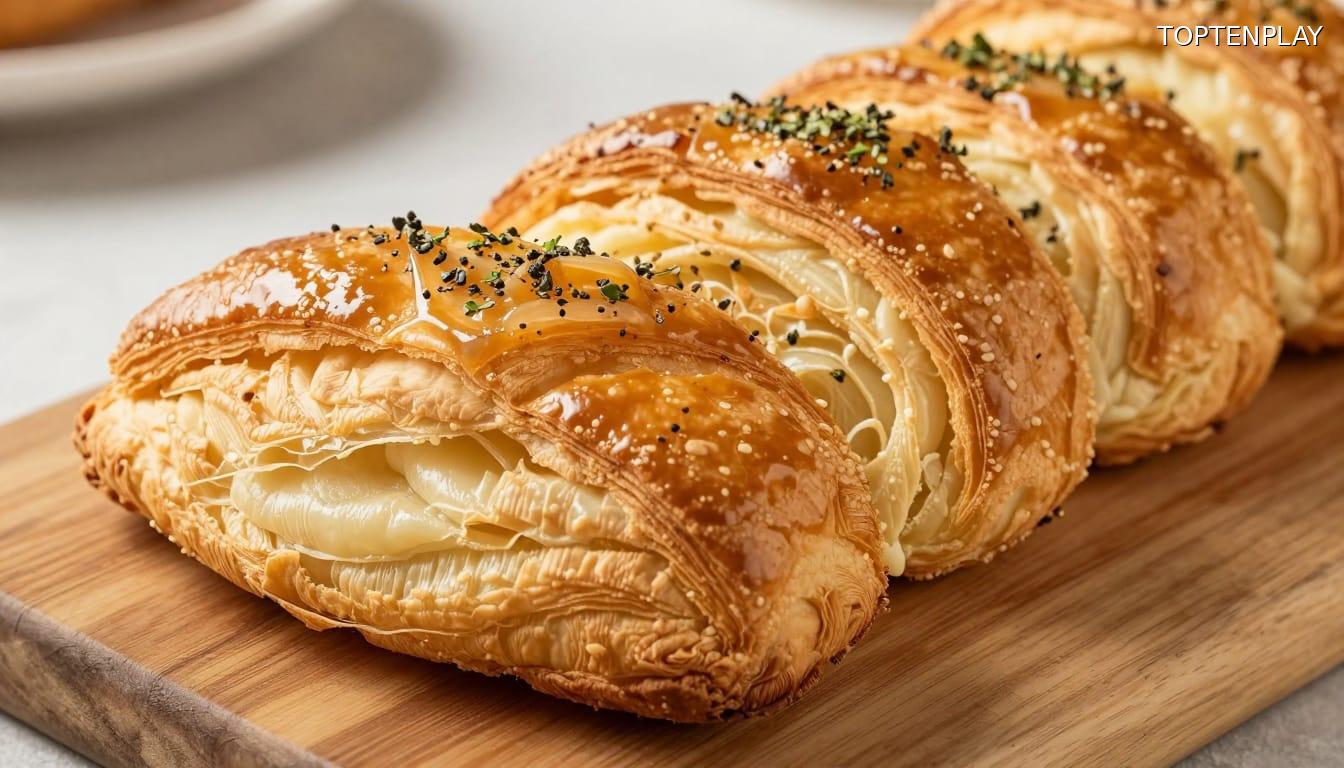
Behind every golden and crispy braid lies a reassuring truth: this presentation worthy of a professional bakery requires no special skills. The braiding technique, as visually spectacular as it may be, fulfills a precise and accessible function. By interlacing the strips of puff pastry, you hermetically seal the filling inside while creating that golden finish that impresses every time it comes out of the oven.
The balance is revealed at the first bite: the exterior offers that characteristic crunch while the interior reveals a melting heart where the cheese blends harmoniously with the other ingredients. Two simple sheets of puff pastry are enough to achieve this bakery-worthy result, without pastry training or sophisticated equipment.
The complete versatility of this method opens up an infinite field of possibilities. A savory version with ham, cheese, and vegetables for an elegant brunch, or a sweet variation filled with Nutella, apple compote, or fresh berries to satisfy gourmet cravings. The technique remains identical; only the filling changes according to the occasion or the preferences of the moment. This simplicity disguised as sophistication explains why puff pastry braids are as popular at family gatherings as they are at festive receptions. The secret lies in the regularity of the braiding, which guarantees uniform cooking and that much-sought-after artisanal appearance.
Winning Combinations For All Occasions
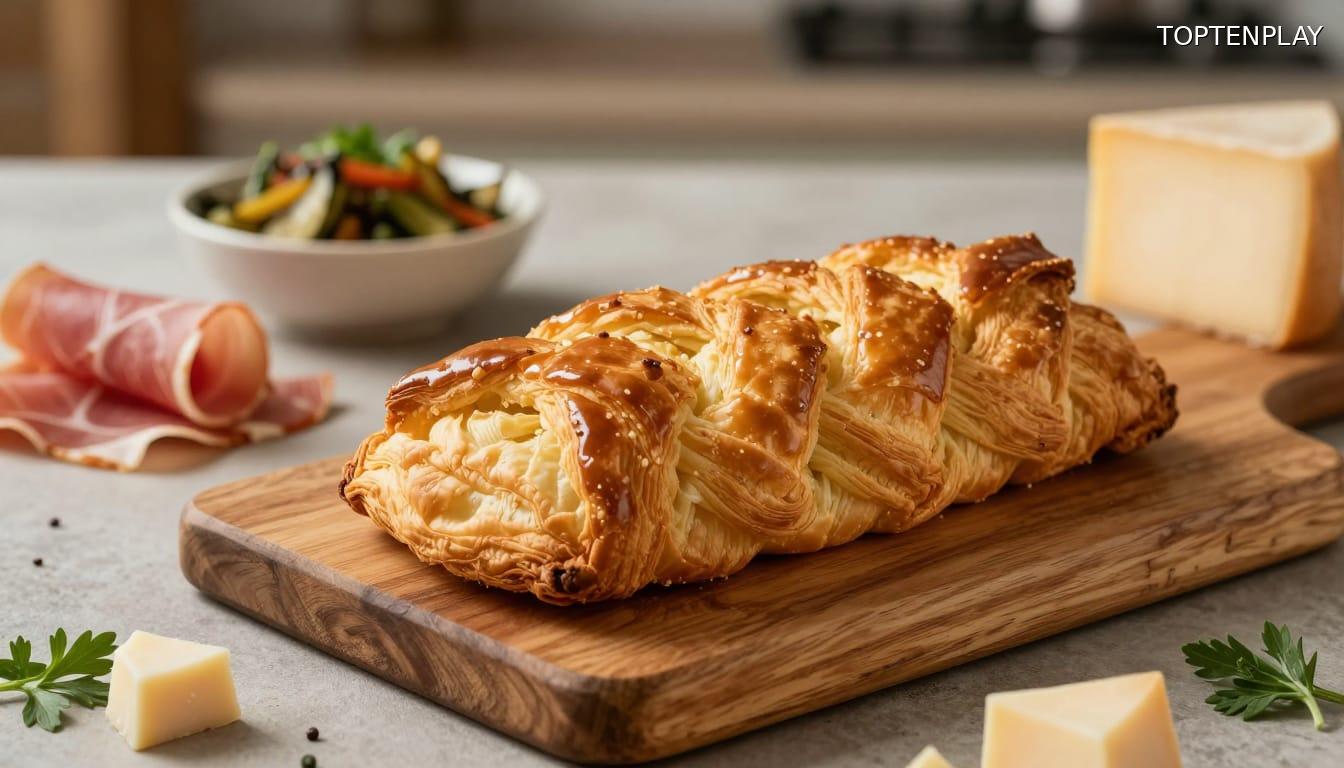
The basic formula relies on precise proportions: two thawed sheets of puff pastry accommodate one cup of finely sliced ham and one cup of cheese. This mathematical simplicity hides remarkable creative freedom in the choice of ingredients. Swiss, mozzarella, cheddar, or Gruyère each bring their distinct character, from delicate melting to aromatic power.
Sautéed vegetables transform the braid into a complete dish. Tender spinach, golden mushrooms, or colorful peppers integrate harmoniously provided they are previously cooked to avoid any excess moisture. Prosciutto advantageously replaces classic ham for a more refined version, particularly appreciated during Sunday brunches.
The sweet alternative deserves just as much attention. Generous Nutella, creamy cream cheese, artisanal jam, cinnamon-scented apple slices, or fresh berries create gourmet variations without changing the technique. A beaten egg applied with a brush before baking guarantees that characteristic golden finish, while fresh herbs (parsley, chives, thyme), coarse sea salt, or sesame seeds add the final touch.
This versatility explains why the puff pastry braid adapts to every moment: elegant brunch with friends, quick family snack, or festive appetizer during holiday gatherings. The ingredients change, the success remains constant.

The Layered Composition That Guarantees Success
This mastery of ingredients requires a precise understanding of their assembly. The savory filling starts with finely sliced ham or prosciutto, whose delicate texture facilitates uniform distribution on the dough. The cheese — whether Swiss for its sweetness, mozzarella for its elasticity, cheddar for its character, or Gruyère for its sophistication — must melt harmoniously without saturating the dough.
Vegetables require special attention: the preliminary sautéing step is not optional. Spinach, mushrooms, and peppers release their water during cooking. Cooking them before assembly eliminates this moisture that would transform a crispy braid into a soggy structure. A few minutes over high heat are enough to concentrate their flavors while preserving their texture.
The beaten egg plays a strategic double role. Applied with a brush to the braided surface, it creates a protective barrier that caramelizes during baking, producing that golden finish that evokes bakery windows. This simple step visually separates the amateur from the connoisseur.
The final aromatic garnishes — chopped parsley, fresh chives, or delicate thyme — transform the presentation just before serving. Their greenery contrasts with the gold of the dough, while coarse sea salt or sesame seeds add a tactile dimension. These seemingly minor details build the complete sensory experience that impresses guests even before the first bite.
Total Adaptability For Every Palate
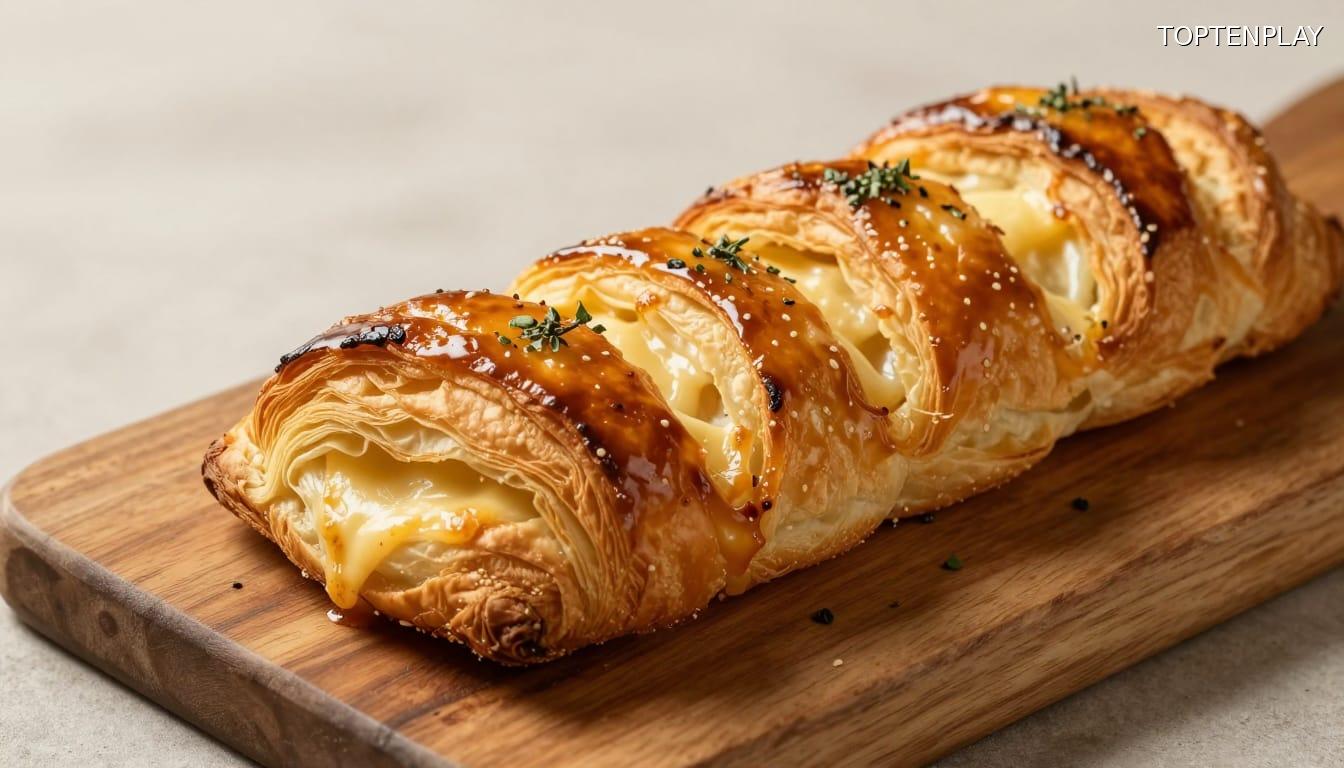
This proven structure transforms according to occasions and preferences. The savory version — artisanal ham, aged Gruyère cheese, melting spinach — is suitable for elegant brunches where sophistication and subtlety are sought. Replace the ham with Italian prosciutto, the cheese with mozzarella di bufala, and the braid acquires a Mediterranean dimension that impresses during festive appetizers.
The sweet alternative uses the same technique for a radically different result. Generously spread Nutella, cinnamon-spiced apple filling, or fresh berries mixed with cream cheese create desserts worthy of a pastry shop without requiring specialized training. Cinnamon sugar sprinkled before baking caramelizes on the surface, adding a layer of aromatic complexity.
This versatility meets distinct needs: the busy parent finds a nutritious snack for the week, the ambitious host a centerpiece for end-of-year receptions, the Sunday cook a satisfying project without technical stress. The same technique, the same gestures, infinitely variable results.
The real advantage lies in this capacity for instant adaptation. No parallel recipe is necessary — only the ingredients change. This conceptual simplicity masks a versatility that eliminates culinary monotony. Every baking becomes an opportunity for reinvention, every braid a new taste exploration accessible in less than an hour, from preparation to service.