On Saturday mornings, when the knife blade hits the lime and that tangy scent — almost sharp, almost sweet — fills the kitchen, that’s the beginning. I’ve been making this green market water ever since I tasted a similar version at a fruit stand in Mexico City. Nothing complicated. Just a few fresh ingredients, a blender, and a bit of patience to let it rest in the fridge.
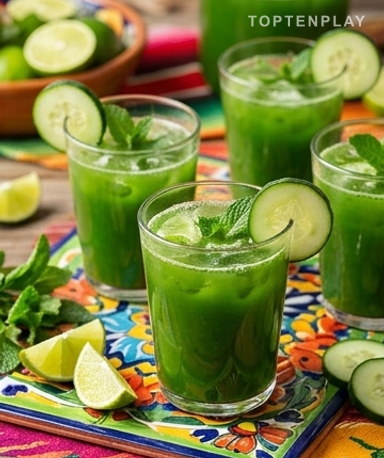
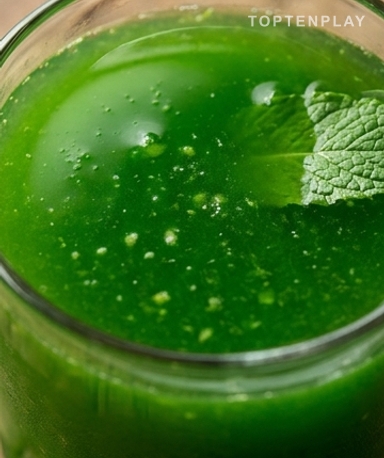
In the pitcher, the color is a deep emerald green, slightly cloudy — not the transparency of industrial juice, but that of water that has truly been passed through something alive. As you draw closer, the mint hits first, clean and cold just from the aroma. Then the lime takes over, rounder and fruitier. The first ice-cold glass has that slight density of blended cucumber, that almost imperceptible texture that makes you sip slowly, not gulp it down.
Why you’ll love this recipe
Ingredient Notes
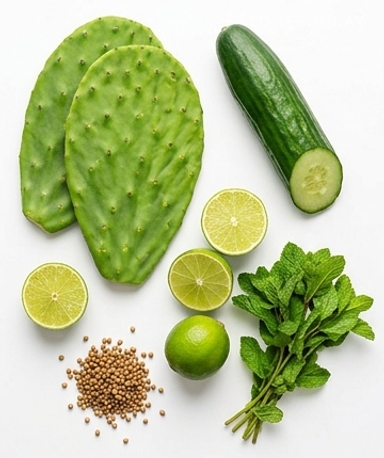
All the ingredients for market green water: fresh nopal, cucumber, limes, mint, and coriander seeds.
- Nopal (cactus paddle) : This is the flattened leaf of the nopal cactus, used in Mexican cuisine for centuries. Raw, it looks like a large green oval leaf with thorns — the seller often removes them before sale. Its raw texture is firm and slightly sticky, a bit like okra. After blending and straining, this texture completely disappears. If you can’t find fresh nopal, jarred nopal (Mexican grocery stores, some organic shops) works well: rinse it thoroughly under cold water before using.
- Whole cucumber — skin on : Keep the skin. It adds green color and a slight bitterness that balances the lime. Choose a firm cucumber, not soft to the touch — a tired cucumber will result in bland water. If yours is waxed (supermarket cucumbers often are), run it under hot water and scrub it before cutting.
- Limes — real, fresh, not bottled : Bottled lime juice is a no. The acidity is there, but all the aromatic elements are gone. You need three to four limes that feel heavy for their size — light limes are often dry. Roll them on the counter before cutting to release more juice.
- Fresh mint : Classic spearmint works very well. Avoid peppermint, which dominates everything — it’s too aggressive here. A good handful, stems included. Before using, lightly bruise the leaves in your hand: it awakens the essential oils and the water will be significantly more fragrant.
- Coriander seeds (optional but recommended) : Not coriander leaves (cilantro) — the seeds. Lightly crushed in a mortar, they provide a warm, slightly citrusy note that hums quietly in the background. It’s the kind of detail people can’t quite identify but that makes the water more complex. Half a teaspoon is enough.
Preparing the nopal: the only step that requires attention
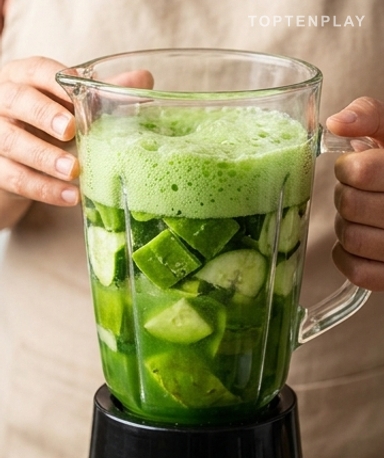
If you have fresh nopal, start there. Lay the paddle flat on the board and run the knife to remove thorns if they are still there — slide the blade flat, you’ll hear the sharp snap of each thorn coming off. Then cut into rough chunks of about 3 cm, no need to be precise. In the blender, put the nopal with half of the cold water and blend for a full minute. The green color will intensify, the texture will become foamy and slightly viscous — this is normal, it’s the natural mucilage of the nopal. Don’t stop there.
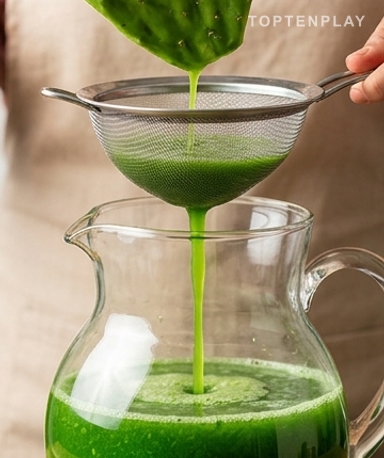
The part everyone messes up: straining
Almost everyone who fails at making this water fails here. Pouring the blended mixture directly into the pitcher without straining means keeping all the slimy texture of the nopal — and then, it’s frankly less pleasant to drink. Pass the mixture through a fine-mesh strainer or a clean cloth over a large bowl. Press with the back of a spoon to extract all the liquid. What remains in the strainer is a fibrous green pulp — discard it. What flows into the bowl is an intense green, smooth and clean. That’s where you see the difference.
Assembling the water and finding the balance
Now add the cucumber (with skin, roughly chopped), the lime juice, and the bruised mint to the blender with the remaining water. Blend at full power. The smell escaping the blender at this moment is exactly like an open-air market — fresh, herbaceous, slightly acidic. Strain a second time. Combine the two strained liquids in the pitcher, taste. Too acidic? Add a bit of water. Flat? An extra half lime. If you’re using lightly crushed coriander seeds, this is when they go in — directly into the pitcher, not the blender.
Why I never skip the resting time anymore
Tasting the water right after making it is good. Tasting it an hour later, straight from the fridge, is better. Two hours later, the flavors have melded: the mint is less aggressive, the nopal has completely receded, the lime has become softer and rounder. Put the pitcher in the refrigerator for at least an hour before serving. Serve in tall glasses straight from the fridge — the water is already cold enough, it doesn’t need to be diluted with ice. A slice of cucumber or a sprig of mint on the rim, and that’s it.
Tips & Tricks
- If you have no nopal at all, replace it with a small handful of raw spinach and a basil leaf. You’ll lose the specific herbal note of the nopal, but the green color and freshness will be there.
- The water keeps for 48 hours in the fridge in a closed jar. After that, the mint starts to take on a dark hue like a cold tea leaf, and the taste degrades quickly — make an amount you can finish in two days.
- To adjust without sweetening, you can add half a green apple (peeled) when blending the cucumber. It adds roundness without masking the lime’s acidity — ideal if your limes are particularly powerful that day.
Where can I find fresh nopal?
Mexican or Latin American grocery stores are the most reliable source, but you can also find them in some exotic grocers or organic markets. If you can’t find any, canned or jarred nopal works very well — rinse it thoroughly under cold water to remove the brine before using.
Do I really have to strain it, or can I keep the pulp?
You really must strain it. Raw nopal contains natural mucilage (the same slimy substance as okra) that makes the texture unpleasant if not removed. After straining, only a smooth, colored water remains — exactly what we want. A fine strainer or clean cloth does the job in under two minutes.
How long does this green water last?
48 hours maximum, in an airtight jar in the refrigerator. Beyond that, the mint turns dark and the taste degrades quickly. Make an amount you can finish in two days — with one liter for 4 people, it’s rarely an issue.
The water is too acidic for me. How can I soften it without sugar?
Add half a green apple (peeled) during blending with the cucumber — it adds roundness without masking the lime. Alternatively, simply dilute with a bit more cold water, or replace some lime with unsweetened coconut water for a smoother, rounder note.
Can I make this recipe without a blender?
Yes, with a bit more effort. Finely grate the nopal and cucumber, then squeeze everything through a clean cloth by twisting hard. For the lime and mint, infuse the bruised leaves and juice directly in the cold water for 30 minutes. The result will be slightly less intense in color but just as good.
Can I vary the ingredients according to the season?
Yes, and it’s highly recommended. In summer, add a few pieces of watermelon when blending with the cucumber — the color turns a pinkish-green and it’s very refreshing. In winter, a piece of fresh ginger (1 cm) blended with the cucumber adds warmth without being heavy. The principle remains the same: blend, strain, balance.
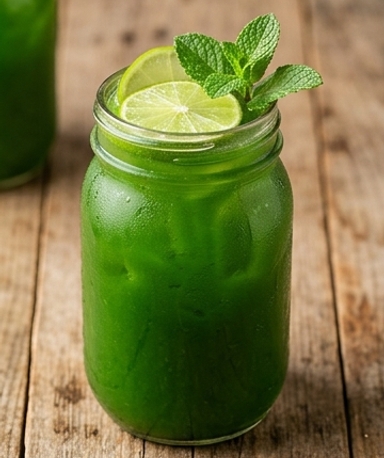
Green Water with Nopal, Cucumber, and Lime
Mexican
Drink
A refreshing Mexican agua fresca made with nopal, cucumber, lime, and fresh mint. Prepare in 15 minutes and let rest in the cold for an intense, balanced drink.
Ingredients
- 300g fresh nopal (2 medium paddles) or 200g well-rinsed canned nopal
- 1 medium cucumber with skin (about 300g)
- 4 limes (about 100ml juice)
- 20g fresh mint (1 bunch)
- 1 liter cold water, divided
- ½ tsp lightly crushed coriander seeds (optional)
Instructions
- 1Cut the nopal into rough chunks (3 cm). Blend with 500ml cold water at full power for 1 minute.
- 2Strain through a fine-mesh strainer over a bowl. Press the pulp with the back of a spoon to extract all liquid. Discard pulp.
- 3Roughly chop the cucumber (with skin). Bruise the mint leaves in your palm. Juice the limes.
- 4Blend the cucumber, mint, lime juice, and the remaining 500ml of water at full power for 1 minute.
- 5Strain this second mixture through the same strainer. Combine both liquids in a pitcher.
- 6If using coriander seeds, lightly crush them in a mortar and add them directly to the pitcher. Taste and adjust acidity (more water if too sharp, half a lime if too flat).
- 7Refrigerate for at least 1 hour before serving. Pour into tall cold glasses and garnish with a cucumber slice or a sprig of mint.
Notes
• Storage: 48 hours maximum in the refrigerator in an airtight jar. Mint starts to degrade after that.
• Without nopal: replace with a large handful of raw spinach (30g) + 1 basil leaf. No slimy texture to deal with, but color and freshness remain.
• To naturally sweeten: add half a green apple (peeled, about 80g) when blending the cucumber.
Nutrition Facts (per serving, estimated)
| 32 kcalCalories | 1gProtein | 7gCarbs | 0.3gFat |