A Culinary Heritage Born Of Necessity
In American kitchens during hard times, certain recipes transcended their simple nourishing function to become true symbols of family resilience. “Poor Man’s Stew” belongs to this category of ancestral dishes, passed down from generation to generation as a worthily developed survival skill. The grandfather who bequeathed this recipe was not just passing on a culinary technique, but an entire philosophy: feeding six people with exactly five accessible ingredients, without compromising on satiety.
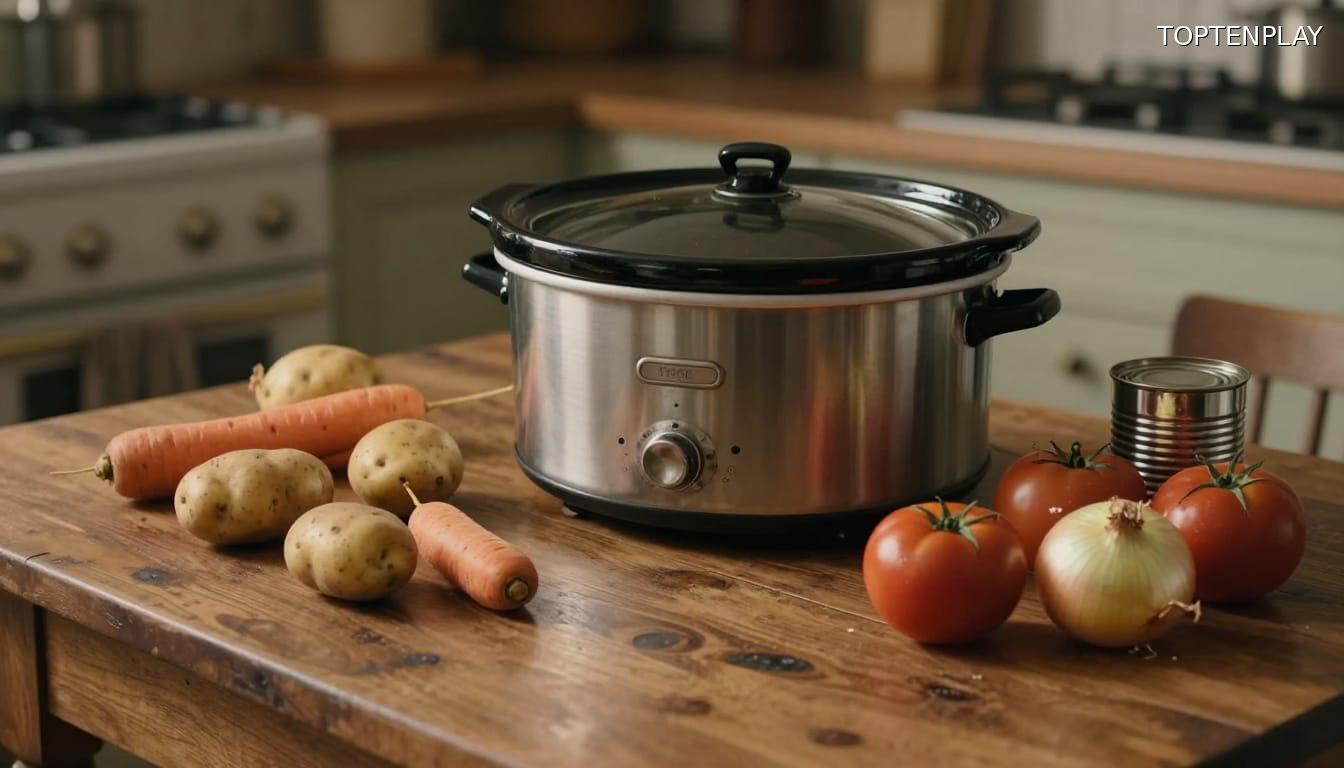
The radical economy of this preparation relies on universal components that modest households could obtain even during crises: a pound of ground beef, four russet potatoes, four medium carrots, one yellow onion, and two cans of tomato sauce. No superfluous ingredients, no exotic spices, only the essentials combined with intelligence. This apparent austerity hides a remarkable generosity in the final result.
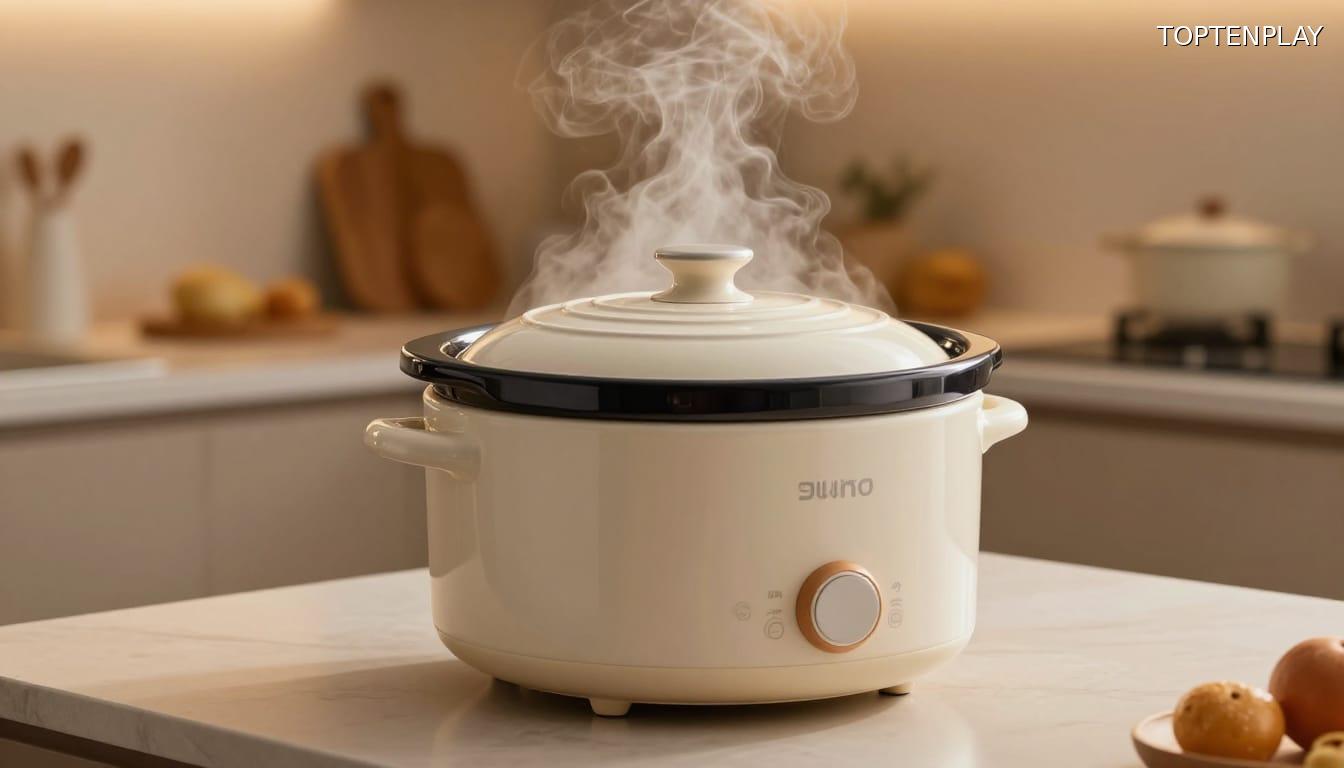
The slow cooker naturally established itself as the preferred tool for this subsistence cooking. This appliance allowed families to maximize energy resources while freeing up time for other essential tasks. While the stew simmered slowly for hours, life continued without constant supervision needed. This approach perfectly embodied the pragmatic spirit of eras where every minute and every cent counted, transforming constraint into culinary opportunity.

Strategic Preparation: Simplicity And Efficiency
This ancestral method reveals its modernity from the very first steps: it all begins with the methodical browning of the ground beef in a hot skillet. Six to eight minutes are enough to transform raw meat into caramelized raw material, releasing those deep aromas that only the Maillard reaction can produce. The choice of 80-85% lean beef was not arbitrary: this fat content guaranteed both flavor and financial accessibility, far from unaffordable noble cuts.
The partial elimination of excess fat after cooking testified to an instinctive understanding of balance. Removing most of the fat prevented a stew that was too heavy, but keeping a fraction preserved that gustatory richness indispensable to subsistence dishes. During this browning, no minute was wasted: hands were simultaneously active on the vegetables, peeling potatoes into regular one-inch cubes, slicing carrots into calibrated half-inch rounds, chopping the yellow onion.
This precise orchestration transformed a simple recipe into a ballet of temporal efficiency. Every gesture counted, every second saved represented a victory against the fatigue of endless days. The standardization of cuts guaranteed uniform cooking in the slow cooker, preventing some pieces from falling apart while others remained crunchy. This rationalization of culinary work perfectly reflected the spirit of times when optimization was not a managerial fad, but a vital necessity to hold out until the next meal.
Layered Assembly: The Key To Uniform Cooking
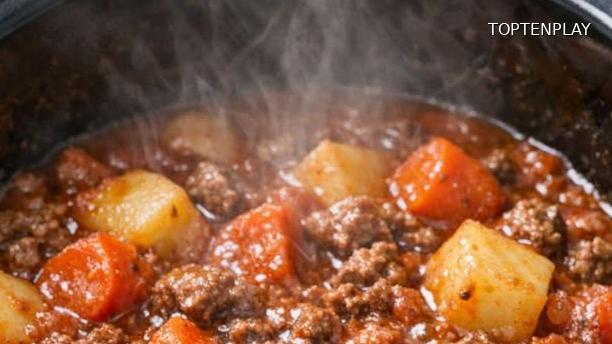
This vertical architecture constituted the true technical secret of the recipe. At the bottom of the slow cooker, the vegetables formed a dense and regular base: potatoes, carrots, and onion spread out in a homogeneous layer, creating an absorbent bed that would progressively capture the meat juices. This arrangement was not accidental but strategic, calculated so that each vegetable receives exactly the same exposure to the rising heat.
The browned beef then took its place, meticulously dispersed over this vegetable foundation. This balanced distribution guaranteed an essential promise: every ladle dipped into the stew would come up with its share of protein, avoiding those unequal portions where some guests find themselves with only vegetables while others monopolize the meat. In households with tight budgets, this distributive equity was miniature social justice.
Then came the crucial moment of the two cans of tomato sauce. Thirty ounces of acidic pulp flowed uniformly, coating meat and vegetables without a drop of water diluting this aromatic concentration. The explicit instruction “Do not add water” contained all the accumulated empirical wisdom: the vegetables would naturally release their moisture during the hours of simmering, transforming the tomato sauce into thick and velvety gravy. One or two circular movements were then enough to delicately integrate the layers, preserving the structural integrity of the potatoes while initiating the fusion of flavors that would occur slowly, without human intervention.
The Science Of Slow Cooking: Transformation Without Intervention
Once the lid was closed, the slow cooker began its silent work. During the following hours, a chemical and thermal process was orchestrated without witness: the plant cells of the potatoes and carrots gradually released their trapped water, creating a natural broth that rose slowly through the layers. This endogenous moisture, combined with the juices rendered by the meat, transformed the concentrated tomato sauce into smooth gravy without any external liquid being necessary.
This domestic alchemy relied entirely on thermal patience. At a constant low temperature, the beef fibers broke down into tenderness while the starch from the tubers thickened the sauce, creating that characteristic velvety texture. The initial minimal mixing preserved the architecture of the vegetables: the potatoes kept their cubic shape rather than disintegrating into formless mash, the carrots kept their melting firmness.
This method perfectly embodied the philosophy of “hard times”: maximizing results while minimizing effort. No constant supervision, no seasoning adjustments, no complex culinary techniques. The slow cooker accomplished alone what poverty imposed as a necessity – transforming raw and accessible ingredients into a substantial meal for six people. Each portion contained meat and vegetables equally, each ladle promised the same nutritional density, embodying that food justice that the grandfather had instinctively codified in his survival recipe.