Pokémon Card Queue Turns Deadly: When Collectible Passion Becomes Violence
What should have been a typical Saturday morning wait for Pokémon cards transformed into a near-fatal bloodbath outside a GameStop in Colma, California. The innocuous scene of collectors lining up for trading cards became the stage for shocking violence that left one man fighting for his life and two others behind bars.
The incident erupted at 9:20 a.m. when two individuals attempted to cut in line ahead of waiting customers. This seemingly minor breach of queue etiquette ignited an altercation that would escalate far beyond anyone’s imagination. The morning’s anticipation for collectible cards quickly devolved into a brutal assault involving makeshift weapons and critical injuries.
Local authorities described the incident as “deeply troubling”, emphasizing that no card or collectible justifies risking human lives. The stark contrast between the childlike joy of Pokémon collecting and the adult violence that unfolded reveals a disturbing underbelly of consumer culture gone wrong.
The transformation from peaceful queue to crime scene highlights how collectible hysteria can push individuals past rational boundaries. What began as enthusiasm for trading cards crossed into territory where passion became pathology, where patience gave way to predatory behavior.
The GameStop parking lot, typically filled with gaming enthusiasts and families, became an unlikely arena for attempted murder. This incident forces uncomfortable questions about the psychological triggers that can turn collectors into criminals when their desires are challenged.
Glass Jar Attack: The Brutal Weapons That Turned A Line Dispute Into Attempted Murder
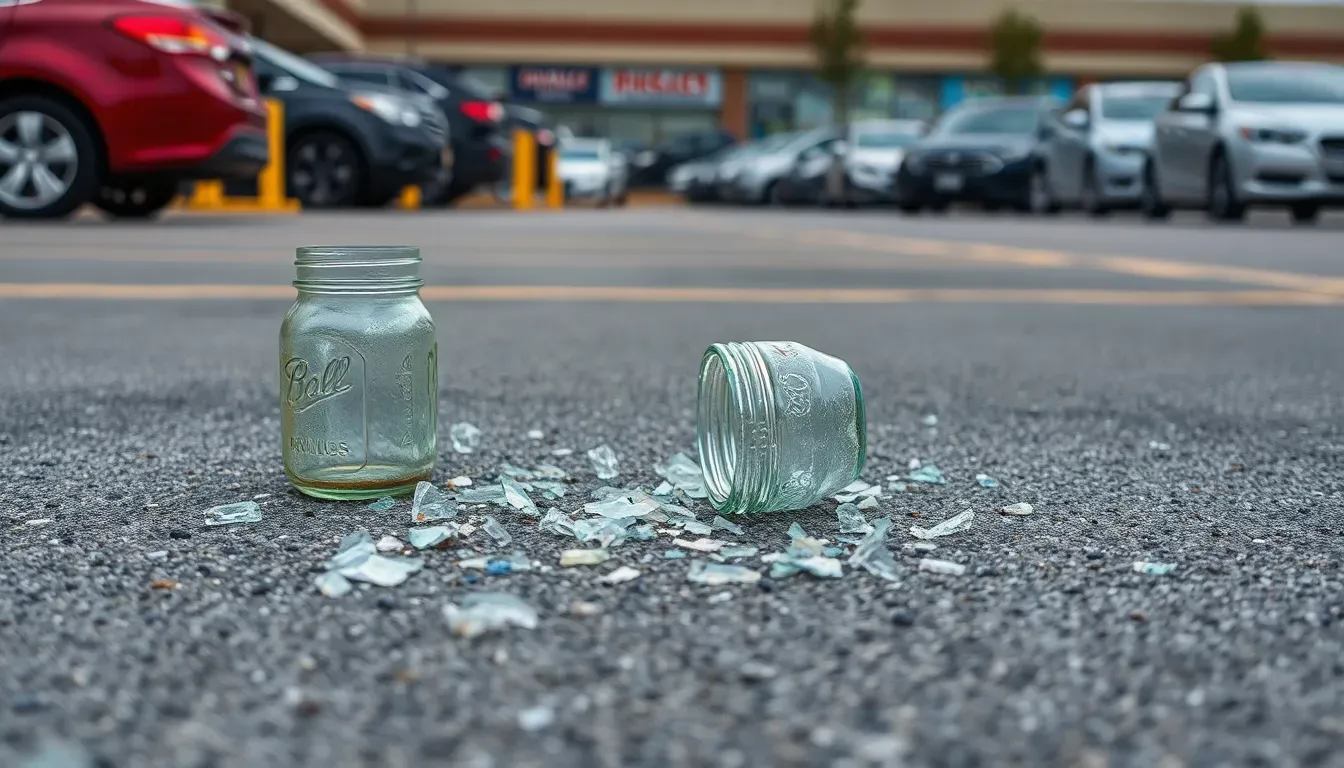
The escalation from words to weapons happened with terrifying speed. Miguel Orellanos-Flores reached for a glass mason jar, transforming an everyday object into a deadly weapon. Without hesitation, he struck the victim directly in the head, shattering both the jar and any pretense of civilized behavior.
The broken glass scattered across the pavement, but Isaiah Calles saw opportunity in the debris. He grabbed one of the razor-sharp shards and began stabbing the victim repeatedly. What started as a single blow had become a coordinated assault with improvised weapons that could have easily proven fatal.
The makeshift nature of the attack reveals a chilling spontaneity. These weren’t premeditated weapons brought to the scene, but ordinary objects weaponized in moments of rage. A simple mason jar became a bludgeon, its fragments transformed into stabbing instruments capable of inflicting critical injuries.
The victim’s wounds were severe enough to require immediate hospitalization. The multiple stab wounds from the glass shards created life-threatening trauma that medical professionals worked frantically to address. Emergency responders found a scene more resembling a street fight than a retail parking lot.
Both suspects now face charges of assault with a deadly weapon, battery resulting in serious injury, and conspiracy to commit a crime. The conspiracy charge suggests prosecutors believe this wasn’t random violence but coordinated criminal behavior that turned a GameStop queue into an attempted murder scene.

Victim’s Quick Thinking Leads To Swift Justice: License Plate Photos Despite Critical Injuries
Even as blood pooled beneath him, the wounded victim refused to let his attackers escape. While Miguel Orellanos-Flores and Isaiah Calles fled toward their separate vehicles, believing they had left behind only a broken man and scattered glass, their victim was already planning their downfall.
Despite suffering multiple stab wounds and a severe head injury, the man managed to photograph both attackers’ license plates as they sped away. His presence of mind in those critical moments would prove to be the key that unlocked swift justice.
The photos provided law enforcement with everything they needed. Within hours of the brutal assault, police had tracked down both suspects and placed them in custody. No lengthy investigation, no dead ends, no unsolved case files gathering dust.
« Before the suspects were caught, police said they split from the scene, bolting in two different cars, » according to reports. But their escape plan crumbled against one man’s determination to see justice served.
The victim’s quick thinking transformed him from casualty to hero. While medical professionals worked to stabilize his condition, detectives were already building an airtight case thanks to his decisive action under extreme duress.
Both suspects now face the full weight of the law, with charges that could result in significant prison time. The wounded man, meanwhile, has been reported in stable condition, his physical recovery matching his remarkable composure during the attack.
His courage ensured that what could have been a perfect crime became a textbook example of swift justice.

Viral Video Exposes Dark Side Of Collectible Culture: When Hobbies Turn Hostile
While justice was served swiftly, the damage to the collectible community’s reputation had already begun spreading across social media platforms. The shocking footage of the GameStop brawl quickly went viral, transforming what should have been a private moment of violence into a public spectacle viewed by millions.
The video reveals more than just a brutal assault—it exposes the toxic underbelly of modern collectible culture. What was once seen as an innocent hobby has morphed into something far more dangerous, where passionate collectors become willing combatants over pieces of cardboard.
Local authorities didn’t mince words about the incident’s broader implications. They emphasized that no collectible, regardless of its rarity or value, is worth risking human lives. The message carries weight as collectible hysteria continues to fuel increasingly aggressive behavior at retail locations nationwide.
The GameStop in Colma, once just another suburban gaming store, now stands as a symbol of how consumer obsession can spiral into life-threatening violence. The location that should have been buzzing with excited collectors instead became a crime scene littered with broken glass and blood.
As Miguel Orellanos-Flores and Isaiah Calles face serious charges including assault with a deadly weapon and conspiracy, their case serves as a stark warning. The viral footage they never intended to create has become a cautionary tale about what happens when collecting passion crosses the line into criminal violence.
The collectible community must now reckon with this dark chapter in its history.