📌 Fried cake without eggs or oven: how to succeed with this express recipe using only water, flour, and sugar
Posted 24 January 2026 by: Admin
The Perfect Egg-Free Base: Essential Ingredients
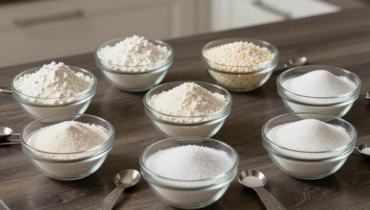
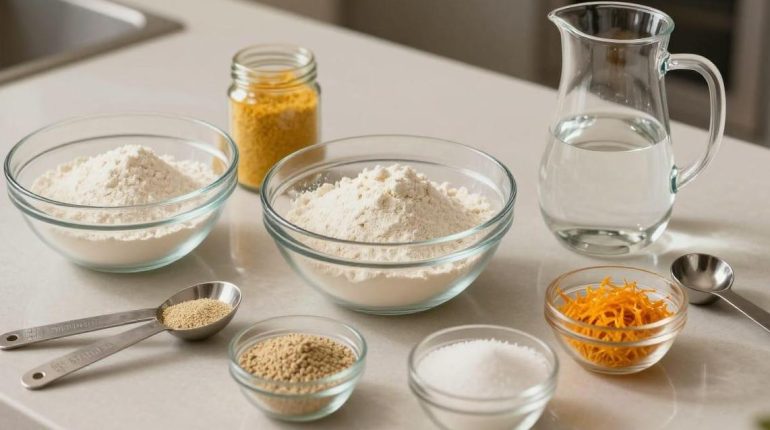
This recipe relies on a simple alchemy: transforming pantry ingredients into a gourmet treat. The secret lies in the methodical activation of the dry yeast. Dilute 5 grams in 160 ml of lukewarm water – a crucial temperature to wake up the ferments without killing them. Immediately stir in 8 grams of vanilla sugar and 2 tablespoons of white sugar: these carbohydrates feed the yeast and trigger the fermentation process.
Grated orange zest brings an aromatic freshness that balances the richness of the dough. Add 300 grams of sifted flour, 2 tablespoons of oil for smoothness, and half a teaspoon of salt to reveal the flavors. The absence of eggs is not a constraint but a creative liberation: the yeast perfectly compensates for their binding and aerating role.
This minimalist base proves that successful baking requires neither expensive ingredients nor sophisticated equipment. Each element plays a precise role in the final gustatory structure. Magic happens when these ordinary components merge under the effect of fermentation, creating a honeycomb structure ready to reveal its potential during the next decisive step.
The Preparation Technique: When Simplicity Becomes Mastery
Once the yeast is activated, the dough enters its critical phase. Knead vigorously for 8 to 10 minutes until an elastic and non-sticky texture is obtained. This mechanical work develops the gluten network that will trap the fermentation gases. Form a smooth ball, cover with a damp cloth, and let rest for 60 minutes in a warm place – the dough must double in volume.
This first rise transforms the compact mass into an airy structure. Then degas with a firm punch to drive out excess air, then divide into equal 50-gram portions. Shape each piece into a regular ball between your palms: uniformity guarantees even cooking. Slightly flatten these portions, arrange them on a floured surface without touching each other.
Allow a second rest of 20 minutes. This time allows the yeasts to resume their activity after shaping. The dough pieces swell visibly, a sign that fermentation is reaching its peak. This double rise – a technique borrowed from traditional bakers – ensures the characteristic interior softness of these treats. The dough is now ready to face the intense heat that will reveal all its golden flavor.
Pan Cooking: The Crispy Alternative to the Oven
Heat the frying oil in a deep skillet over medium heat. The ideal temperature is between 170 and 180°C – test by dipping a piece of dough: it should rise immediately while sizzling gently. Excessive heat burns the outside without cooking the core, while lukewarm oil soaks the dough with grease.
Gently place 3 to 4 spaced dough pieces in the oil bath. They swell spectacularly upon contact with the heat, almost doubling in volume in a few seconds. Flip them after 2 minutes with a slotted spoon as soon as a golden crust forms. The opposite side requires the same amount of time to reach this uniform caramel hue. Monitor constantly: the line between appetizing golden and burnt is thin.
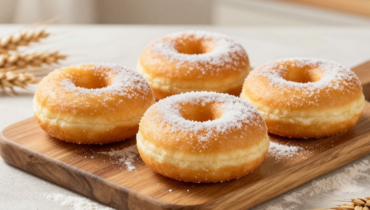
Drain immediately on several layers of paper towels. This step removes excess surface oil without altering the crispness. Repeat the operation in successive batches while maintaining a constant temperature. Each yeast doughnut comes out of the pan with a crunchy crust trapping an airy and warm interior. This ancestral method, accessible without sophisticated equipment, transforms your kitchen into a gourmet laboratory where the scent of caramelized orange already announces the tasting.
The Final Touch: Sugar Coating and Tasting
Pour granulated sugar into a wide dish while the doughnuts are draining. As soon as they can be handled – still hot but manageable – dip them one by one into this crystalline bath. Roll them vigorously: the residual heat imperceptibly melts the crystals which adhere in an irregular sugar crust. This light caramelization amplifies the contrast with the soft orange-scented core.
Enjoy them warm to capture the perfect balance between external crunch and internal tenderness. The sugar cracks under the tooth before revealing this airy crumb that evokes carnival doughnuts, without the technical complexity or the cost of traditional recipes. Once cooled, they keep their texture for three days in an airtight box, although the crispness gradually fades.
Vary the pleasures by substituting the orange with grated lemon or a pinch of cinnamon mixed with the coating sugar. This recovery recipe, born from ingenuity in the face of shortages, proves that with three basic ingredients and a mastered technique, indulgence remains accessible. The lingering citrus scent in the kitchen long recalls this culinary transformation where budgetary constraints give birth to savory creativity.