📌 Empty tuna cans: how to transform them into plant pots and decorative candle holders
Posted 26 January 2026 by: Admin
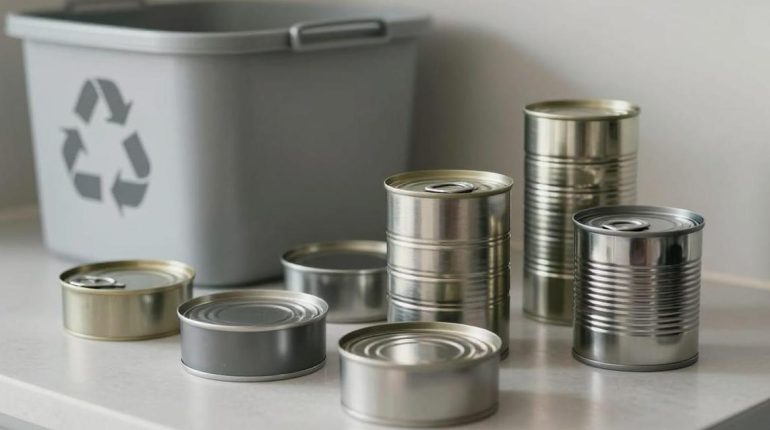
The Error We All Make: Throwing Away Tuna Cans
Every day, millions of tuna cans end their journey in our trash cans. This automatic gesture, repeated in millions of homes, represents an unrecognized waste of a precious resource. Canned tuna, popular for its richness in Omega 3 and recommended by nutritionists, is among the most consumed foods. Its practicality is appealing: a few cans in the cupboard guarantee quick and healthy meals.
The result? Italians, like other populations, buy them massively, storing large quantities in their pantries. But once the content is enjoyed, the reflex is universal: straight to the trash for the empty can. This habit deprives us of opportunities for intelligent reuse.
These metal containers hold unsuspected potential for your interior. Far from being simple waste to be discarded, they can become useful and aesthetic objects. Next time you open a can of tuna, think twice before throwing it away: a few simple steps are enough to offer it a rewarding second life.
The Unexpected Transformation: From Waste To Flower Pot
This metal box that seemed uninteresting can be transformed into a decorative flower pot in a few minutes. The process is disarmingly simple and requires only one accessory: wooden clothespins.
Start by selecting plants suitable for small containers. Succulents and miniature cacti are perfectly suited to these small dimensions. Their minimal maintenance makes them ideal candidates for this type of project.
Then fix the clothespins vertically all around the empty can, creating a natural and warm covering. The wood contrasts elegantly with the metal, transforming a simple industrial container into a neat decorative object. This covering technique completely hides the origin of the pot while giving it a handcrafted touch.
Fill the can with suitable potting soil, plant your greenery, and place your creation on a windowsill or shelf. You thus obtain a unique, economical, and ecological decorative element. This tip allows you to multiply small pots without investment, while giving a useful second life to what would have ended up in the trash.
Second Life: Elegant And Personalized Candle Holders
The same customization technique applies to a completely different use: the creation of decorative candle holders. The clothespins that dressed your flower pots so well also transform these cans into warm tea light holders.
The principle remains the same. Arrange the clothespins vertically around the empty can to form a protective and aesthetic wooden case. This time, the goal is not to house a plant but to diffuse a soft light.
The essential tip lies in protection against the flame. It is imperative to place your candle inside a small glass before putting it in the can. This transparent barrier preserves both the metal from overheating and the wood of the pins from any risk of fire. The glass also allows for the collection of melted wax without dirtying the container.
Placed on a table during a dinner or lined up on a shelf, these handcrafted candle holders create an intimate atmosphere at a lower cost. The light filters delicately between the pins, casting graphic shadows that reveal the unsuspected potential of these simple metal containers.
An Underestimated Precious Resource
These successive transformations reveal a disturbing truth: we daily throw away objects with high decorative potential without even thinking about it. Tuna cans now belong to this category of reusable packaging that deserves better than the trash.
Creative recycling is not limited to an ecological gesture. It above all offers concrete aesthetic solutions for furnishing your interior without spending a cent. A standard metal container becomes a flower pot, a candle holder, or even storage for small accessories according to your needs. This versatility explains why some are starting to systematically store their empty cans.
The economic dimension is self-evident. Rather than buying decorative pots for several euros each, you add value to packaging you already have. Clothespins constitute the only investment, minimal and infinitely reusable to multiply your creations.
This approach is part of a broader movement to reduce domestic waste. Each can diverted from its initial fate represents one less piece of waste, one more resource. The gesture seems modest, but repeated by millions of households, it significantly changes our relationship with food packaging. These metal containers, far from being worthless scrap, now constitute raw materials for those who know how to look at them differently.