The Float Test: Science at the Service of Freshness
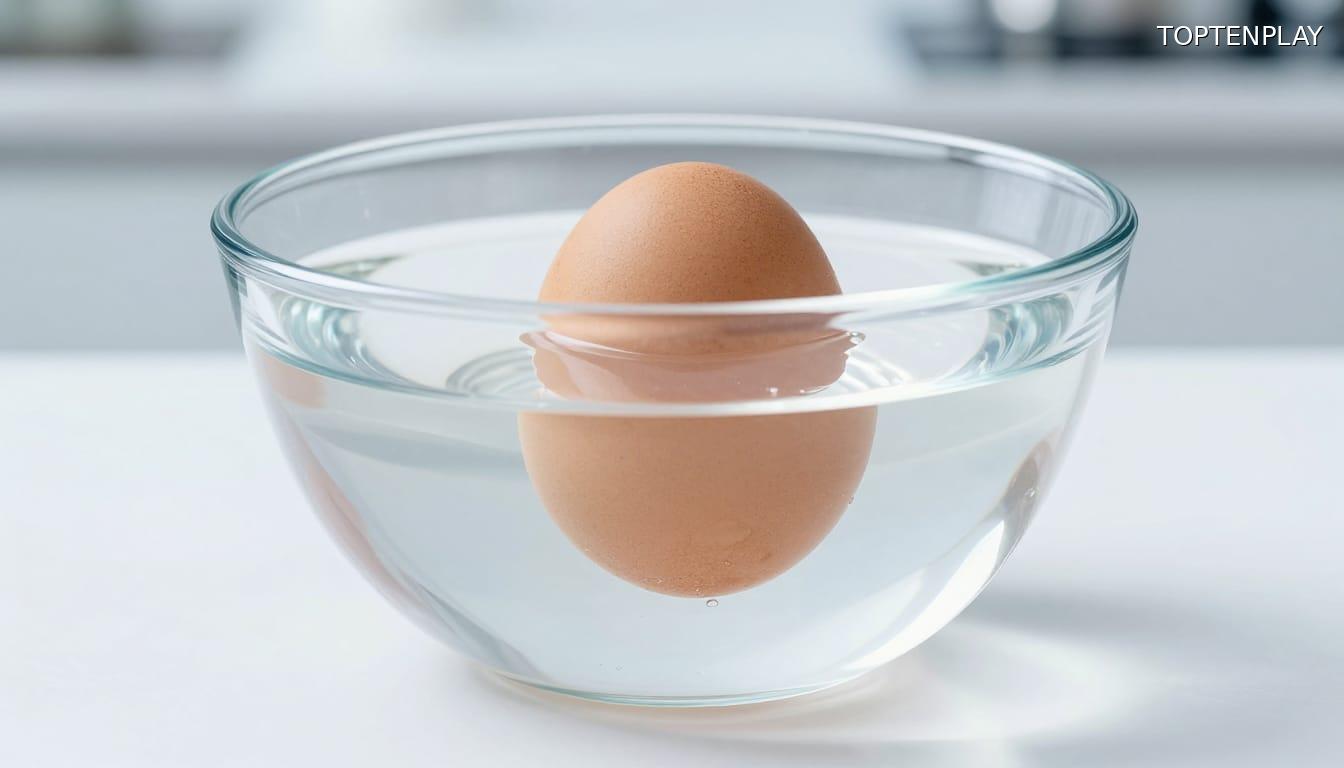
Faced with a suspicious egg, there’s no need to play guessing games. The float test offers a clear answer in seconds. Fill a bowl with cold water deep enough to completely submerge the egg, then observe its reaction.
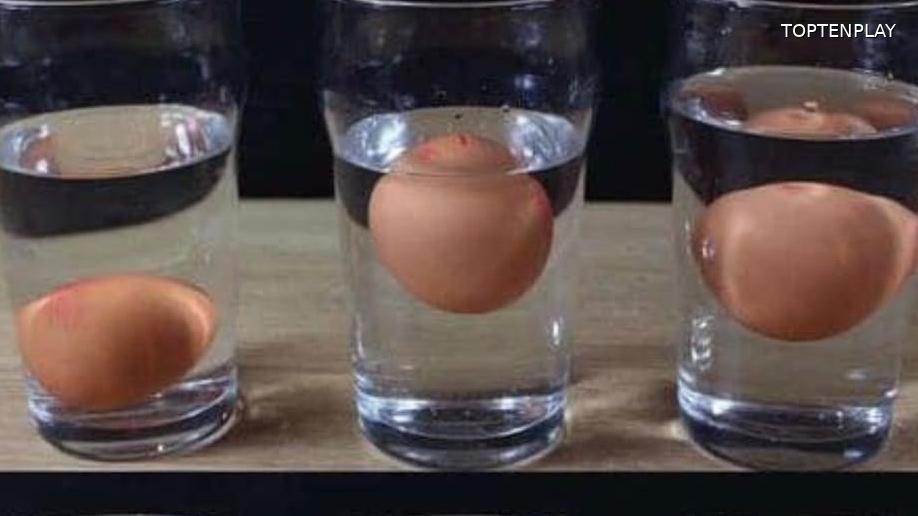
An egg that lies flat at the bottom reveals optimal freshness. Perfect for delicate preparations like poached eggs, soft-boiled eggs, or pastry creams where texture is paramount. An egg that stands vertically on the bottom remains consumable, ideal for hard-boiled eggs, scrambled eggs, or baking, but should be used within 48 hours. On the other hand, an egg that floats on the surface must be thrown away immediately, without discussion.
This ancestral method relies on a simple physical principle: over time, moisture evaporates through the microscopic pores of the shell, while air seeps in. The air pocket located at the rounded end of the egg gradually expands. The larger it is, the lighter the egg becomes and the more it rises in the water. When it floats, this excessive expansion signals potential bacterial proliferation and decomposition gases.
This test requires no special equipment, takes thirty seconds, and avoids unpleasant surprises at the crucial moment of preparation. A scientifically grounded technique that transforms uncertainty into an informed decision.
Olfactory and Visual Signs: When Your Senses Are Your Best Allies
Beyond the float test, your senses constitute an instinctive and formidably effective line of defense. Smell, in particular, instantly detects spoiled eggs as soon as the shell is cracked. This characteristic sulfur smell, caused by the hydrogen sulfide released during the decomposition of proteins, never lies.
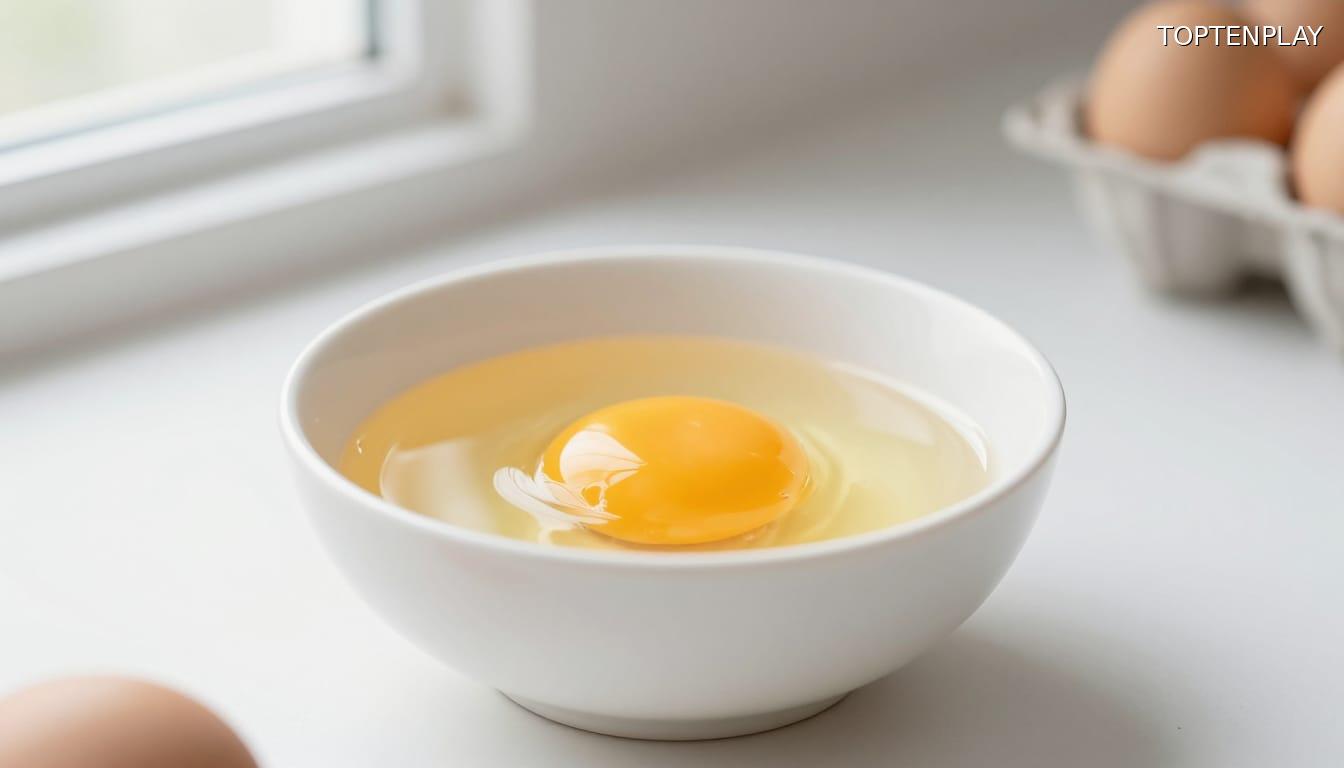
Imagine the pancake scene mentioned in the introduction: you crack the egg into the bowl, and this unpleasant scent immediately seizes you. This instinctive recoil reflex reflects a biological reality: the egg has passed the point of no return. Even if the smell seems slight, take no risks. A fresh egg gives off no perceptible odor when cracked.
Visual inspection completes this sensory evaluation. A translucent and firm white, a rounded and intact yolk signal freshness. Conversely, a liquid white that spreads out, a flattened yolk, or a suspicious color (greenish, grayish) confirm deterioration. Always crack your eggs individually into a small bowl before incorporating them into your preparation. This simple precaution avoids contaminating your entire recipe.
These natural indicators work even when the shell appears intact. Faced with the slightest olfactory or visual doubt, the rule remains immutable: throw it away without hesitation. The cost of an egg never justifies the risk of food poisoning.
The Expiration Date: Understanding What “Expired” Really Means
This date printed on the carton, often a source of anxiety, deserves a nuanced reading. Contrary to popular belief, an expired date does not systematically equate to a health hazard. In reality, it indicates the period during which the producer guarantees optimal freshness, not a fatal threshold beyond which the egg becomes toxic.
Regulations distinguish between two essential notions: the best-before date (BBD) and the use-by date. For eggs, we generally speak of BBD, followed by the mention “best before…”. This formulation implies that after this date, the food may lose certain taste or nutritional qualities, without presenting an immediate health risk.
That carton found at the back of the refrigerator with a date from “last season” does not necessarily justify automatic disposal. First apply the float test: if the egg stays at the bottom, intact and without a suspicious smell after cracking, it remains consumable. Prudence, however, dictates prioritizing complete cooking (hard-boiled, well-scrambled) rather than a raw or undercooked preparation.
This enlightened understanding of dates limits unnecessary food waste while preserving safety. The label provides a reference point, your sensory tests provide final validation. This combination allows you to fully utilize your provisions according to their real state, not according to an arbitrary date.
Adapted Uses According to the Degree of Freshness
Beyond the simple question of “good or bad,” freshness determines the optimal culinary use. An ultra-fresh egg, the one that lies flat at the bottom of the water, reveals its full potential in delicate preparations: poached with very compact whites, soft-boiled with a creamy yolk, or silky custard creams. Its intact protein structure guarantees perfect hold and an incomparable texture.
The older egg, which stands upright without floating, naturally finds its place in recipes where structure matters less. Hard-boiled for mixed salads, scrambled for a generous brunch, or incorporated into a cake batter: these uses perfectly exploit its qualities while guaranteeing complete cooking. Pastry, in particular, even benefits from slightly aged eggs, whose whites sometimes whip better into peaks.
This logic imposes thoughtful management of the refrigerator. Place recent purchases behind opened cartons, monitor dates, and adjust your menus accordingly. A ten-day-old egg doesn’t wait indefinitely: plan a quiche or deviled eggs rather than letting it cross the critical limit.
This methodical rotation considerably reduces waste without compromising safety. Each egg finds its ideal destination according to its age, transforming a storage constraint into a culinary opportunity. Your preliminary tests ensure peace of mind, your creativity in the kitchen values every stage of freshness.