The Garden Hides A Plant With Unsuspected Virtues
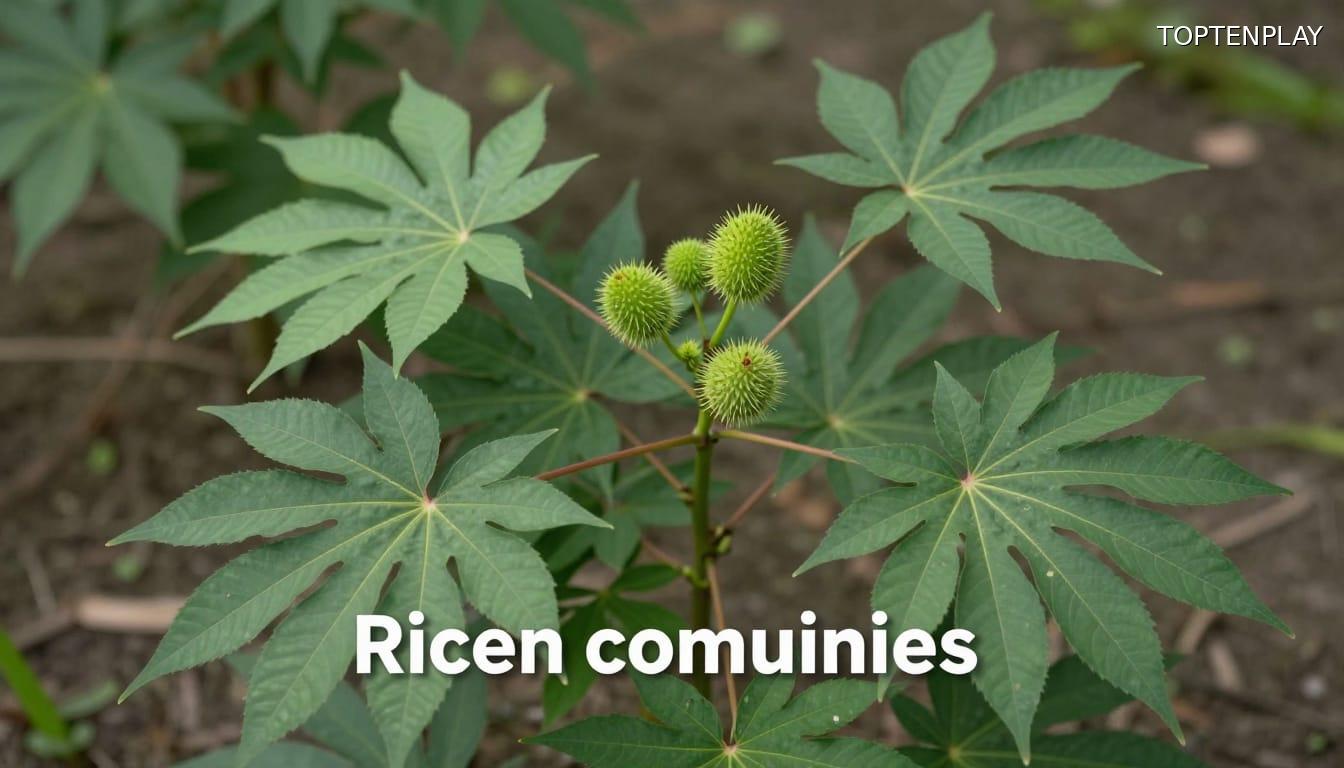
Present in gardens, vacant lots, and along roadsides, a plant with large star-shaped leaves and prickly pods often goes unnoticed or ends up pulled out like a common weed. Yet, castor oil plant (_Ricinus communis_) possesses a millennial history in traditional wellness practices. Ancestral medicines from Egypt, Ayurveda, and other therapeutic systems document the external use of the oil extracted from its seeds to promote comfort, soften the skin, and encourage relaxation.
This plant bears a revealing nickname: “Palma Christi,” literally “the palm of Christ.” Its leaves evoke an open hand, a symbol associated with its historical therapeutic applications. But a crucial distinction is necessary: the seeds and leaves contain ricin, a naturally toxic compound. Pharmaceutical or cosmetic castor oil undergoes a rigorous purification process that eliminates this dangerous substance, making the final product suitable for specific and approved uses.
This transformation changes everything. What many consider an invasive plant becomes, once properly treated, a resource with properties recognized for centuries. The resulting oil maintains a dense and unique texture, creating that warming sensation that many users associate with deep relaxation.
The Science Behind Castor Oil: What Research Reveals
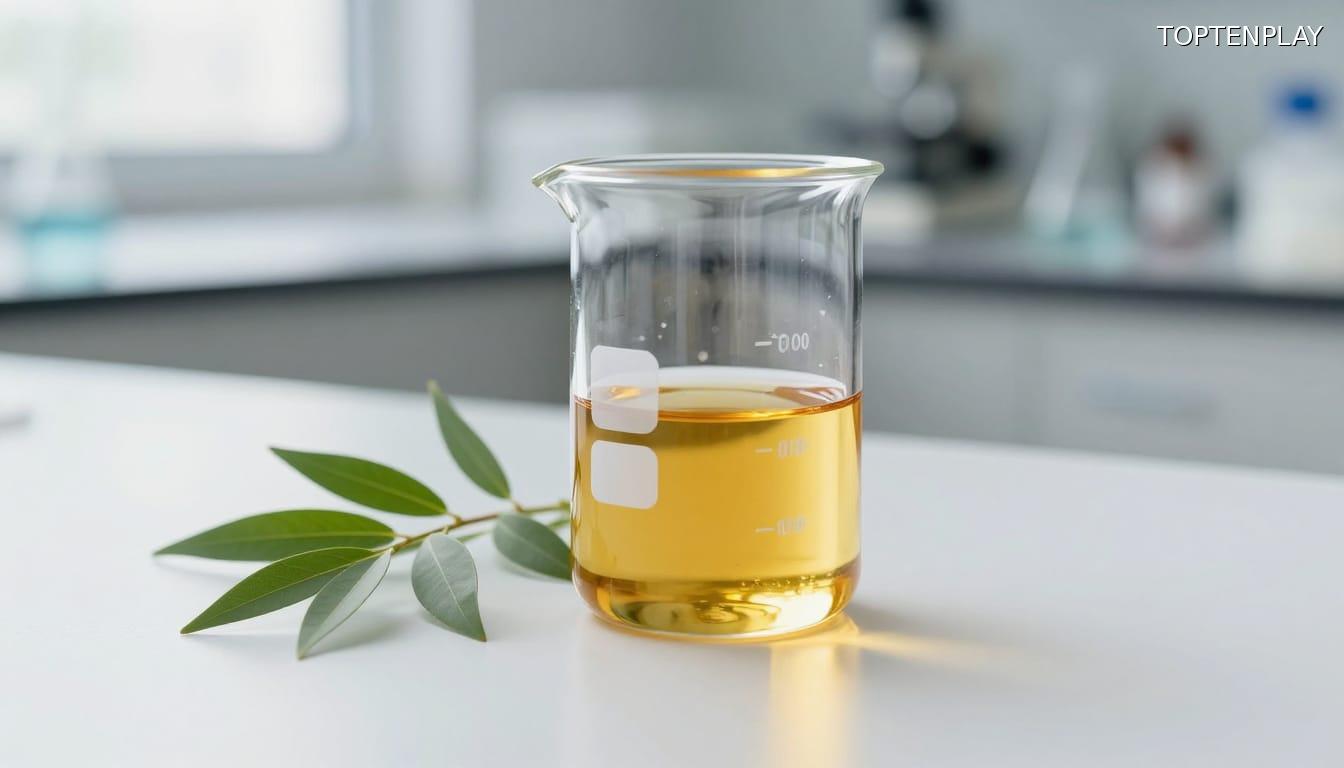
This transformation of castor into purified oil reveals a particular chemical composition that explains its persistent use. Ricinoleic acid represents up to 90% of its fatty acid content, an exceptionally rare concentration in the plant kingdom. This unique compound determines the specific properties observed during topical applications.
A study published in Complementary Therapies in Clinical Practice followed older adults applying the oil to their knees. Participants reported a measurable improvement in joint comfort compared to initial readings. Simultaneously, research from the Journal of Cosmetic Dermatology documents how ricinoleic acid acts as an emollient, strengthening the skin barrier similarly to certain recognized moisturizing agents.
The oil’s naturally thick texture creates an occlusive effect: it forms a barrier limiting water evaporation at the skin’s surface. This mechanism explains why it effectively reduces dryness and flaking. This same density also generates that gentle warmth sensation that many users describe during prolonged applications.
Studies do not present castor oil as a curative treatment, but clarify the biological mechanisms validating its traditional use. For those seeking gentle and natural solutions, these subtle but documented effects offer precisely the support sought without excessive complexity. These physicochemical properties now scientifically justify what ancestral practices observed empirically for millennia.

Detailed Protocol: The Castor Oil Pack Step By Step
These scientifically documented properties find their most popular application in an ancestral ritual: the castor oil pack. This technique, passed down through generations, combines gentle heat and prolonged application to maximize the relaxing effects of ricinoleic acid.
The required material remains minimal: a cold-pressed hexane-free castor oil, a cotton or flannel cloth, a hot water bottle or heating pad, and an old towel. Fold the cloth into three or four layers to obtain a rectangle of approximately 25 × 30 cm. Pour two to three tablespoons of oil until the cloth is completely saturated, without dripping.
Lie down comfortably and place the soaked cloth on the targeted area: lower back, stiff joint, or any area needing support. Cover with a towel then place the heat source set to moderate temperature, never burning. Breathe slowly and deeply for 45 to 60 minutes.
This prolonged application time differentiates the pack from a simple quick massage. Regular users report that these 45 minutes constitute a moment of total disconnection, where the penetrating heat combined with the oil’s occlusive properties generates progressive muscle relaxation. Then remove the cloth and gently wipe off the excess oil without aggressive rinsing.
This evening routine transforms a topical application into a true wellness ritual, explaining why so many people integrate it permanently into their nightly habits.
Daily Applications And Essential Precautions
Beyond the nightly pack, castor oil easily integrates into targeted daily actions. For cracked heels, apply a generous layer before bed and put on cotton socks: body heat amplifies absorption during the night. Dried cuticles respond remarkably to a drop massaged in every evening. Dry scalp benefits from a gentle massage of a few lukewarm drops, two to three times a week, before the usual shampoo.
Consistency takes precedence over quantity. A modest but constant application far surpasses sporadic and abundant uses. The oil penetrates slowly; patience becomes your ally.
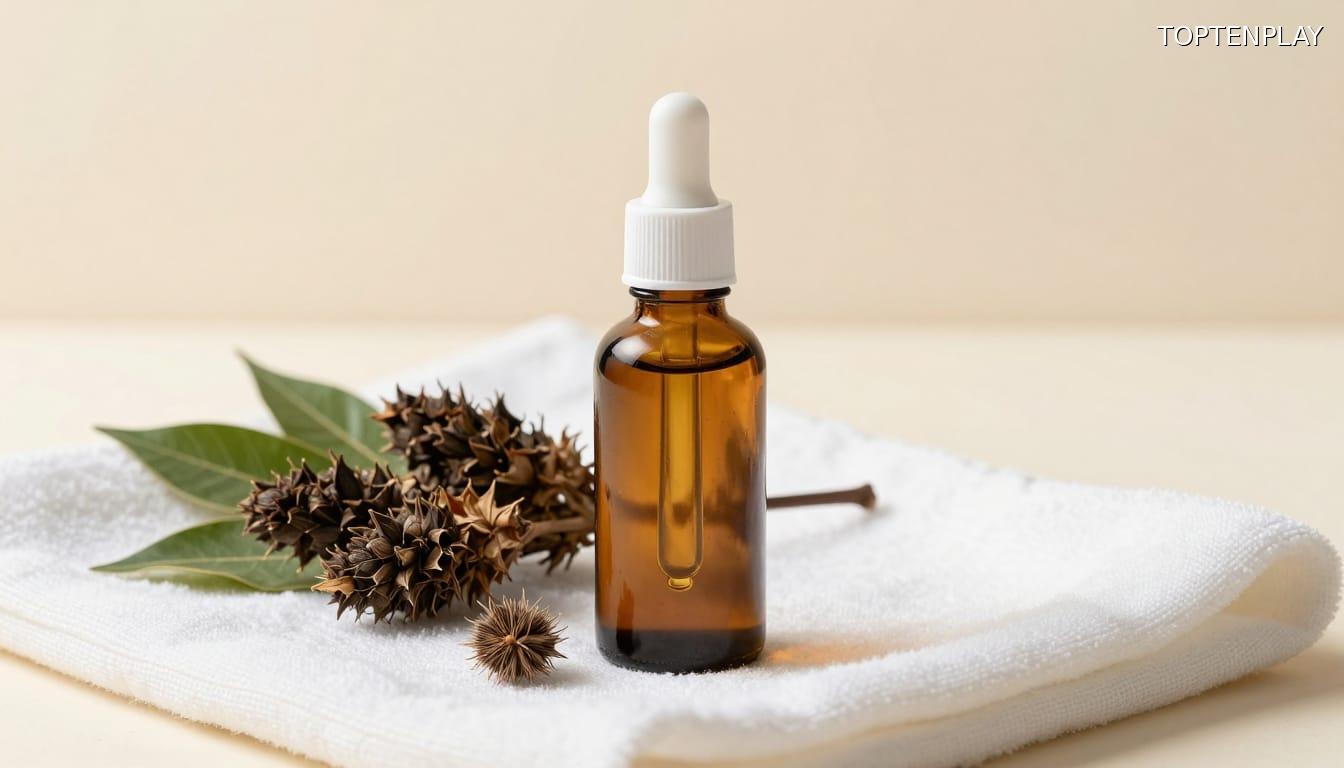
Product selection directly conditions efficacy and safety. Exclusively favor a cold-pressed oil, guaranteed hexane-free, ideally certified organic and packaged in amber glass protecting from UV. These criteria eliminate chemical residues and preserve the integrity of ricinoleic acid.
Precautions remain non-negotiable. Systematically perform a skin test on the forearm 24 hours before any first application. Absolutely avoid irritated, broken, or inflamed skin. Pregnant or breastfeeding women must imperatively consult a healthcare professional before use. Fundamental reminder: castor oil remains strictly external; any ingestion not medically supervised exposes to serious digestive risks, despite its historical use as a controlled purge.
This common plant, long ignored in our gardens, finally offers an accessible natural resource when respect for the purification process and rigor of application are combined.