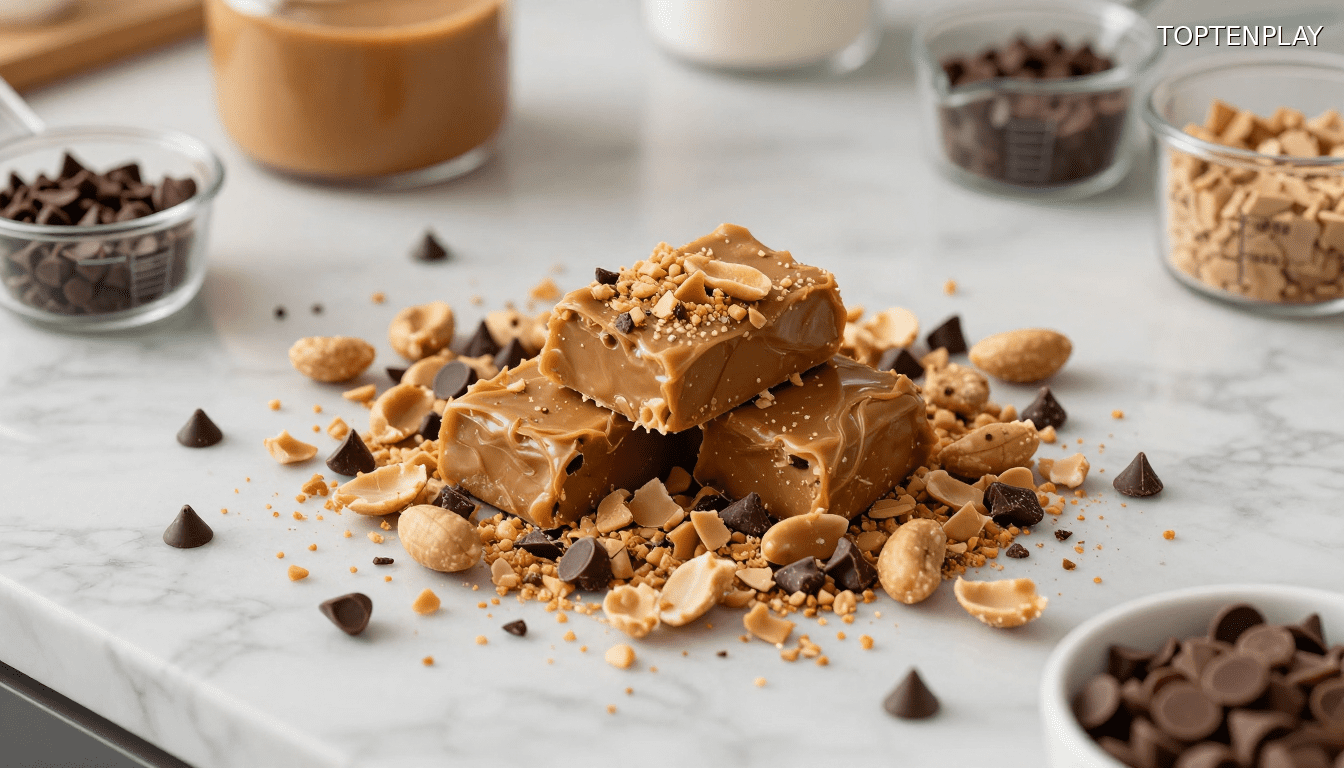
The Easy Recipe That Reinvents Butterfinger In A Homemade Version
Thirty minutes of active preparation, one hour of rest in the fridge: that’s all that separates your cupboards from an artisanal confection worthy of a professional chocolatier. These Butterfinger Balls revolutionize the approach to homemade candy by eliminating all baking, complex techniques, and specialized equipment. The recipe relies on a principle as simple as it is effective: assemble a creamy peanut butter heart, incorporate Butterfinger bits for the signature crunch, then coat everything in an impeccable chocolate shell.
The yield is as impressive as the ease of execution. A single preparation session produces between 30 and 36 bites, enough to garnish a holiday table or build up a stock of homemade treats. The trio of star ingredients – smooth peanut butter, authentic Butterfinger pieces, melting chocolate – faithfully reproduces the iconic flavor of the original chocolate bar, while offering a controlled texture thanks to total control over proportions.
This technique democratizes fine pastry. Where traditional candies require sugar thermometers, chocolate tempering, and skills acquired through experience, this no-bake version removes all technical barriers. The result? Confections with a professional finish, accessible even to absolute beginners, ready in ninety minutes flat. The balance between speed of execution and taste quality redefines the standards of domestic pastry.

Strategic Composition: When Filling Meets Crunch
The secret to this addictive texture lies in precise measurement. The creamy heart requires 1⅓ cups of smooth peanut butter, complemented by 100 grams of softened salted butter which gives that melting smoothness characteristic of professional ganaches. This fatty base then welcomes 2 cups of powdered sugar, a precise amount that transforms the preparation into a malleable dough without ever tipping into excessive, cloying sweetness.
The incorporation of 1½ cups of Butterfinger pieces marks the decisive turning point. These caramelized shards create the essential textural contrast: each bite alternates between the velvety softness of the filling and the unexpected crunch that releases notes of toasted caramel. This sensory alternation reproduces the experience of the original chocolate bar while offering a higher density of pieces, as the ratio can be adjusted according to preference.
Pure vanilla – one teaspoon is enough – acts as a discreet flavor enhancer. It rounds off the edges of the sugar, strengthens the notes of roasted peanut, and harmonizes the whole without imposing its own signature. This technical detail distinguishes amateur confections from thoughtful creations: the balance between fats, sugar, and aromatics determines the final success long before the chocolate dipping stage. This gustatory architecture ensures that each ball offers the same sensory experience, from the first to the thirtieth.

The Chocolate Coating: The Final Touch That Makes The Difference
This gustatory architecture now requires its protection: 450 grams of semi-sweet or milk chocolate melting wafers, melted to a liquid ribbon consistency. These specific wafers contain stabilizers that eliminate traditional tempering – that time-consuming technique of cocoa butter crystallization that terrifies amateur pastry chefs. The resulting fluidity allows for uniform dipping: each dipped ball emerges coated in a smooth 2 to 3 millimeter film, without drips or excessive thickness.
The technical gesture boils down to a simple choreography. A dipping fork – or a classic fork – supports the bite during total immersion, then the removal of the excess by light tapping against the edge of the bowl. This method guarantees a shiny shell that hardens in twenty minutes in the refrigerator, creating that characteristic snap at the first bite. Purists sprinkle additional Butterfinger shards within fifteen seconds of dipping, before the chocolate begins to set.
The temperature of the melted chocolate dictates success: too hot, it slides off without adhering; too cool, it sets in a thick, matte layer. The melting wafers maintain this ideal working zone for fifteen to twenty minutes, allowing time to coat the thirty or so bites without rushing. This technical choice transforms a delicate operation into an accessible process, where the professional texture results from the product itself rather than expert know-how.