Rosemary: Much More Than a Simple Kitchen Herb
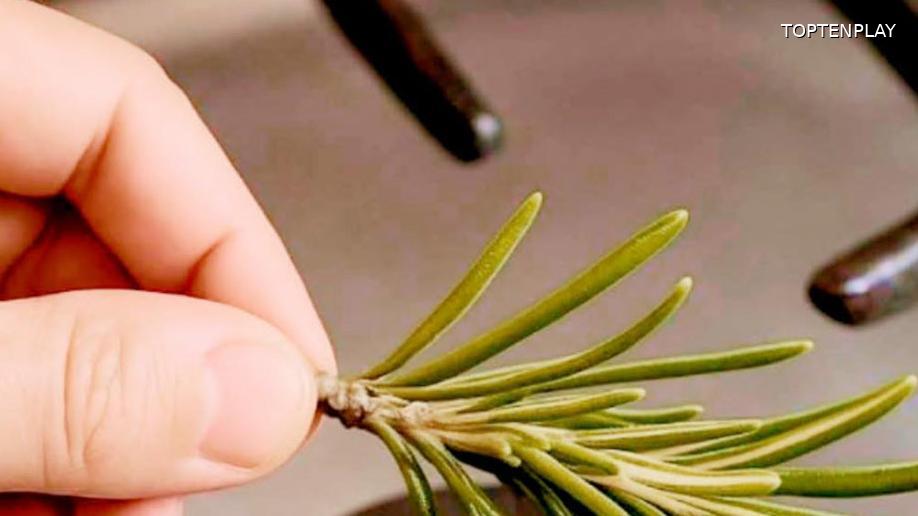
On the edge of millions of kitchens, it sits, almost ignored between thyme and basil. Rosemary — Rosmarinus officinalis — is such a familiar presence that we forget its extraordinary complexity. Native to the Mediterranean basin, this shrubby plant with fine evergreen needles contains an internal chemistry of unsuspected richness.
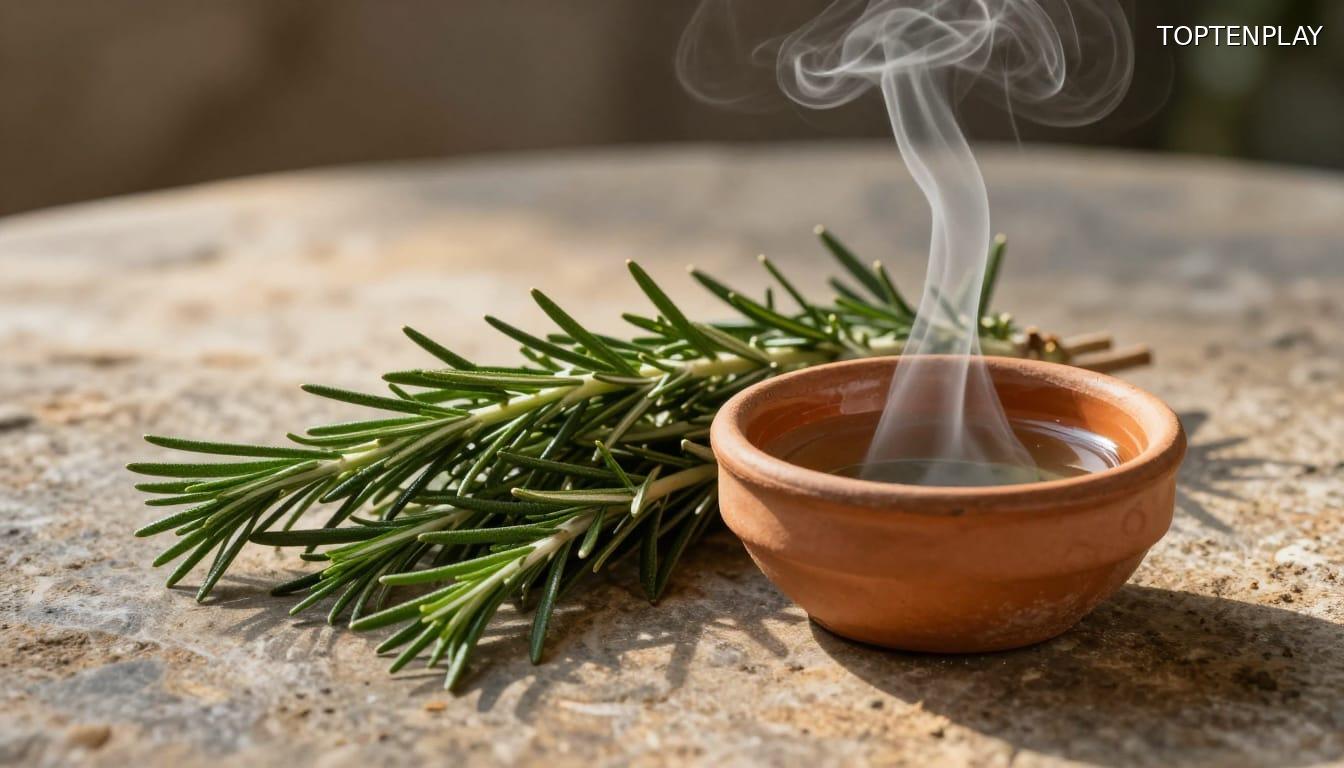
What most people don’t know: heat changes everything. When you burn rosemary, its plant cells release a cascade of bioactive compounds — cineole, camphor, and rosmarinic acid — which remain largely inactive in a fresh sprig placed on a roast. Combustion acts as a trigger, transforming an ordinary herb into a true diffuser of active molecules capable of interacting with the ambient air and the human nervous system.
Rosemary’s culinary use barely scratches the surface of its potential. In aromatherapy as in ritual practices, it is the smoke — and not the flavor — that carries the bulk of the benefit. These volatile molecules, once inhaled, take a direct path to the brain via the olfactory nerve, thus bypassing the usual filters of digestive metabolism.
This precise biochemical mechanism is not the result of a belief: it constitutes the scientific foundation of a practice that entire civilizations adopted long before they had the tools to explain it.
A Millennial Ritual Brought Back to Life
If entire civilizations adopted this practice before having the tools to explain it, it’s not by chance. Burning rosemary is not a contemporary trend — it is one of the best-documented plant practices in human history, attested for more than 3,000 years across three continents.
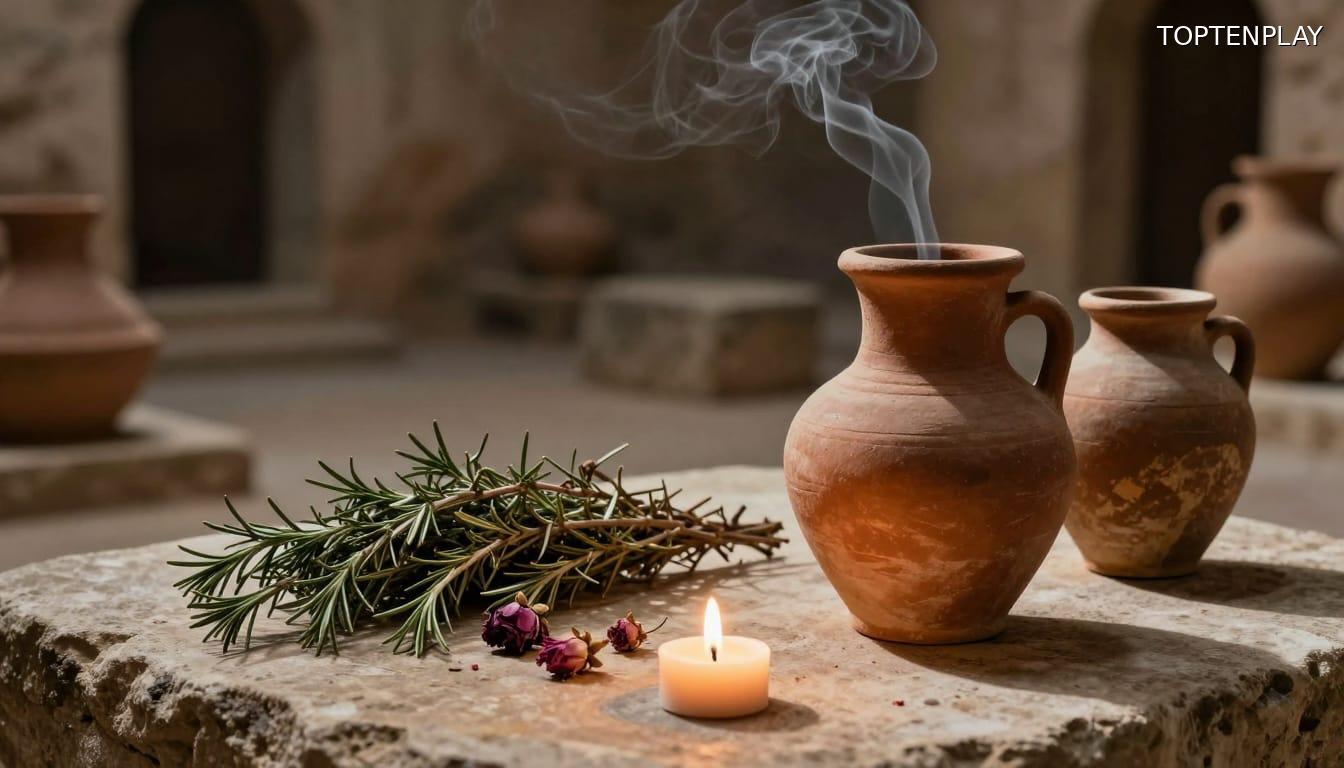
Egyptians burned rosemary during funeral rites to purify sacred spaces. Greeks perfumed their temples with it, convinced that the smoke established a link between the earthly world and the divine. In Rome, the practice gradually shifted from the religious to the medical: during plague epidemics, authorities recommended burning rosemary in homes and hospitals to drive away the disease. An empirical intuition — without microscope or microbiology — that would prove, centuries later, to be partially well-founded.
In the Middle Ages, European herbalists perpetuated this tradition by placing burning rosemary branches at the thresholds of homes during epidemic periods. The use crossed centuries without being lost, migrating from popular practices to Wicca rituals, smudging inspired by Native American traditions, and more recently to wellness and modern meditation circles.
What this continuity reveals is fascinating: radically different cultures, separated by millennia and thousands of miles, converged on the same plant and the same gesture. The question that then naturally arises: what do they perceive that our era is only beginning to measure?
What Science Confirms: From the Atmosphere to the Brain
What the Romans instinctively perceived, contemporary neuroscience now measures with precision. The question is no longer whether or not to believe in the power of burned rosemary — the data speaks for itself.
A study published in Therapeutic Advances in Psychopharmacology demonstrates that inhaling aromatic rosemary compounds for just ten minutes before a cognitive task significantly improves concentration, working memory, and mental performance. The mechanism is identified: cineole — the main compound released during combustion — enters the bloodstream through the respiratory tract and directly reaches the brain, stimulating the production of acetylcholine, a key neurotransmitter for attention.
The impact doesn’t stop there. Inhaling rosemary smoke stimulates the production of serotonin and dopamine, the two central molecules for emotional regulation. Researchers measured a measurable reduction in cortisol — a biological marker of stress — after short-term exposure. The limbic system, the seat of emotions, reacts to these volatile compounds in just a few minutes.
On a microbiological level, ethnopharmacology reviews confirm what Middle Ages herbalists applied empirically: rosemary smoke significantly reduces airborne bacterial load, particularly against certain common pathogenic strains.
Science and tradition, for once, come together. It remains to be seen how to translate this data into concrete practice — and in complete safety.
How to Practice the Ritual at Home — and What to Know Before Starting
This scientific data converges toward an obvious conclusion: the ritual deserves to be experienced. But between theory and practice, a few rules are necessary.
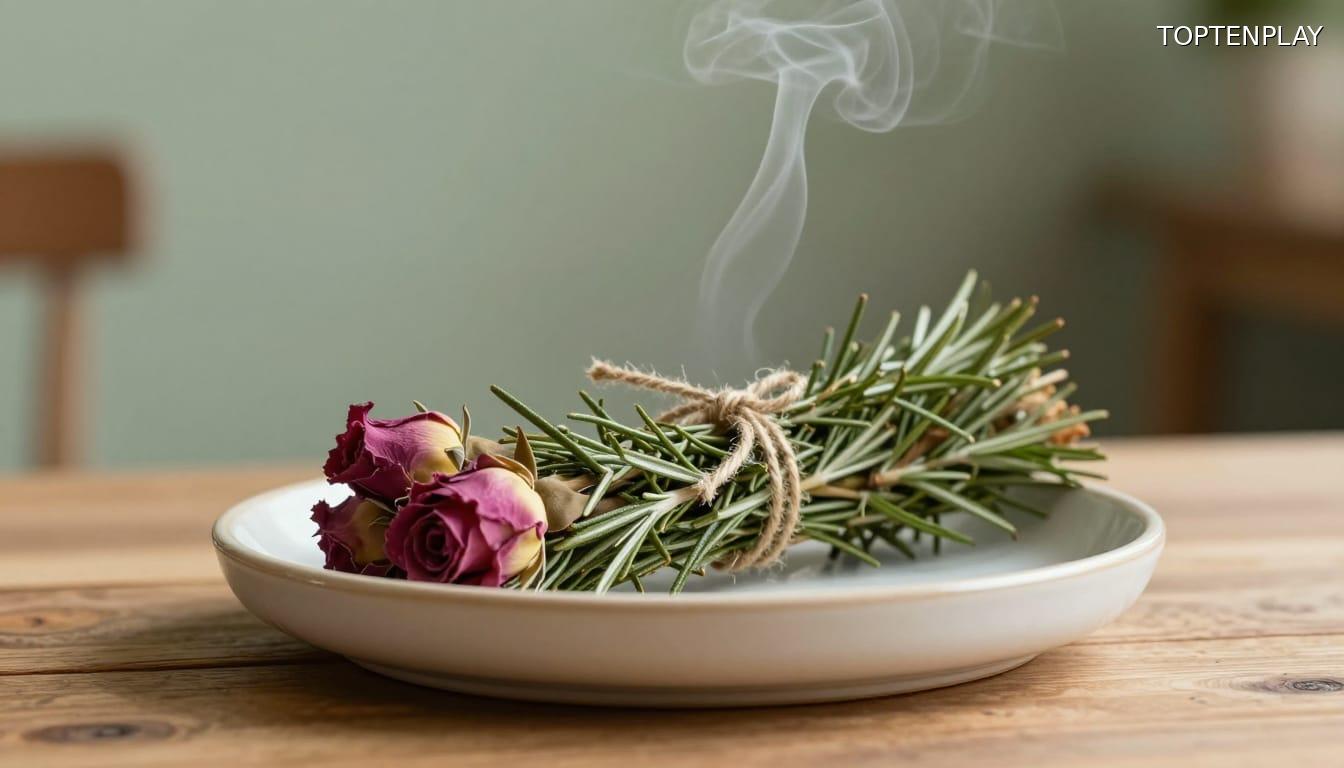
The protocol is simple. Dry fresh rosemary stems for 48 hours, then tie them into a compact bundle. Light the end, let it catch fire for a few seconds, then blow gently to obtain a slow, smoky combustion. Move the bundle in a circular motion in each room, focusing on corners and confined spaces where air stagnates. A heat-resistant bowl collects the ashes.
The most effective contexts: after a period of illness, a conflict in the home, a prolonged phase of stress, or to prepare a space for meditation. “When you burn it, you’re not just scenting your home — you’re helping to lighten the emotional atmosphere of the space,” summarize those who practice this ritual regularly. The effects — increased concentration, purified air, stabilized mood — manifest in a few minutes.
Certain precautions remain non-negotiable: pregnant women, asthmatics, and young children should avoid any direct exposure to smoke. Temporarily disable smoke detectors or ventilate sufficiently. For sensitive profiles, diffusing rosemary essential oil is a safe alternative with comparable effects, without combustion.
A millennial ritual, validated by science, accessible in a few steps — and whose benefits are measured from the first session.