The Hidden Dangers In Your Broccoli
Broccoli is among the most popular vegetables for its exceptional nutritional density. Its fresh, green appearance inspires confidence, to the point that many consider it a naturally clean and protective food. Yet, this reassuring perception masks a very different reality.
Between the tight bunches and the inner layers, one finds soil residues, tiny insects difficult to see, and traces of agricultural chemicals. The compact structure of this cruciferous vegetable creates real niches where contaminants accumulate. The microscopic gaps between the florets offer an ideal refuge for undesirable particles, totally invisible during a quick inspection.
The automatic gesture we all repeat – passing the vegetable under the tap for a few seconds – provides a deceptive feeling of cleanliness. Rinsing under the tap only eliminates superficial dirt. Running water slides over the surface without penetrating the critical areas where impurities concentrate. Pesticide residues, which are particularly stubborn, resist this summary treatment.
This involuntary neglect exposes consumers to regularly ingesting elements they believe they have eliminated. The question is no longer whether broccoli is healthy, but how to prepare it correctly to preserve all its benefits without the associated risks.
Storage: The Crucial First Step
Even before considering cleaning, storage determines the final quality of the broccoli. An error at this stage accelerates deterioration, promotes yellowing, and compromises the vegetable’s texture. Apparent freshness at the time of purchase guarantees nothing if storage conditions are unsuitable.
As soon as you return from the store, wipe the outer stem with a dry cloth to eliminate any trace of moisture. Residual water creates an environment conducive to bacterial proliferation and premature softening of plant tissues. This simple, often overlooked step makes all the difference.
The following technique is surprisingly effective: make several small perforations in the stem with a toothpick to prevent condensation buildup inside. These micro-openings allow air circulation without dehydrating the vegetable, thus maintaining optimal water balance. The phenomenon of condensation, invisible but destructive, attacks plant cells from the inside.
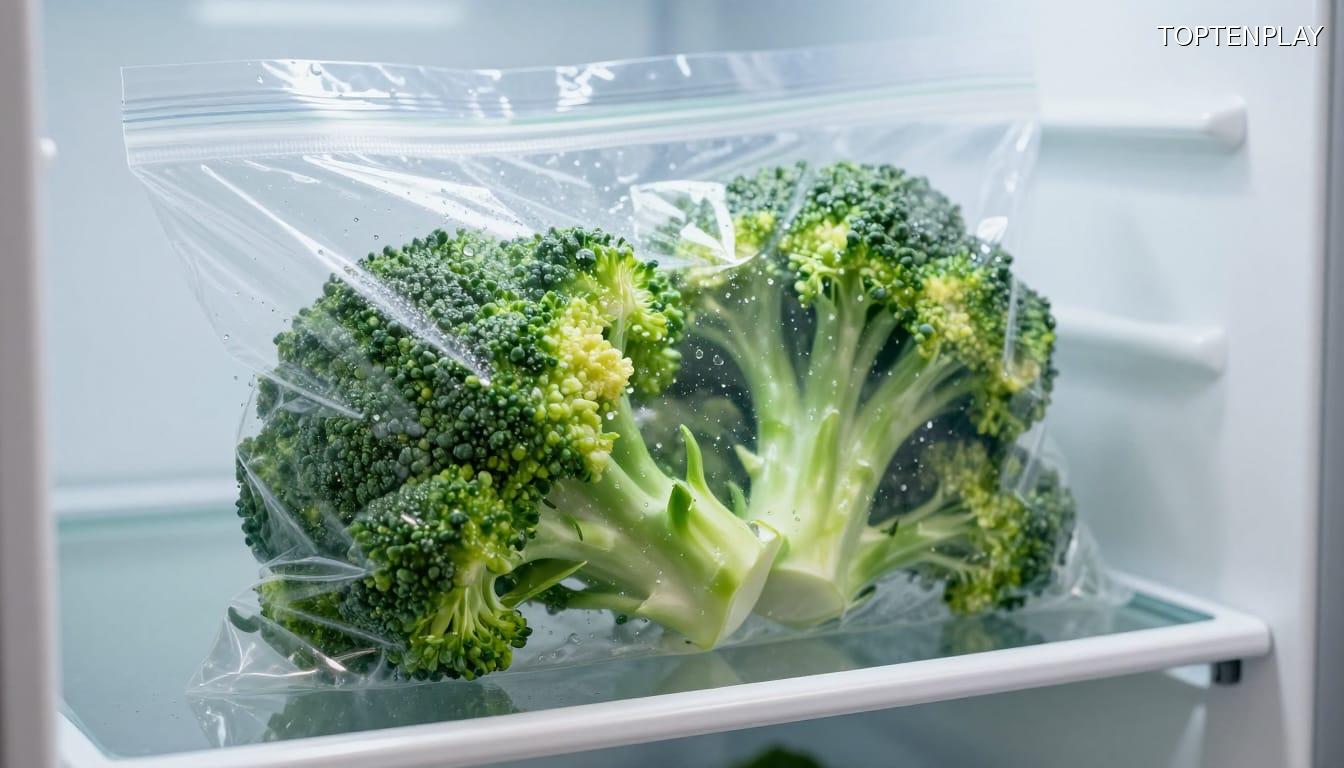
Then place the broccoli in a plastic bag or wrap it in cling film before refrigerating it. This protective barrier limits excessive gas exchange while preserving necessary moisture. Properly stored broccoli lasts several days without losing its nutritional properties or characteristic crunch. This methodical preparation sets the stage for truly effective cleaning.

Why Traditional Washing Is Ineffective
This meticulous preparation is useless if the cleaning remains superficial. Rinsing under the tap, an automatic gesture in most kitchens, only eliminates visible surface dirt. The compact structure of the bunches prevents water from penetrating between the tight stems, creating inaccessible areas where contaminants and residues persist.
The natural architecture of broccoli poses an obvious mechanical problem. The inflorescences form a dense interlacing that blocks the passage of running water. Microscopic insects, soil particles, and traces of pesticides lodge precisely in these protected gaps. A simple jet of water slides over the surface without dislodging these undesirable elements.
Laboratory tests reveal a worrying reality: after a classic rinse, up to 70% of initial contaminants remain present in the deep areas of the vegetable. The naked eye detects nothing, but consuming these invisible residues exposes the body to potentially harmful substances. The phytosanitary products used in conventional agriculture have a chemical adherence that water alone cannot overcome.
This observed inefficiency requires a complete revision of domestic practices. A change in method is necessary to guarantee a real elimination of contaminants.
The Deep Cleaning Method
Faced with this demonstrated inefficiency, an alternative technique is necessary. The solution is based on a simple principle: prolonged immersion in a solution that penetrates between the bunches to dislodge what running water cannot reach.
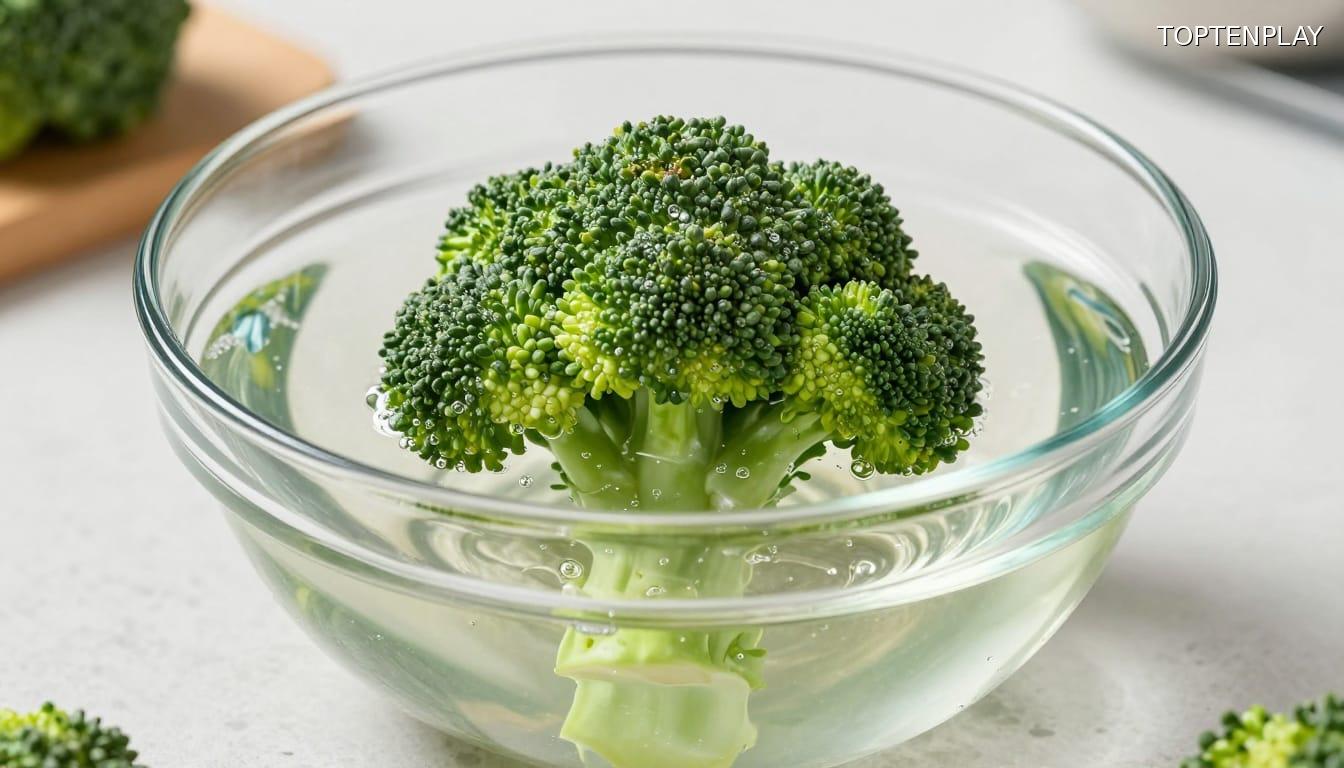
Fill a large container with cold water and add a tablespoon of white vinegar or baking soda. Submerge the whole broccoli in this preparation for fifteen to twenty minutes. The acidity of the vinegar dissolves chemical residues while the baking soda neutralizes pesticides and brings impurities to the surface. Insects lodged in the gaps, deprived of oxygen, naturally rise to the surface.
After this immersion, gently separate the bunches with your fingers to expose the protected areas. Rinse thoroughly under running water while slightly spreading the stems. This soaking-rinsing combination eliminates up to 95% of contaminants according to microbiological analyses.
For the most demanding consumers, a variant exists: cutting the broccoli into pieces before immersion. This prior fragmentation exposes more surface area to cleaning, but it also accelerates oxidation. The choice between maximum efficiency and optimal preservation depends on your risk tolerance.
This method radically transforms the sanitary quality of the vegetable consumed, guaranteeing a truly healthy tasting experience.