📌 Blood circulation: how garlic and onion naturally support leg vascular health
Posted 15 March 2026 by: Admin
The Circulatory Virtues Of Garlic And Onion: What Science Says
While the viral image promises a spectacular disappearance of varicose veins, scientific reality proves to be more nuanced. Garlic and onion are not a magic eraser, but their active compounds are generating real interest in vascular health research.
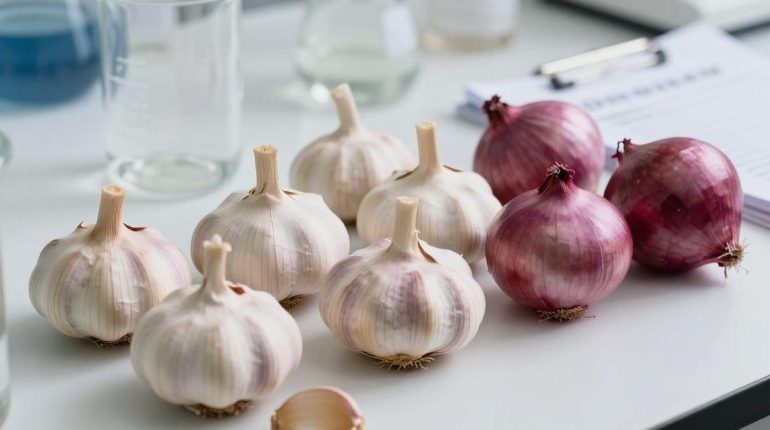
Garlic contains specific sulfur compounds released when crushed: allicin, ajoene, and diallyl sulfides. These molecules have been the subject of studies exploring their ability to improve blood flow, support healthy blood pressure levels, and protect vessels against oxidative stress. Some research suggests they may promote better peripheral circulation.
Onion, for its part, concentrates quercetin, a flavonoid with documented antioxidant properties. This plant compound could help reduce vascular inflammation and strengthen the integrity of venous walls against oxidative stress. Red onions contain particularly high concentrations of it.
Beyond these isolated molecules, garlic and onion share natural anti-inflammatory properties that could alleviate discomfort related to slowed circulation. Their traditional use in Mediterranean and Asian wellness practices is based on centuries of empirical observations, now partially validated by modern nutritional research.
These ordinary cooking ingredients therefore deserve their place in a global approach to circulatory health, provided their real limits are understood.
Garlic And Olive Oil Massage: A Traditional Preparation
Beyond dietary ingestion, Mediterranean traditions favor an external application combining massage and maceration. This ancestral method exploits the active compounds of garlic while mechanically stimulating circulation through upward movements.
Preparation requires three to four freshly crushed garlic cloves, mixed with two tablespoons of extra virgin olive oil. The optional addition of the juice of half a lemon strengthens the extraction of active principles. The mixture must imperatively rest for twelve hours in an airtight container before use, allowing the sulfur compounds to fully diffuse into the fatty body.
Application follows a precise protocol: the massage starts at the ankles and gradually moves up towards the thighs, following the natural direction of venous return. This ascending technique promotes the mobilization of stagnant fluids. The recommended application time is between twenty and thirty minutes, a period during which the active principles penetrate the epidermis while the massage stimulates local microcirculation.
The optimal frequency is three or four applications per week. This sustained rhythm allows for continuous action without risk of skin irritation, with olive oil also providing its own emollient and antioxidant properties thanks to its richness in vitamin E.
This artisanal preparation offers an accessible alternative to industrial circulatory creams, provided one accepts its characteristic odor and observes regularity in application.
The Onion-Aloe Vera Mask: The Soothing Alternative
For those put off by the persistent smell of garlic, red onion combined with aloe vera gel constitutes a gentler option. This preparation prioritizes skin soothing while delivering the circulatory flavonoids of onion in a less aggressive form.
The recipe is simple: half a red onion finely crushed or blended, incorporated into two tablespoons of pure aloe vera gel. Unlike the garlic mixture, this preparation is used immediately without prior maceration. Aloe vera, recognized for its moisturizing and anti-inflammatory virtues, tempers the potentially irritating action of the onion while creating an easy-to-spread texture.
Application lasts fifteen to twenty minutes, sufficient time for the quercetin from the onion to come into prolonged contact with the epidermis without causing discomfort. Rinsing with cool water completes the desired refreshing effect, particularly appreciated at the end of the day when legs feel tired.
This method is particularly suitable for sensitive or reactive skin, with aloe vera playing a protective role against the sulfur compounds of the onion. While circulatory effectiveness remains comparable to that of garlic massage according to traditional usage reports, the immediate sensation of freshness is its main distinctive asset.
The absence of maceration and reduced application time also make it a practical solution for busy schedules.
Limits And Complementarity With A Healthy Lifestyle
As promising as these ancestral remedies seem, they never replace a medical consultation for concerning symptoms. Persistent pain, unexplained swelling, skin discoloration, or severe varicose veins require evaluation by a healthcare professional. The natural compounds of garlic and onion support vascular health; they do not correct established pathologies.
The real effectiveness of these preparations largely depends on the context in which they are used. A sedentary lifestyle, prolonged static positions, or excess weight compromise any attempt at natural relief. Conversely, regular physical activity, even moderate like daily walking, potentializes the circulatory action of these ingredients by mechanically stimulating venous return.
Elevating the legs at rest, maintaining a balanced weight, and frequently changing positions are non-negotiable habits for anyone seeking to sustainably improve their circulation. In some cases, wearing medical compression stockings is indispensable, a decision that rests exclusively with professional advice.
Garlic and onion-based preparations are therefore integrated into a global strategy, never isolated. Their value lies less in a hypothetical miraculous action than in their ability to complement proven lifestyle measures. Therapeutic power never arises from a single gesture, but from their coherent accumulation.