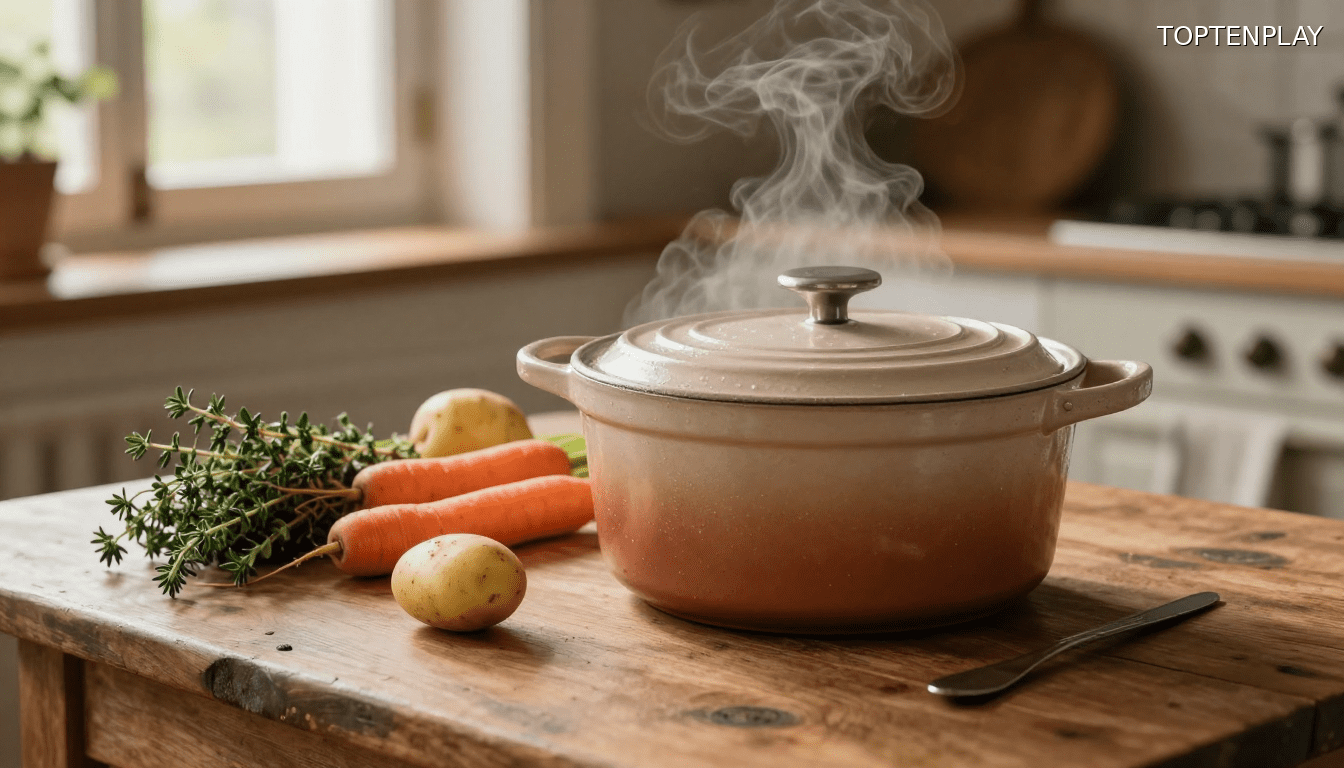
The Family Stew, a Pillar of Traditional French Cuisine
An iconic dish of Sunday tables, beef stew with vegetables embodies the soul of traditional French cuisine. Simple in design, generous in execution, this comforting dish transcends generations through its ability to create a culinary event without artifice.
The magic happens from the first minutes of cooking. The scents of browned meat and aromatic herbs fill every corner of the house, announcing a memorable meal. This recipe has a rare peculiarity: it gains flavor over time, transforming an ordinary preparation into a family gastronomic experience.
The secret lies in patience. Long simmered, the meat reaches exceptional tenderness while the vegetables soak up a sauce flavored with thyme and bay leaf. This slow alchemy makes the stew much more than a simple dish: a ritual that brings people together, comforts, and perpetuates ancestral know-how.
“It’s the kind of recipe that scents the house, brings everyone around the table, and gains even more flavor over time,” perfectly summarizes this emotional dimension that goes beyond mere taste satisfaction. To succeed in this iconic preparation, technique counts as much as the choice of ingredients.

A Six-Step Cooking Technique for Perfection
The success of a stew relies on a rigorous six-step method, where every gesture counts. The first, crucial phase consists of searing the meat in a mixture of butter and oil over high heat. This browning develops the aromas and creates an essential taste base that simmering will then amplify.
Without this step, it is impossible to obtain that characteristic depth of flavor. The meat must brown on all sides, in small quantities to prevent it from boiling. Once removed, the pot welcomes the onions and garlic which reveal their flavors in the caramelized juices at the bottom of the vessel.
The progressive construction continues with the addition of tomato paste and broth, creating the cooking liquid that will envelop each ingredient. Thyme and bay leaf scent this aromatic base before simmering for two hours over low and steady heat. This slow cooking transforms the meat fibers into a melting texture.
The delayed addition of potatoes after two hours ensures they stay whole without falling apart. The last thirty minutes complete the cooking, allowing the vegetables to fully soak up the sauce which has become creamy. This methodical progression, totaling two and a half hours, ensures perfect harmony between all elements of the dish.

The Secrets of a Successful Stew: Choice of Ingredients and Chef’s Tips
Beyond technique, the selection of ingredients determines the final quality of the dish. Braising beef is the pillar of this recipe, with three preferred cuts: chuck, blade, or shin. These meats rich in collagen become extraordinarily tender under the effect of prolonged simmering, unlike noble cuts which would dry out.
Cutting into regular pieces guarantees even cooking, preventing some cubes from being overcooked while others remain firm. This regularity, often neglected, makes all the difference between an ordinary stew and a success. For 1.2 kg of meat, plan for cubes of about 4 to 5 cm on each side.