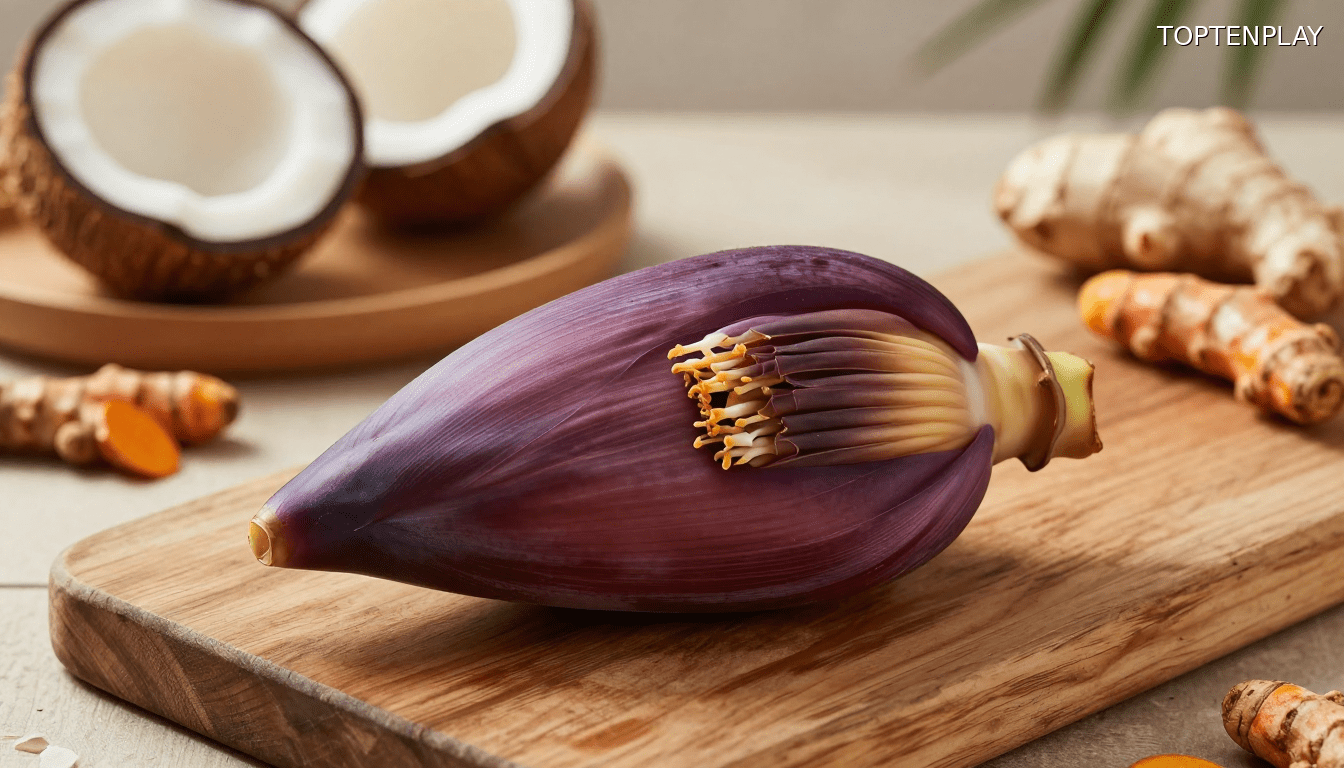
The Banana Flower: A Misunderstood Ancestral Treasure With Exceptional Nutritional Properties
For centuries, Asian cuisines have revered an ingredient that the West has long ignored: the banana flower, that purple tear-shaped inflorescence that ends every bunch. Also called banana heart, it offers a remarkable nutritional profile, traditionally associated with hormonal balance, digestive vitality, and immune strengthening.
Composed of overlapping purple bracts protecting small edible flowers, this misunderstood part of the banana plant develops a melting texture reminiscent of artichoke and a slightly bitter flavor with nutty notes when cooked. Its current rediscovery as a modern superfood is based on centuries of use in Ayurvedic medicine and in the culinary traditions of India, Thailand, Sri Lanka, and the Philippines.
Now available fresh in Asian grocery stores or canned for simplified use, the banana flower appeals to followers of a plant-based and functional diet. Its natural richness in phytoestrogens, flavonoids, insoluble fiber, and antioxidants makes it a valuable ally for those seeking ancestral nutritional solutions adapted to contemporary health challenges. This alliance between traditional knowledge and the quest for holistic well-being explains its strong comeback in kitchens concerned with authenticity and natural effectiveness.

Nine Traditional Virtues: From Hormonal Balance To Immune Support
This richness in natural phytoestrogens and flavonoids explains why the banana flower occupies a central place in the traditional support of the female cycle. In India and Sri Lanka, it is systematically integrated into meals intended to alleviate menstrual discomfort, reduce hormonal bloating, and compensate for iron loss during periods. Its action on hormonal regulation is based on plant compounds recognized for centuries for their affinity with estrogen receptors.
Beyond this female specificity, the banana flower is traditionally considered a natural galactagogue for young mothers, providing iron, calcium, and magnesium during breastfeeding. Its low glycemic index and exceptional insoluble fiber content make it a valuable ally for lasting satiety and stabilization of glucose levels, thus reducing sugar cravings in balanced diets.
On the digestive level, these fibers feed the beneficial intestinal flora and promote regular transit. The antioxidants it contains—notably catechins and quercetin—protect cells from oxidative stress, while its vitamin C and phytochemical compounds support natural defenses. Its plant phytosterols finally contribute to limiting the intestinal absorption of cholesterol, thus participating in cardiovascular health. Potassium and magnesium complete this picture by promoting water balance and the detoxifying processes traditionally attributed to this ancestral ingredient.

Mastering Preparation: Essential Techniques To Reveal Its Qualities
To fully exploit these nutritional properties, the preparation of fresh banana flower requires a rigorous three-step method. Start by removing the tough outer purple bracts, then finely chop the tender inner bracts and small pale flowers. The crucial step consists of soaking these pieces in lemon or vinegar water for 10 to 15 minutes: this acid bath neutralizes the natural bitterness while blocking the rapid oxidation that blackens the flesh exposed to air.
Cooking methods adapt to culinary traditions: boiling, gentle steaming, quick sautéing, or prolonged simmering in curries and soups. The plant texture remarkably absorbs aromatics, making associations with coconut milk, fresh ginger, garlic, turmeric, and tropical spices particularly harmonious. This aromatic affinity transforms an ingredient with an initially neutral taste into a central component of complex dishes.
Prior cooking remains imperative: consuming the flower raw exposes one to unpleasant astringent compounds. Once mastered, this preparation becomes intuitive and opens access to a culinary universe where ancestral tradition and modern creativity meet. The patience invested in these technical gestures releases all the gustatory and nutritional subtlety of this plant treasure too long ignored.