You’ve likely heard that sleep position matters for your health — but does consistently sleeping on your right side cause real harm? For most people, the answer is no. For those living with specific conditions such as acid reflux or heart disease, however, the question deserves a closer look.
En bref
- —Right-side sleeping worsens acid reflux symptoms
- —No cardiac risk proven for healthy sleepers
- —Left side recommended for GERD and some arrhythmias
Right-side sleeping and GERD: a well-documented link
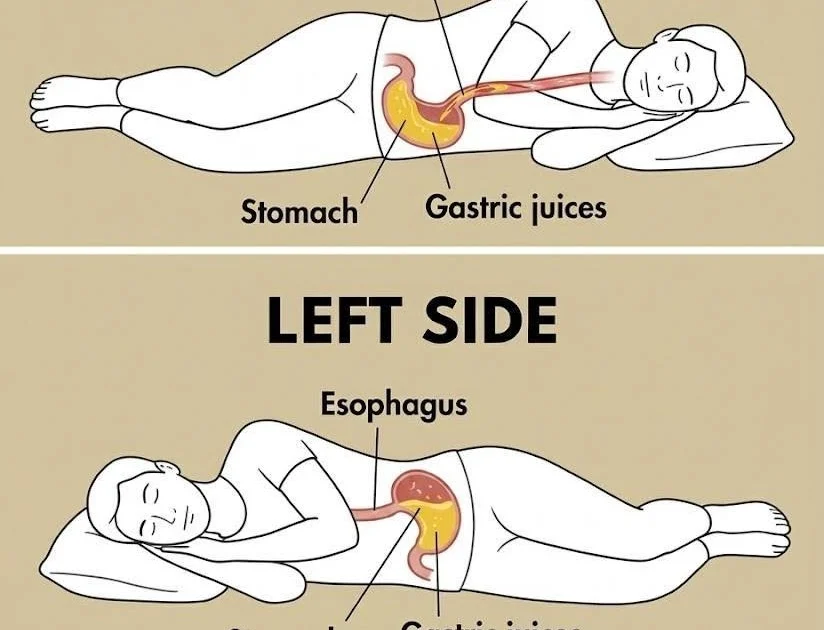
The most evidence-backed concern about right-side sleeping involves gastroesophageal reflux disease (GERD). When you lie on your right side, the lower esophageal sphincter — the valve separating the stomach from the esophagus — tends to relax. That relaxation makes it easier for stomach acid to travel upward.
The practical consequence for GERD sufferers is straightforward: nighttime symptoms, including heartburn and regurgitation, are typically worse in this position. Switching to the left side changes the equation. Gravity then works in your favor, helping keep stomach acid where it belongs.
If you regularly experience heartburn at night, adjusting your sleep position is one of the simplest, cost-free steps you can take before exploring other acid reflux treatment options. The recommendation is consistent: left-side sleeping is the preferred position for anyone managing GERD symptoms.
Heart strain from right-side sleeping: separating myth from evidence
One of the most persistent claims about sleep position is that lying on the right side puts harmful strain on the heart. For healthy individuals, current evidence does not support this. No research has established that right-side sleeping damages cardiac function in people without pre-existing heart disease.

The picture is more nuanced for those with diagnosed conditions. Some studies suggest that people with advanced heart failure may actually find the right side more comfortable, as it appears to reduce direct pressure on the heart. This runs counter to the popular assumption.
People living with arrhythmias — irregular heart rhythms — report a different experience. Some say they notice fewer palpitations when sleeping on the left side, though this response is highly individual and not universal. Anyone with a diagnosed heart condition should discuss optimal sleep positioning with their cardiologist rather than relying on general guidelines.
Why sleep position research has grown
Interest in sleep positioning has expanded alongside broader research into sleep medicine over the past two decades. Conditions like GERD, heart failure, and neurodegenerative disease have all prompted scientists to examine whether the hours spent lying down could influence disease progression or symptom severity. Most findings remain condition-specific rather than universal.
Suggested Posts

Why doctors say two eggs at breakfast can change your entire day
Eating two eggs in the morning can noticeably change how you feel, eat, and focus for the rest of the day — and doctors…