At a total cost under $8, the recipe produces eight handheld pockets. That works out to roughly $1 per serving, making it one of the more affordable hot meals a household can put together on a busy evening without sacrificing flavor.
Optional additions — diced onions, bell peppers, or a dash of hot sauce — can be folded into the filling for extra depth, but the base five-ingredient version is complete on its own. For households avoiding gluten, swapping in a gluten-free dough is the only change required.
Browning the beef and building a filling that won’t make the dough soggy
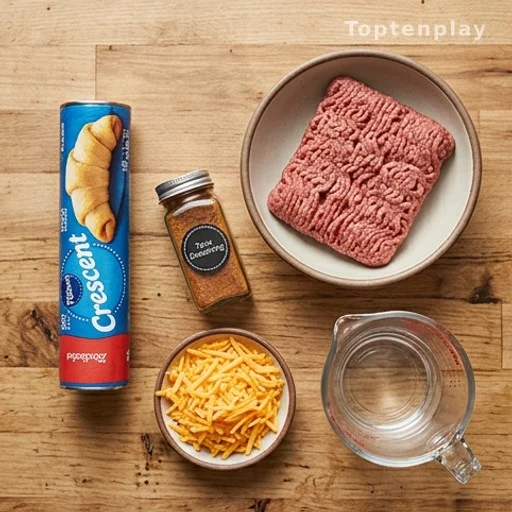
The filling starts in a skillet over medium heat. The ground beef is browned, then the fat is drained thoroughly — a step the recipe flags as critical, since excess grease is the primary cause of soggy pockets once baked.
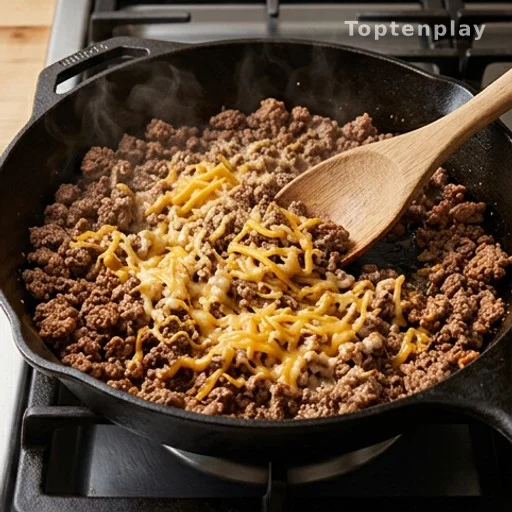
Taco seasoning and water go in next. The mixture simmers for three to five minutes until it thickens into a cohesive, saucy filling rather than a loose, wet one. Shredded cheese is stirred in off the heat, melting into the beef before the filling is set aside to cool for five minutes.
That cooling window matters. Wrapping hot filling in crescent dough raises the risk of tearing the dough before it even reaches the oven. Letting the mixture rest briefly firms it up slightly and makes portioning onto each dough triangle far more manageable.
Why crescent dough works so well here
Refrigerated crescent roll dough bakes quickly at moderate heat and produces a light, flaky shell without requiring any pastry-making skills. Its pre-portioned triangles also simplify assembly, which is why it has become a go-to shortcut in American home cooking for stuffed and pocket-style recipes. Puff pastry or pie crust can substitute with similar results.
Assembling and sealing: the fork-press technique that locks in the cheese
The oven is preheated to 375°F (190°C) and a baking sheet is lined with parchment paper. The crescent dough is unrolled and separated into eight triangles. If using crescent sheets rather than pre-cut rolls, the seams are pressed together first to form rectangles before portioning.
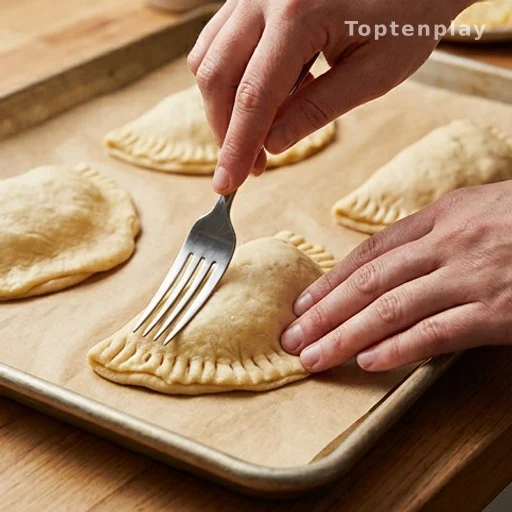
A spoonful of the cooled beef-and-cheese filling is placed onto each piece of dough. The dough is then folded over the filling and the edges are pressed firmly shut with the tines of a fork. That crimped seal is what keeps the melted cheese inside during baking rather than leaking onto the sheet.