Have you ever looked at an empty pan after taking out the chicken and wanted to rinse everything off in the sink? Don’t do it. Those brown bits stuck to the bottom are exactly what you need to make a sauce that impresses anyone. Twenty-five minutes total, a single pan, and the kind of result that looks like you spent much more time in the kitchen.
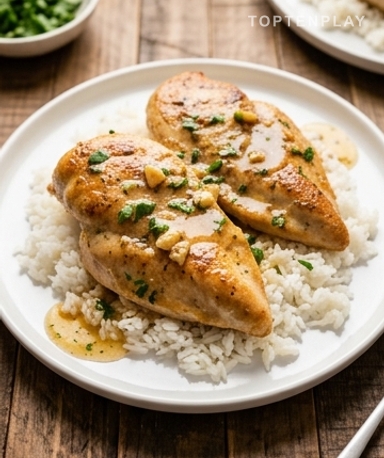
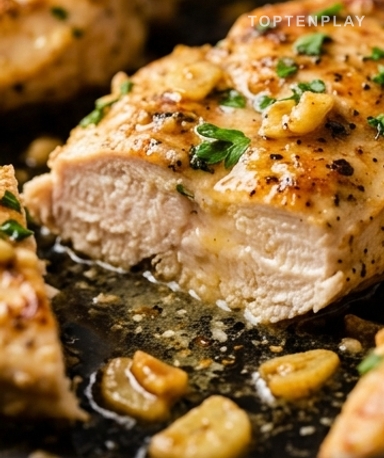
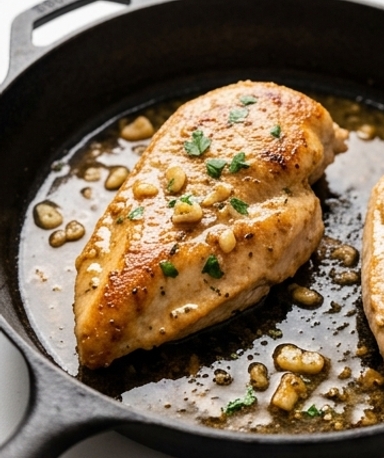
What you see on the plate is chicken with a golden crust like light caramel, topped with a glossy sauce that clings perfectly — neither too thin nor too thick. The garlic bits have taken on a soft, amber hue without ever turning bitter. Just placed on the rice, the butter continues to steam slightly. The aroma rising is round, buttery, with that little pungent note of fresh garlic — the kind of smell that brings people out of their rooms without you needing to call them.
Why you’ll love this recipe
Ingredient Notes
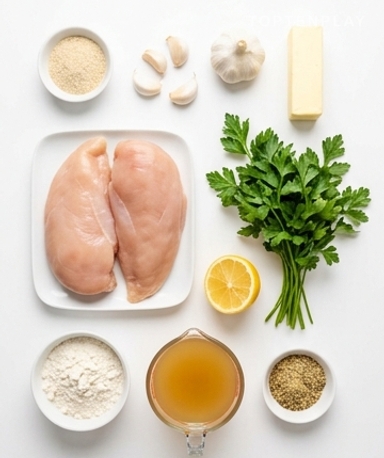
Everything you need: chicken, fresh garlic, butter, and a few herbs.
- Chicken breasts : Get thick fillets if possible — but if yours are 3 cm on one side and 1 cm on the other, flatten them slightly with the palm of your hand or a rolling pin. Uniform thickness is what prevents having one side overcooked and the other still too pink.
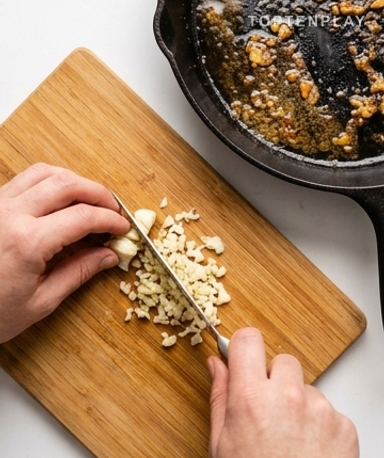
- Garlic : Fresh, not from a jar. Pre-minced garlic has lost its essential oils — its flavor will evaporate into the sauce leaving little behind. Take 3 or 4 large cloves, hand-minced. Not through a garlic press: that creates a paste that’s too fine and burns before it has time to brown.
- Butter : Unsalted is important because you’re already salting the chicken and the broth adds salt. If you only have semi-salted, it’s fixable, but taste before seasoning at the end.
- Chicken broth : A cube diluted in hot water works perfectly fine. If you have homemade broth in the freezer, even better — the sauce will be richer. Avoid overly salty broths so you can control the seasoning at the very end.
- Lemon : Fresh only. Bottled lemon juice has a slight chemical bitterness that stands out in such a simple sauce. Half a lemon squeezed at the last moment makes all the difference — it lightens and brightens the sauce without making it acidic.
Why a cast iron skillet really changes the game
You can use any pan, but cast iron is something else. It heats up slowly, then maintains that heat perfectly evenly over the entire surface. The result: a crust that truly forms, with a steady and regular frying sound instead of the irregular sputtering of a pan that’s too thin. The chicken comes out with a deep golden-brown surface — not beige, not pale — and most importantly, it leaves those bits stuck to the bottom that give the sauce its character. A non-stick pan prevents sticking, but also prevents the formation of those essential brown bits. Stainless steel or cast iron. That’s it.
Patience means not touching it
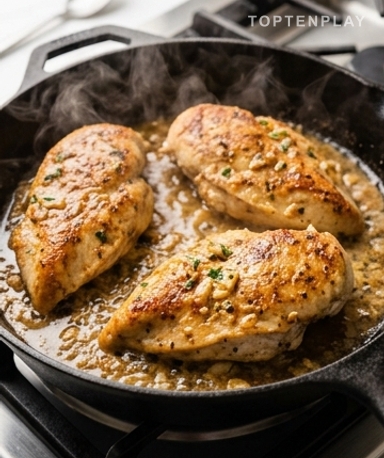
The chicken is in the hot pan. And then, the temptation is strong to move it, check it, lift it to see if it’s browning. Don’t do it. A well-seared fillet releases itself when it’s ready — if you pull and it resists, it’s not time yet. About five minutes on this side, untouched. You hear the frying, you see the edges gradually turning white, the steam rising in a thin stream. When the fillet lifts effortlessly, flip it. Only once. That’s the secret to a crust that stays on.
Garlic — the part everyone messes up
After removing the chicken, the pan is still very hot and the juices are there, brown and fragrant. The minced garlic goes straight in — stir without stopping. Two minutes, no more. It should turn a honey-blonde color, slightly translucent, and the smell becomes round, almost sweet. One second too long and it turns dark brown. Bitter. Irretrievable. Keep an eye on it. This is the only moment in the recipe that truly requires attention.
The sauce — four minutes and you’re done
The broth goes into the pan, and then you scrape the bottom with a wooden spoon — really scrape, don’t just graze. Those little brown bits that lift off are the soul of the sauce. They dissolve into the liquid and give it that concentrated flavor you couldn’t get any other way. Then the butter, then a spoonful of flour whisked in. The sauce thickens quickly, in two or three minutes — it should coat a spoon without running off immediately. Off the heat, add the lemon juice and fresh parsley. And stop there, don’t cook it anymore.
Tips & Tricks
- Take the chicken out of the fridge 15 minutes before cooking — room temperature meat sears better and stays juicier than a cold fillet that drops the pan temperature suddenly
- If your sauce is too thick when serving, add a tablespoon or two of hot broth and whisk quickly — it loosens up easily and without lumps
- Add the parsley only when it’s off the heat. Cooked, it turns olive-colored and loses its fresh edge. Thirty seconds before serving, not sooner.
Can I prepare this chicken in advance?
The chicken keeps well for 3 days in the refrigerator in an airtight container with its sauce. To reheat, do it gently in a pan over medium heat with a splash of broth to loosen the sauce — the microwave works, but the crust won’t be crispy anymore.
Can I use chicken thighs instead of breasts?
Yes, and it’s even more flavorful due to the fat content. Allow 6 to 7 minutes of cooking time per side for boneless skinless thighs, a bit more if they are bone-in. Always check with a thermometer: 74°C at the center.
My sauce is too thin, how do I fix it?
Mix half a teaspoon of flour with a teaspoon of softened butter, and whisk this mixture into the sauce over medium heat. One or two minutes is enough to thicken it without lumps.
Does it work without a cast iron skillet?
Absolutely. A stainless steel pan gives a very similar result. A non-stick pan also works, but won’t form the brown juices necessary for a well-flavored sauce — the sauce will be less interesting.
What should I serve with this garlic butter chicken?
Plain basmati rice, homemade mash, or couscous — the idea is to have something that absorbs the sauce. Short pasta like penne also works great. Avoid side dishes that are too dry or too strong in flavor which would mask the sauce.
Can I freeze this dish?
Yes, for up to 2 months in the freezer. Thaw overnight in the refrigerator, then reheat over low heat adding a bit of broth to restore the sauce. The chicken texture will be slightly firmer, but the taste remains intact.
25-Minute Garlic Butter Chicken
American
Main Course
Pan-seared golden chicken breasts, drizzled with a homemade garlic butter sauce. One pan, eight ingredients, zero compromises on taste.
Ingredients
- 4 (about 600g) chicken breasts, boneless skinless
- 1 tablespoon (15ml) neutral oil (sunflower or grapeseed)
- 4 garlic cloves, finely minced
- 240ml chicken broth
- 45g (3 tablespoons) unsalted butter
- 1 tablespoon (8g) flour
- 1/2 lemon, fresh squeezed juice
- 2 tablespoons fresh parsley, chopped
- 1 teaspoon salt
- 1/2 teaspoon ground black pepper
Instructions
- 1Take the chicken out of the refrigerator 15 minutes before cooking. Season both sides generously with salt and pepper.
- 2Heat the oil in a large cast iron or stainless steel skillet over medium-high heat until shimmering.
- 3Place the chicken breasts and cook for 5 minutes without touching, until they release naturally with a golden crust. Flip only once and cook for another 3 to 5 minutes until 74°C at the center.
- 4Transfer chicken to a plate. Do not wipe out the pan.
- 5Reduce heat to medium. Add the minced garlic to the pan juices and stir constantly for 2 minutes, until honey-blonde.
- 6Pour in the broth and scrape the bottom of the pan with a wooden spoon to release all the brown bits.
- 7Add the butter and whisk to incorporate. Sprinkle in the flour and whisk until the sauce thickens slightly, 2 to 3 minutes.
- 8Remove from heat. Stir in the lemon juice and fresh parsley. Taste and adjust seasoning.
- 9Drizzle the chicken with the sauce and serve immediately.
Notes
• Storage: 3 days in the refrigerator in an airtight container. Reheat over low heat with a splash of broth to restore the sauce.
• Thickness variation: if the breasts are more than 2.5 cm thick, flatten them slightly with a rolling pin for even cooking.
• Gluten-free: replace the flour with 1 teaspoon of cornstarch diluted in 1 teaspoon of cold water, added after the broth.
Nutrition Facts (per serving, estimated)
| 295 kcalCalories | 36gProtein | 4gCarbs | 14gFat |