Suivez-nous
28 May 2026

Yogurt cake: olive oil and cornstarch radically transform its texture

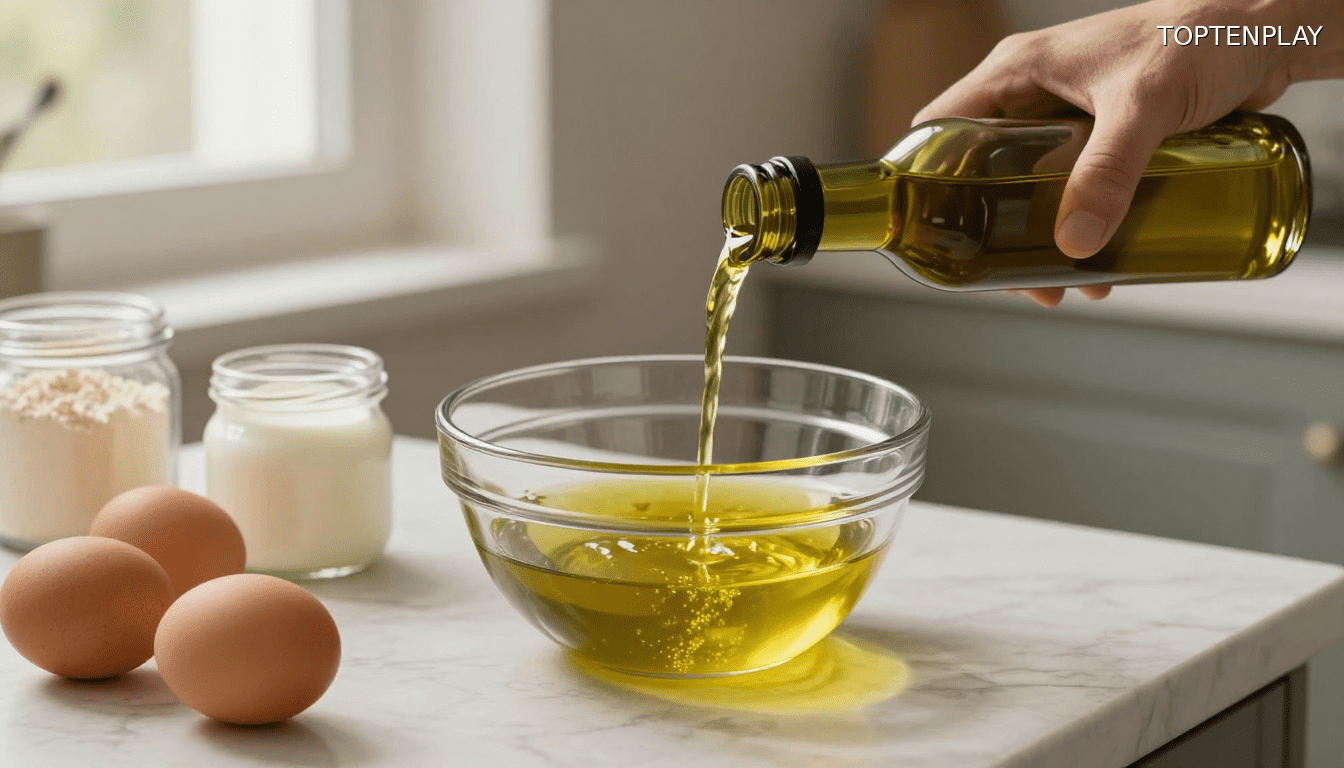
Illustration image © TopTenPlay
Symbolbild © TopTenPlay

Publicité

The Secrets Of Perfect Moistness: The Science Of Ingredients

Olive oil radically transforms the texture of a yogurt cake thanks to its intense moistening power, far superior to traditional butter. A mild oil, at a rate of 3/4 to one pot, guarantees exceptional tenderness without altering the taste.

The choice of yogurt directly determines the final result. Forget classic plain yogurt: fromage blanc, Greek yogurt, or the addition of a spoonful of crème fraîche provide the necessary fats. The richer the dairy product, the moister and airier the cake becomes. Drinking yogurt offers an interesting alternative for pronounced moistness, although it is less airy.

Cornstarch instantly lightens the structure. The half-flour, half-starch option is suitable for traditional preparations, while a 100% starch version allows for a gluten-free cake while maintaining moistness.

Publicité

Baking soda is the unsung miracle product: a simple quarter teaspoon combined with half a packet of baking powder is enough to transform the texture. This combination guarantees optimal expansion of the batter during baking.

These four technical elements — olive oil, rich dairy products, starch, and baking soda — work in synergy to create this characteristic melting texture. Their effectiveness, however, relies on a precise incorporation method that entirely conditions success.

Illustration image © TopTenPlay
Symbolbild © TopTenPlay

Technical Gestures That Change Everything

Mastering the incorporation gestures directly conditions the final texture. Whisking egg whites separately creates an airy structure without compromising creaminess: this simple technique transforms an ordinary cake into a light and voluptuous preparation.

Publicité

Mixing time represents the most critical element. Incorporate all ingredients except the flour, mix in less than 6 to 8 seconds, then add flour, baking powder, and baking soda while stirring very quickly: this precise chronology avoids overworking the gluten which would toughen the texture. No lumps should remain, but speed of execution takes precedence over everything.

Resting the batter for 20 to 30 minutes before baking allows the ingredients to stabilize and the baking powder to act effectively. This step determines the cake’s ability to rise uniformly during baking.

Upon leaving the oven, immediately covering the cake with aluminum foil creates an artificial steam room. The trapped moisture maintains the moistness and prevents the rapid drying characteristic of failed versions.

These four gestures — whipped whites, ultra-fast mixing, prolonged rest, and immediate covering — form an infallible technical sequence. Their rigorous application guarantees a professional result, but some creative alternatives allow for exploring other taste dimensions.

Publicité

Illustration image © TopTenPlay
Symbolbild © TopTenPlay

Publicité
Partager sur Facebook