US Citizen Veteran Wrongfully Detained: When Immigration Raids Target The Wrong People
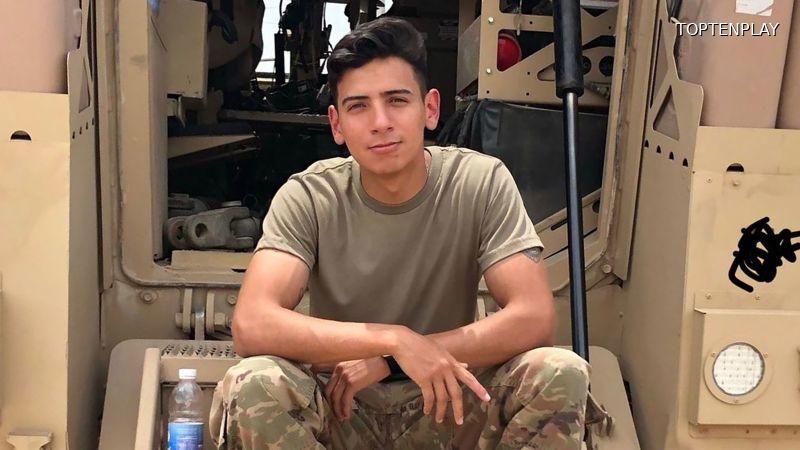
George Retes woke up July 10th expecting an ordinary workday. Instead, the 25-year-old Army veteran found himself trapped in an immigration enforcement nightmare that would tear apart his family’s most cherished plans.
When Retes arrived at Glass House Farms in Camarillo, where he worked as a contract security guard, federal agents had already descended on the marijuana facility. Over 300 people would be arrested that day across two locations in what became one of the largest immigration raids in recent California history.
The Iraq War veteran approached the barricade of Immigration and Customs Enforcement officers, confident his citizenship would resolve any confusion. “I didn’t think it was gonna be a problem for me to go to work … as long as I identified myself,” Retes later recalled.
The agents refused to listen.
What followed shattered any illusion that legal status provides protection from enforcement errors. When Retes tried to leave the escalating scene, agents surrounded his vehicle, shouting conflicting orders. They shattered his driver’s side window, deployed pepper spray directly into his face, and dragged him from his car as tear gas clouded the air around hundreds of protesters.
“All I wanted was to be there for my daughter’s birthday,” Retes would later say, his voice breaking as he described the three-year-old’s planned Minnie Mouse party – the celebration that would never happen.

Three Days In Hell: Inside The Detention Of An Innocent Father
An EMT bandaged Retes’ bleeding leg before federal agents loaded him into an unmarked SUV. His destination: downtown Los Angeles’ Metropolitan Detention Center, where he would vanish into the system for three endless days.
No one explained why he was there. No one answered his repeated questions. Even the booking officers seemed confused about his case, Retes recalled. “No one even knew who arrested me or why they arrested me,” he said.
Based on intake responses about his mental state, officials placed the father on suicide watch – solitary confinement in a cell where bright lights never turned off. Guards monitored him constantly while a psychiatrist made daily visits to ensure he wouldn’t harm himself.
The gash on his leg from the shattered car window received no medical attention, despite his repeated requests. Tear gas and pepper spray continued burning his skin and eyes, but he never got a chance to shower. Sleep proved impossible on what he described as a cement block covered by a thin mattress.
Throughout his detention, Retes couldn’t contact an attorney or call his wife. His family received no information about his whereabouts from any agency they contacted.
The Department of Homeland Security later accused Retes of assault, claiming he “became violent and refused to comply with law enforcement.” Yet federal prosecutors declined to file any charges against him.
“I would like to see where I assaulted an officer, and if that’s true, why wasn’t I charged?” Retes demanded.
The contradiction spoke volumes: serious enough allegations to justify three days of detention, but insufficient evidence for a single criminal charge.

A Family’s Nightmare: The Search For A Missing Father
While Retes lay isolated in his brightly lit cell, his wife Guadalupe Torres was living her own nightmare. She had no idea where her husband had vanished or if he was even alive.
Six hours of frantic phone calls yielded nothing but bureaucratic runarounds. “I just don’t know where he’s at. I’ve been up since 6 a.m. trying to call the sheriff’s, the police department, Oxnard, Camarillo, Ventura… They say they don’t know,” Torres told CNN affiliate KABC through tears.
No agency would provide information. No one would confirm his detention. Federal authorities had simply made a father disappear without a trace.
The timing couldn’t have been crueler. For weeks, Retes and his three-year-old daughter had planned her Minnie Mouse birthday party – complete with an inflatable bounce house, family gathering, and special treats. She was excited about the celebration. He was excited to see her smile.
Instead, while immigration agents debated charges they would never file, a toddler spent her birthday wondering why daddy didn’t come home.
Torres found herself explaining the unexplainable to their confused children: an eight-year-old son asking when his father would return, a three-year-old who couldn’t understand why her party was canceled.
The family that woke up planning a celebration went to bed as casualties of an enforcement system that had swallowed their father whole.
Freedom Without Justice: The Aftermath Of Wrongful Detention
Three days later, guards finally told Retes he was free to leave. No explanation. No apology. No acknowledgment of the constitutional violations he had endured.
“So I basically was locked up for no reason, and missed my daughter’s birthday for no reason?” Retes asked the guards as he signed for his belongings. Their response? Silence.
Stepping into the California sunshine, Retes felt relief wash over him. His wife picked him up, and they drove straight to his parents’ house where their children waited.
The reunion was everything and nothing like he had imagined. His eight-year-old son and three-year-old daughter ran toward him screaming “Dad!” – their voices carrying three days of confusion, fear, and desperate hope.
“It was the best thing ever, that feeling I’ll never forget. It was so nice to finally… hold them,” Retes recalled. But beneath the joy lay trauma that wouldn’t fade with freedom.
The family remains in distress weeks later. Retes apologized to his daughter for missing her birthday, though she’s too young to understand why daddy disappeared. The psychological scars run deeper than his untreated leg wound.
His military service meant nothing. His citizenship meant nothing. His family’s anguish meant nothing to an enforcement system that operates without accountability.
“No one deserves to be treated the way I did,” Retes said. “It shouldn’t even matter if I’m a veteran, it shouldn’t matter if I’m a US citizen or the color of my skin, or if I’m here illegally or I’m an immigrant.”
Justice remained as elusive as the apology that never came.