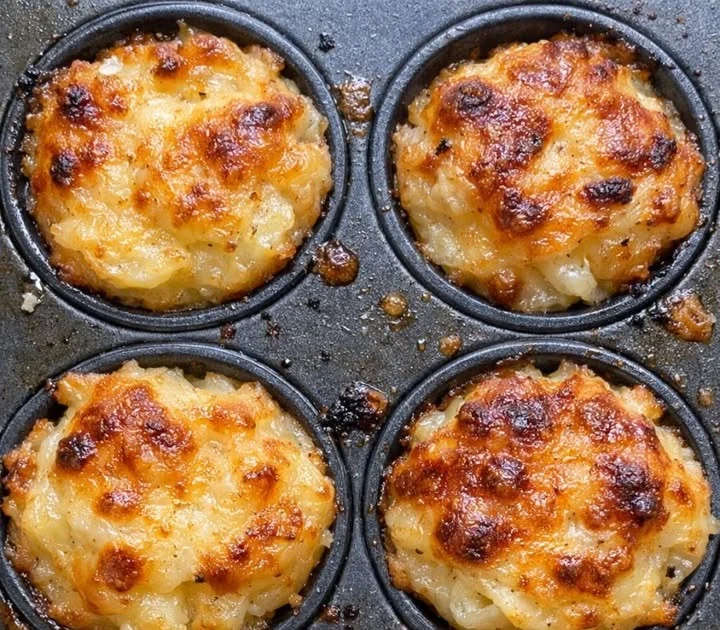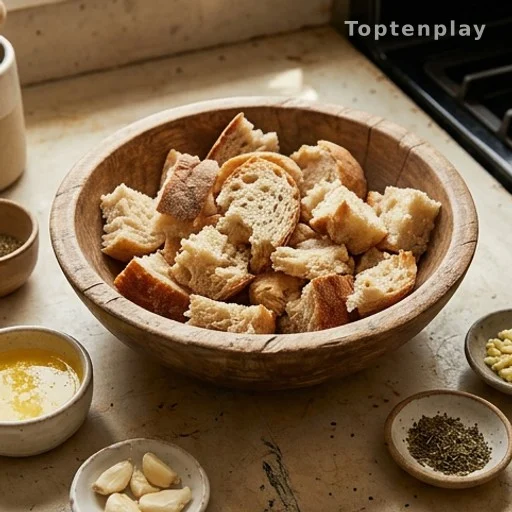
The simplicity is intentional. Everything comes together in a single bowl, and the only equipment needed beyond that is one baking sheet — keeping cleanup to a minimum.
Optional additions can elevate the rolls further: grated Parmesan, red pepper flakes, or sesame seeds are all suggested as easy upgrades that require no extra prep time.
Why stale bread works better here
Stale bread has lost much of its internal moisture, which means it absorbs the butter-and-garlic coating without becoming soggy. When baked, the reduced water content allows the exterior to crisp up faster and more evenly than fresh bread would. This is why day-old crusts, often discarded, are actually the ideal raw material for this recipe.
Tear, don’t slice — the technique that makes the difference
The preparation method matters as much as the ingredients. The recipe is explicit on one point: tear the bread, don’t slice it. Irregular, rough-edged pieces create more surface area, which translates directly into crispier, more textured edges once baked.
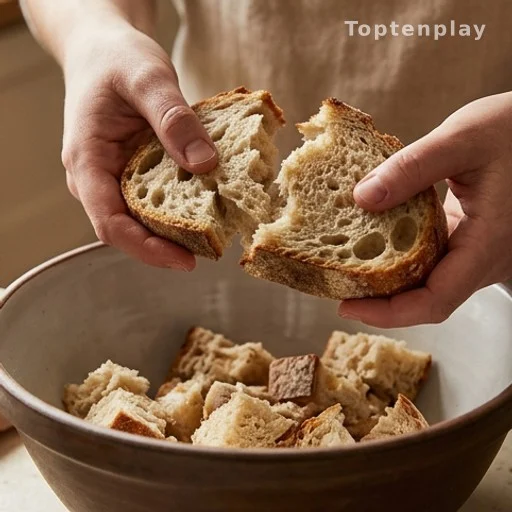
Slightly stale bread is also strongly recommended over fresh. Fresh bread retains too much moisture and risks turning soft rather than achieving the desired crunch during the 12–15 minute bake.
The oven is set to 375°F (190°C), with a parchment-lined baking sheet used to prevent sticking and ensure even browning across all pieces.
Herb butter: the step that ties the whole recipe together
Once the bread is torn, the herb butter is made directly in the same bowl. Melted butter is combined with minced garlic and the chosen herb — parsley for a fresher note, dried oregano for something more robust — before the bread pieces are tossed through to coat evenly.
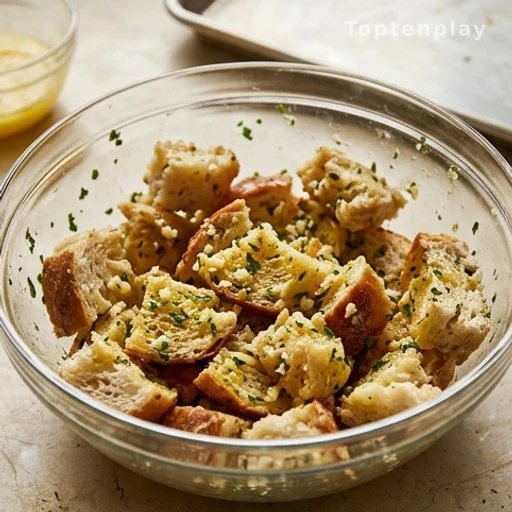
The garlic is described as «the soul of the roll» — and skipping it is explicitly discouraged. Whether using fresh cloves or garlic powder, that aromatic base is what defines the final flavor.