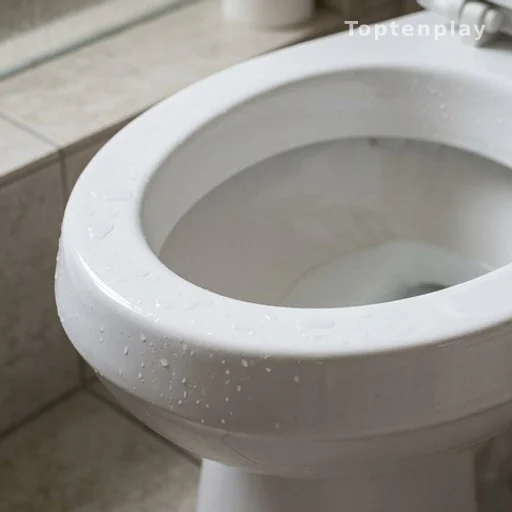
The toilet bowl is small and curved. When a heavy volume of water hits that confined space, it generates what specialists describe as a massive splash zone. Microscopic droplets carrying floor dirt, pet dander, and kitchen grease are projected outward — landing on the toilet seat, the rim, the flush handle, and any nearby surfaces, including toothbrushes stored on the counter.
The verdict from plumbing professionals is clear: avoid the toilet unless it is an absolute emergency. If there is no alternative, the water should be poured incredibly slowly down the back curve of the bowl to minimize the splash effect. Even then, a thorough wipe-down of surrounding surfaces is necessary.
Why mop water is harder on plumbing than it looks
Standard mop water contains a mixture of fine grit, hair, pet dander, kitchen grease, and chemical degreasers. Unlike plain water, this combination is abrasive to smooth surfaces and can accumulate in drain traps. Utility sinks — also called mop or slop sinks — exist specifically to handle this type of waste water safely.
How mop water scratches and stains your bathtub over time
The bathtub looks like the obvious alternative: it is large, easy to pour into, and has a drain. But it is engineered for clean water and clean bodies — not for the gritty, chemical-laden contents of a mop bucket.
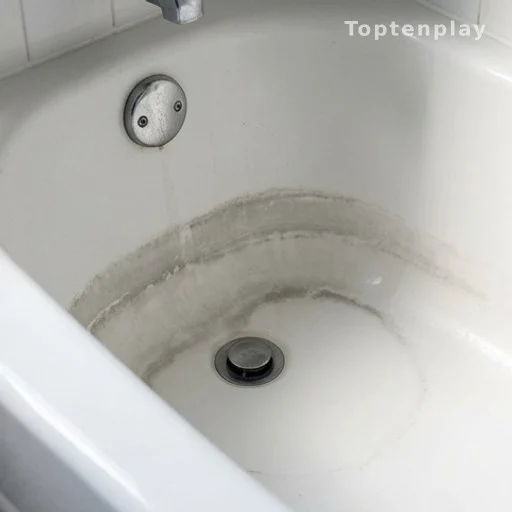
Mop water typically contains fine grit, hair, and harsh chemical degreasers. When poured into the tub, the dirt and cleaning agents leave a stubborn, grayish scum ring around the porcelain that requires additional scrubbing to remove. More damaging is the fine sand and grit suspended in the water, which causes micro-scratches in the glossy finish of fiberglass or porcelain surfaces.
These micro-scratches compound over time. As the surface loses its smooth finish, dirt and soap residue lodge more easily into the grooves, making the tub progressively harder to keep clean. There is also a plumbing consequence: the hair and grit carried in mop water can bypass the drain cover entirely and accumulate in the P-trap, the curved pipe section beneath the drain designed to block sewer gases, leading to a stubborn clog that may require professional attention.
What professional cleaners and plumbers actually recommend
When both the toilet and the bathtub carry documented risks, the question becomes: where should the water go? Professional cleaners and plumbers approach the problem by thinking about two factors simultaneously — the splash zone and the risk of surface or drain damage.
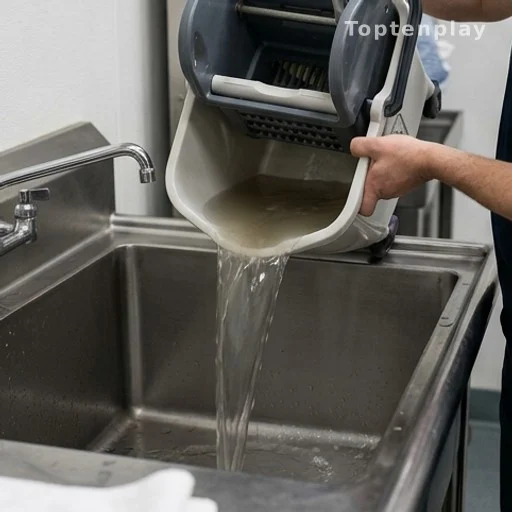
The consistent professional recommendation points away from bathroom fixtures altogether. A utility sink, also called a mop sink or slop sink, is the purpose-built solution: it is deep enough to prevent splashback, its drain is designed to handle debris-laden water, and its surface is built to withstand the chemical content of cleaning products. In homes without a utility sink, an outdoor drain or a toilet used with extreme care and a slow pour remains the least-bad option.
Suggested Posts

Two Identical Officers, One Hidden Difference: Can You Find It?
At first glance, the two police officers in this image look completely identical — same deep blue uniforms, same black sunglasses, same utility belts,…