Moles are usually harmless clusters of pigmented cells, but when they start to change in size, shape, or color—or begin to itch, bleed, or crust—they may be an early warning sign of melanoma or another form of skin cancer. Detecting these changes early can save lives.
The ABCDE Rule to Spot Dangerous Moles
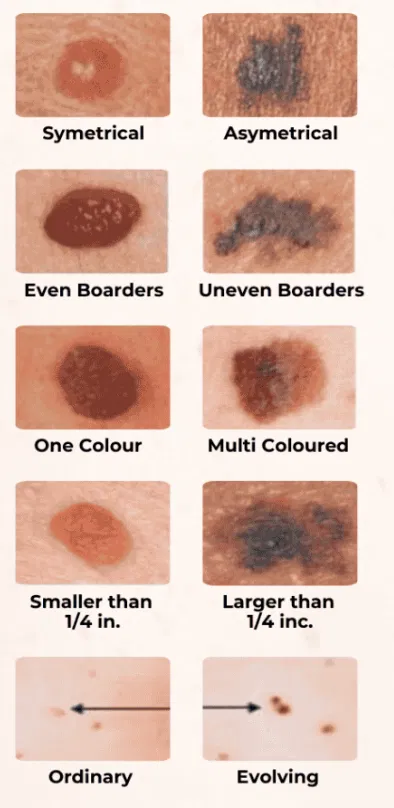
Dermatologists recommend the ABCDE method for identifying suspicious moles:
-
Asymmetry: One half doesn’t match the other.
-
Border: Edges are uneven, blurred, or ragged.
-
Color: Multiple shades within one mole (brown, black, red, white, or blue).
-
Diameter: Larger than 6 mm (like a pencil eraser).
-
Evolving: Any changes over time.
If a mole matches these signs, seek medical advice immediately.
Other Growths to Watch Out For
-
Actinic Keratoses: Rough, scaly patches caused by sun damage.
-
Basal Cell Carcinoma: Waxy or pearly bumps on sun-exposed areas.
-
Squamous Cell Carcinoma: Red nodules or crusty flat lesions.
-
Seborrheic Keratoses: Harmless but often mistaken for cancer.
Red Flags of Dangerous Growths
-
Rapidly growing new spots.
-
Persistent pain, bleeding, or itching.
-
Discoloration spreading beyond the border.
-
Sores that won’t heal.
What You Should Do
-
Check your skin monthly under good lighting.
-
Visit a dermatologist for unusual or changing growths.
-
Protect your skin with sunscreen, protective clothing, and by avoiding tanning beds.
Real-Life Reminder
Sarah, a 42-year-old teacher, ignored a growing mole until doctors confirmed melanoma. Thanks to early detection, she recovered. Her message: “Don’t wait—check your skin regularly. It could save your life.”
Prevention Tips
-
Know your family history.
-
Limit sun exposure (10 AM–4 PM).
-
Apply SPF 30+ daily.
-
Avoid tanning beds.
💡 Stay vigilant. Early detection = better survival. Don’t ignore what your skin is telling you.