Bananas going brown before you get the chance to eat them is one of the most common sources of food waste in the kitchen. The problem, however, is rarely bad luck — it almost always comes down to how they are stored. A few small adjustments to your routine can keep bananas fresh for significantly longer.
En bref
- —Ethylene gas is the main cause of rapid banana spoilage
- —Wrapping banana stems can extend freshness by several days
- —Refrigeration works — but only once bananas are fully ripe
Ethylene: The Invisible Culprit Behind Rapid Ripening
When bananas spoil faster than expected, the cause is usually ethylene, a natural gas that fruits release as part of the ripening process. Bananas are particularly sensitive to this gas, making their storage environment more important than most people realize.
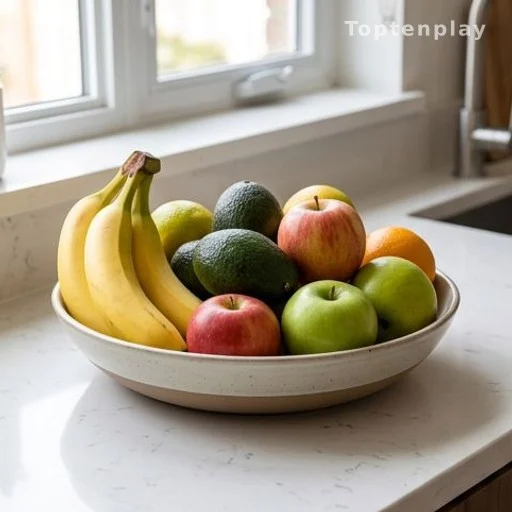
The problem is often made worse by where bananas are kept. Placing them in a fruit bowl alongside items such as apples, avocados, or pears exposes them to additional ethylene produced by those fruits. This combined exposure dramatically accelerates ripening, turning firm bananas soft and brown far sooner than expected.
Understanding ethylene is the first step toward better storage. Once you know the source of the problem, the solutions become straightforward and easy to apply.
Keep Bananas Separate to Slow the Process
The simplest adjustment is also one of the most effective: keep bananas away from other fruits. By giving them their own dedicated spot on the counter, you reduce their exposure to the ethylene released by surrounding produce.

It is equally important to keep bananas in their bunch rather than pulling them apart. Separating individual bananas increases their surface exposure and speeds up spoilage. Keeping the bunch intact helps preserve each banana for longer.
These two habits alone — isolation from other fruits and keeping the bunch together — can make a noticeable difference in how long your bananas stay at the right ripeness.
Why banana storage matters
Bananas are among the most consumed fruits worldwide, yet they are also one of the most frequently wasted due to rapid spoilage. Their high sensitivity to ethylene — a natural ripening gas — makes them uniquely vulnerable to their storage environment. Small changes in how they are kept can have an outsized impact on reducing household food waste.
Wrapping the Stems: A Small Step With a Big Impact
One of the most effective tricks involves the stem of the banana. The stem area is where the majority of ethylene is released, making it the key point to target if you want to slow ripening.
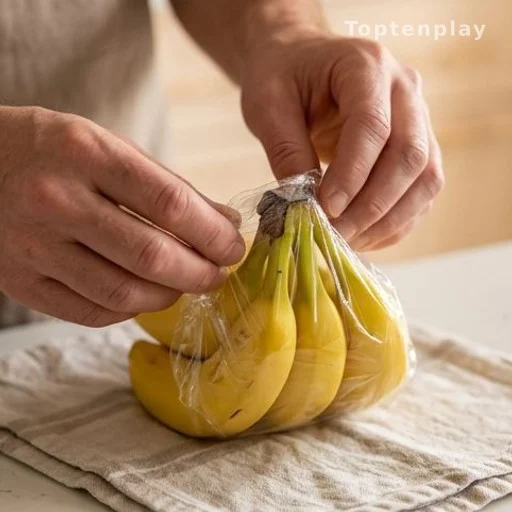
Covering the stems tightly with plastic wrap or aluminium foil helps trap the gas at its source and delays the ripening process. This small, low-cost step can extend the freshness of your bananas by several days on its own.
The technique is easy to apply and requires no special equipment. Simply wrap the stems snugly after purchase, and rewrap them after each time you take a banana from the bunch.
When and How to Use the Refrigerator
Refrigeration is a useful tool, but timing is everything. Placing bananas in the fridge before they are fully ripe can disrupt the ripening process and affect their texture and flavour.
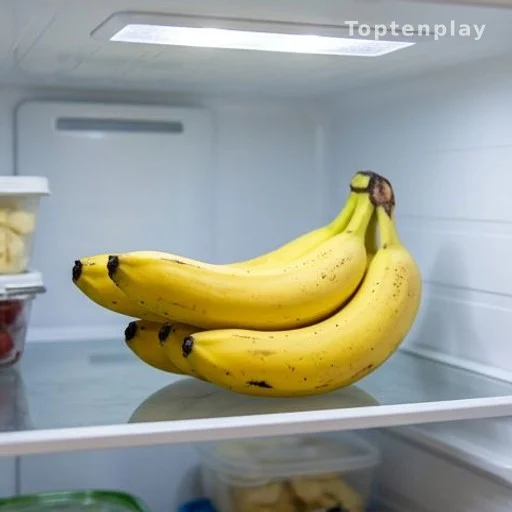
Once bananas have reached full ripeness, however, the refrigerator becomes an effective way to preserve them. The peel will likely darken and turn brown in the cold, but this is purely cosmetic — the fruit inside remains fresh and good to eat for a longer period.
By combining all three approaches — separating bananas from other fruits, wrapping their stems, and refrigerating only at the right moment — it is possible to significantly reduce food waste and enjoy bananas at their best for up to 10 days longer than with standard storage habits.
Keeping bananas fresh for longer does not require any special products or equipment. By understanding the role of ethylene, storing bananas away from other fruits, wrapping their stems, and using the refrigerator only once they are ripe, anyone can dramatically cut down on waste. These small, practical habits are easy to adopt and make a real difference in the kitchen every week.