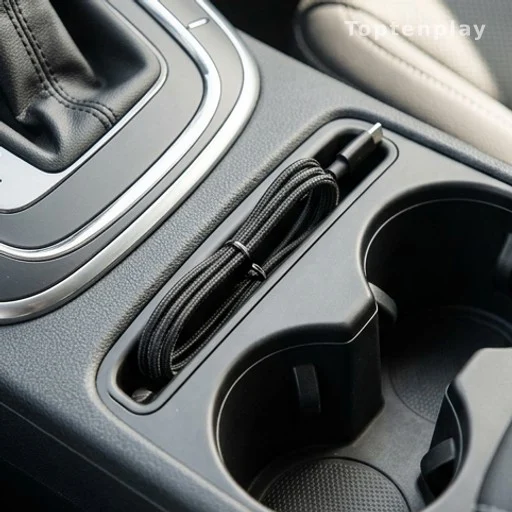
Without this channel, the cup holder’s sliding mechanism would press directly against the cord each time the holder is adjusted, gradually fraying and eventually damaging the cable. The gap acts as a protective conduit, keeping the wire clear of any moving parts.
It is a small detail, but one that reflects how thoroughly engineers map out the interior of a center console. Every millimeter, as automotive designers put it, is accounted for.
The side slit: a deliberate coin and pen holder with a safety rationale
The thin rectangular slit positioned beside the cup holders is not a seam or a gap left by poor assembly. Engineers placed it there as a dedicated spot for coins and pens — the kind of small objects a driver needs to reach quickly at a toll booth or parking garage.
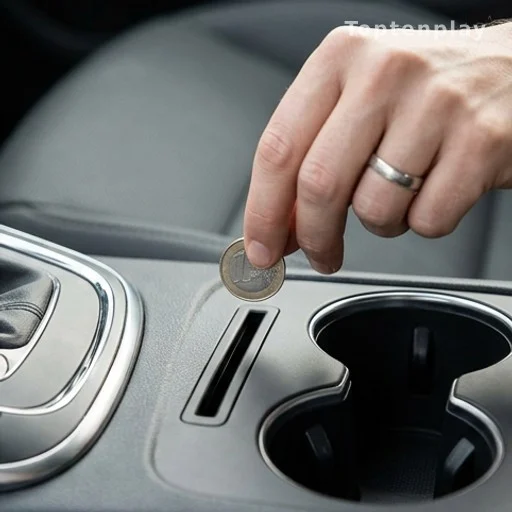
The safety logic behind this is direct: a loose quarter or a rolling pen that slides under the brake pedal creates a genuine hazard. By giving those items a fixed, secure slot, the design removes them from the footwell entirely.
This type of intentional micro-storage reflects a broader principle in vehicle design — anticipating the small, repetitive actions drivers take and building the interior around them rather than leaving them to chance.
Why car interiors are more engineered than they look
Automotive interior designers work within extremely tight spatial constraints, where every compartment, slot, and channel must serve a purpose without adding weight or complexity. The center console in particular has evolved significantly over the past two decades as USB charging, smartphone navigation, and contactless payments changed what drivers need within arm’s reach.
The wider gap on newer models: a built-in smartphone mount
On a number of newer vehicles, the space between two cup holders is wider by design. That gap is sized to hold a smartphone vertically, positioning the screen at roughly eye level for the driver.
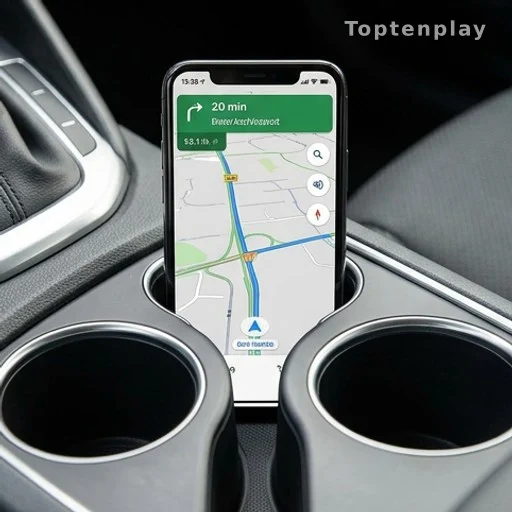
The practical benefit is twofold: the phone charges through a nearby USB port while remaining visible for GPS navigation, without the driver needing to look down toward the lap or reach for a separate dashboard mount.
Suggested Posts

A mystery object in hand turns out to be a vintage tape dispenser
A small, polished golden-brown object sat in someone's hand with no obvious purpose — no label, no instructions, no obvious mechanism. Online searches and…