Guacamole is one of those rare recipes that everyone agrees on before even tasting — the smell of freshly squeezed lime rising in the kitchen already sets the scene. Here, no gimmicks, no cheating: just honest ingredients and a method that respects the avocado.
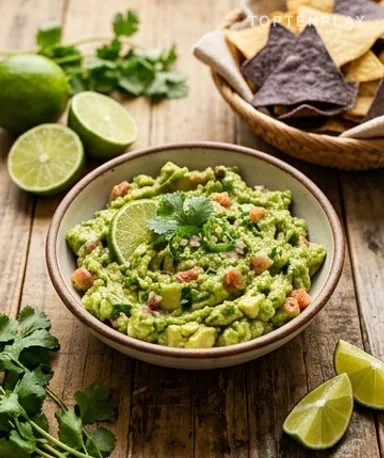
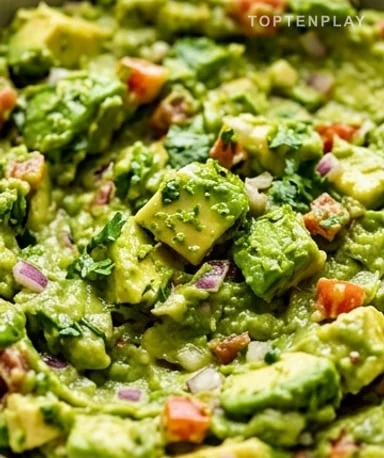
This deep, matte green is the green of avocados at their peak ripeness, a green no artificial color can imitate. The chunks remain generous, almost coarse — intentionally. Cilantro cuts into small dark specks against the creamy paste, and the tomato dice bring a nearly juicy freshness to every bite. It’s rustic, generous, and smells of fresh lime as soon as you approach the bowl.
Why you’ll love this recipe
Ingredient Notes
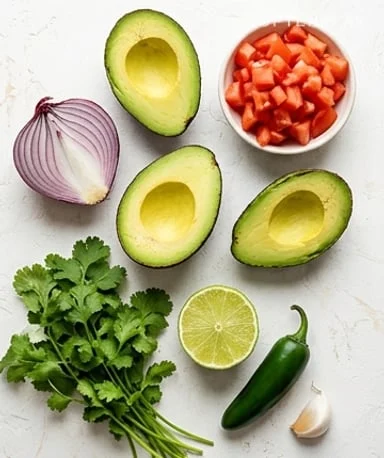
Red onion, Roma tomato, jalapeño, garlic, cilantro, lime zest and juice: nothing more, nothing less.
- Avocado : This is the base, and it’s where it all hinges. An avocado that’s too firm will yield a pasty texture that’s hard to work with; one that’s too soft will taste flat, almost bitter. Look for fruits with dark, rough skin that yield slightly to pressure without denting. Once cut, the flesh should be uniformly green and satiny, without brown spots.
- Red onion : It provides crunch and a slight sweetness that white onion lacks. Mince it very finely — pieces that are too large upset the balance and overpower every other flavor. Once incorporated, it should be felt without asserting itself.
- Fresh cilantro : It balances the fat of the avocado with a nearly citrusy lightness. If you don’t like cilantro (it’s often genetic, not a matter of taste), flat-leaf parsley works as a 1-for-1 replacement, with a milder, less polarizing profile.
- Lime (zest and juice) : The juice provides acidity that wakes up all the ingredients; the zest gives an aromatic intensity that juice alone cannot replicate. It’s also the citric acid that slows oxidation and keeps guacamole green longer — a good reason not to skimp.
- Jalapeño : It provides the heat, but its spice level is entirely adjustable. With seeds: quite spicy. Without seeds or white membranes: very mild, accessible to all. Replacing it with a serrano takes it up another notch. Dice it as finely as possible for even heat distribution.
- Garlic : Half a clove is enough to add a warm, savory note in the background. Too much garlic and it takes over everything. Here, it should be hinted rather than asserted — grated on a microplane rather than pressed, it blends better into the mix.
Everything hinges on the avocado you choose
Before even thinking about the recipe, it’s at the market where it all plays out. An avocado with light, smooth skin isn’t ripe — you’ll need to wait two to three days at room temperature. An avocado that crushes under your fingers is already too far gone, and no technique will salvage a flat, slightly fermented taste. What you’re looking for is a fruit with dark, rough, almost black skin that yields under gentle thumb pressure without denting. In the kitchen, the visual cue is foolproof: once cut in half, the flesh should be uniformly green and satiny, without brown spots, and the pit should release cleanly with a simple twist. If you buy firm avocados to use in a few days, leave them at room temperature — definitely not in the fridge, which halts ripening completely.
Mashing without massacring is the whole technique
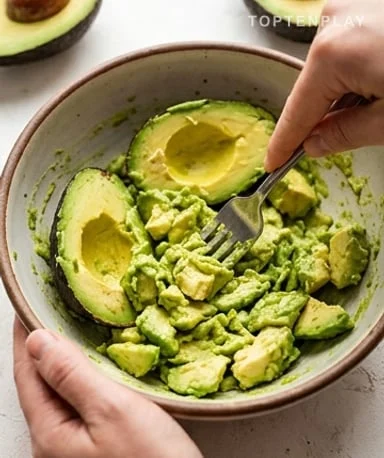
Forget the blender and food processor. Guacamole is made with a fork, and this constraint is actually a blessing: it forces you to keep texture. Scoop out the flesh with a large spoon, place it in a bowl, and start mashing in circular motions, deliberately leaving chunks of varying sizes. The result should have both creamy areas and distinctly chunky ones — that’s what gives the impression of a freshly made guacamole, not an industrial puree. The sound of the fork scraping the bottom of the ceramic bowl, the pieces offering slight resistance under the metal tines: that’s the right signal. If the fork glides too easily without meeting any resistance, the avocado is likely overripe.
Assembly requires restraint
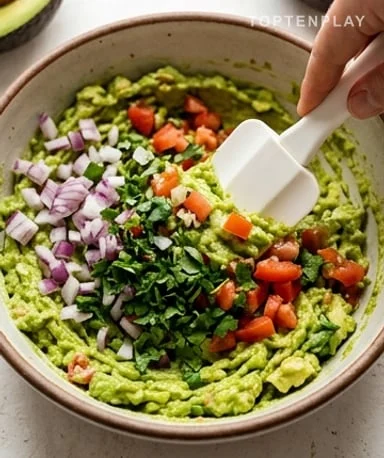
Once the avocados are mashed, add in order: minced red onion, chopped cilantro, grated lime zest, lime juice, finely diced jalapeño, and grated garlic. Season with salt and pepper. Then fold gently with a flexible spatula — no vigorous stirring, as that would destroy the texture you’ve built piece by piece. Tomatoes go in last, even more delicately. Choose firm Roma tomatoes from which you’ve removed the seeds: a watery tomato will turn the guacamole liquid in minutes, and that’s not fixable. At this stage, taste: the lime juice should be present but not overwhelming, the jalapeño should tingle without burning, and the salt should bring out the buttery flavor of the avocado.
Making it ahead is possible — with one precise condition
Guacamole browns quickly, that’s its nature: oxidation starts as soon as the avocado flesh is exposed to air. But there’s a simple remedy. Once the guacamole is in its bowl, smooth the surface with the back of a spoon, then press plastic wrap directly onto the paste — not on the rim of the bowl, but against the surface, with no air pockets between the wrap and the guacamole. Seal with an airtight lid and refrigerate. The next day, the color is preserved and the flavors have melded slightly, resulting in a slightly more homogeneous outcome. Remove the bowl from the fridge ten minutes before serving to restore all the aromatic nuances that the cold has somewhat muted.
Tips & Tricks
- Use freshly squeezed lime juice, not bottled — bottled juice is often pasteurized, which flattens the aromas and can add a slight artificial bitterness that unbalances everything else.
- Don’t overmix after adding the ingredients: every pass of the spatula breaks down the avocado chunks a bit more, and after too many turns, you end up with a smooth, uniform texture that resembles industrial puree rather than homemade guacamole.
- Remove the seeds and white membranes from the jalapeño if serving people unaccustomed to heat — that’s where the capsaicin is concentrated, not in the green flesh itself.
- Add the tomatoes last and fold them in gently: incorporated too early or worked too long, they release their water and turn the guacamole into something much too liquid to stay on a chip.
How can you tell if an avocado is truly ready to use?
A ripe avocado has dark, rough skin and yields to gentle thumb pressure without denting. If the pit releases cleanly with a simple twist once cut in half, and the flesh is uniformly green without brown spots, it’s at the perfect point.
How do you prevent guacamole from browning?
Lime juice already slows oxidation, but the real trick is plastic wrap applied directly to the surface of the guacamole, with no air pockets. With this technique and an airtight container, guacamole stays green for up to 24 hours in the refrigerator.
I don’t like cilantro — is there an alternative?
Flat-leaf parsley is the best substitute, used in a 1-to-1 ratio by volume. It gives a milder, less polarizing profile without altering the overall balance of the guacamole. Avoid curly parsley, as its tougher texture and more bitter taste are not suitable here.
How do you adjust the level of heat?
It all comes down to the jalapeño: removing the seeds and white membranes gives a very mild guacamole, keeping them increases the heat significantly. For even more pronounced heat, replace the jalapeño with a serrano; for a mild guacamole suitable for children, simply omit the chili.
Can you freeze guacamole?
Technically yes, but the result after thawing is disappointing: the texture becomes watery and grainy, and the fresh aromas of lime and cilantro almost completely disappear. It’s better to make exactly the amount you need and consume it within 24 hours.
Why use Roma tomatoes instead of regular tomatoes?
Roma tomatoes are fleshier and less watery than common round tomatoes. When incorporated into guacamole, they add color and slight acidity without making the preparation soggy. A too-juicy tomato quickly releases its water and turns the guacamole liquid in minutes.
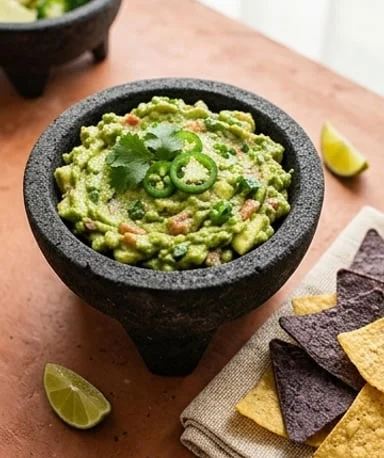
The Best Guacamole (Simple, Fresh, Restaurant Quality)
Mexican
Appetizer / Dip
A homemade guacamole made in ten minutes with fresh ingredients — avocados, red onion, cilantro, lime, jalapeño, garlic, and tomato. Chunky, bright, and frankly better than anything you can buy in a jar.
Ingredients
- 3 ripe avocados (about 450g flesh)
- 50g red onion (about 1/4 onion), very finely minced
- 20g fresh cilantro (1/2 bunch), chopped
- 2 limes — juice of both + zest of one
- 1 jalapeño, seeded and finely minced (seeds reserved for more heat)
- 1 garlic clove, grated or pressed
- 150g Roma tomatoes (about 2), seeded and diced small
- Fine salt and freshly ground black pepper
Instructions
- 1Cut the avocados in half lengthwise, remove the pit with a firm twist, then scoop out the flesh with a large spoon into a medium bowl.
- 2Mash the flesh with a fork in circular motions, deliberately leaving irregular chunks — some creamy areas, others distinctly chunky.
- 3Add the minced red onion, chopped cilantro, zest of one lime, juice of both limes, jalapeño, and grated garlic. Season with salt and pepper.
- 4Gently fold everything together with a flexible spatula until the ingredients are just incorporated — without overmixing to preserve texture.
- 5Fold in the tomato dice last, giving two or three folds without crushing them.
- 6Taste and adjust: more salt, an extra squeeze of lime, or a bit more jalapeño according to your preference. Serve immediately or store (see notes).
Notes
• Storage: smooth the surface of the guacamole, press plastic wrap directly onto the surface (no air pockets), and seal in an airtight container. Keeps up to 24 hours in the refrigerator. Remove 10 minutes before serving.
• Spice: remove the seeds and membranes from the jalapeño for a mild result. Replace with a serrano for more pronounced heat. Omit entirely for a non-spicy guacamole.
• Cilantro: replace with an equal amount of flat-leaf parsley if you don’t like cilantro. The profile is milder but the balance remains coherent.
• Tomatoes: prefer firm Roma tomatoes from which you have removed the seeds. A watery tomato will quickly make the guacamole liquid.
Nutrition Facts (per serving, estimated)
| 178 kcalCalories | 2gProtein | 10gCarbs | 16gFat |