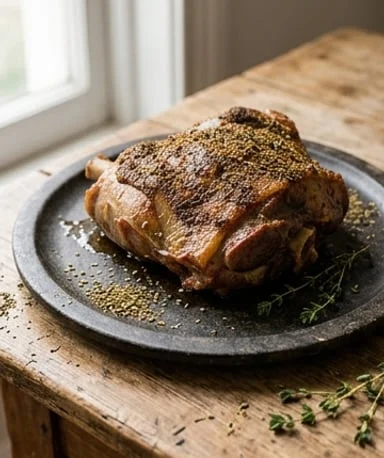
The smell that settles in the house after two hours of cooking—heated herbs, melted fat, slightly toasted notes—is exactly what we think of when we say that cooking takes care of you. The confit milk-fed lamb shoulder is not a weekday recipe. It’s the one you pull out when you want people to remember the meal.
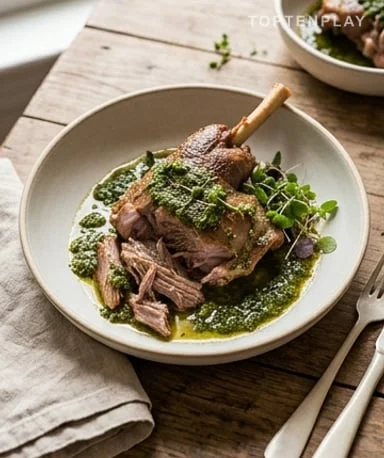
Ingredients :
- Milk-fed lamb shoulder — Milk-fed lamb—under 45 days, fed exclusively on mother’s milk—has very pale, almost pink flesh and fat of rare delicacy. It is this fat that, melting slowly during the confit cooking, will baste the meat from the inside without ever weighing it down. If you can’t find milk-fed lamb specifically, ask for a lamb shoulder under 4 kg: the younger the animal, the more tender the texture. Avoid mutton or adult lamb—the fat would be too present, the texture too firm.
- Za’atar — Za’atar is a dried blend of thyme, oregano, sumac, and toasted sesame seeds. Sumac provides a light, slightly fruity acidity that plays a precise role in the sauce: counterbalancing the richness of the lamb without overwhelming it. Buy it from a Middle Eastern grocery—European blends are often too heavy on thyme alone and lack the depth of real Lebanese or Palestinian za’atar.
- Coarse salt for the brine — Brine works by osmosis: salt gradually penetrates muscle fibers and allows them to retain more moisture during long cooking. Use non-iodized coarse salt—iodized salt can leave a slightly metallic aftertaste during long marinating. Use about 30 g salt per 1 liter water, enough that the brine tastes distinctly salty on the tongue.
- Garlic cloves in their skins — Unpeeled garlic cloves release their aromas slowly over the seven hours of cooking, without ever making the base bitter—which happens systematically with finely chopped garlic at high heat. They melt into the cooking juices and can be retrieved at the end of cooking, mashed with a fork and incorporated into the za’atar sauce for a more robust version.