The Secret Begins at the Butcher: Choosing the Right Meat Above All
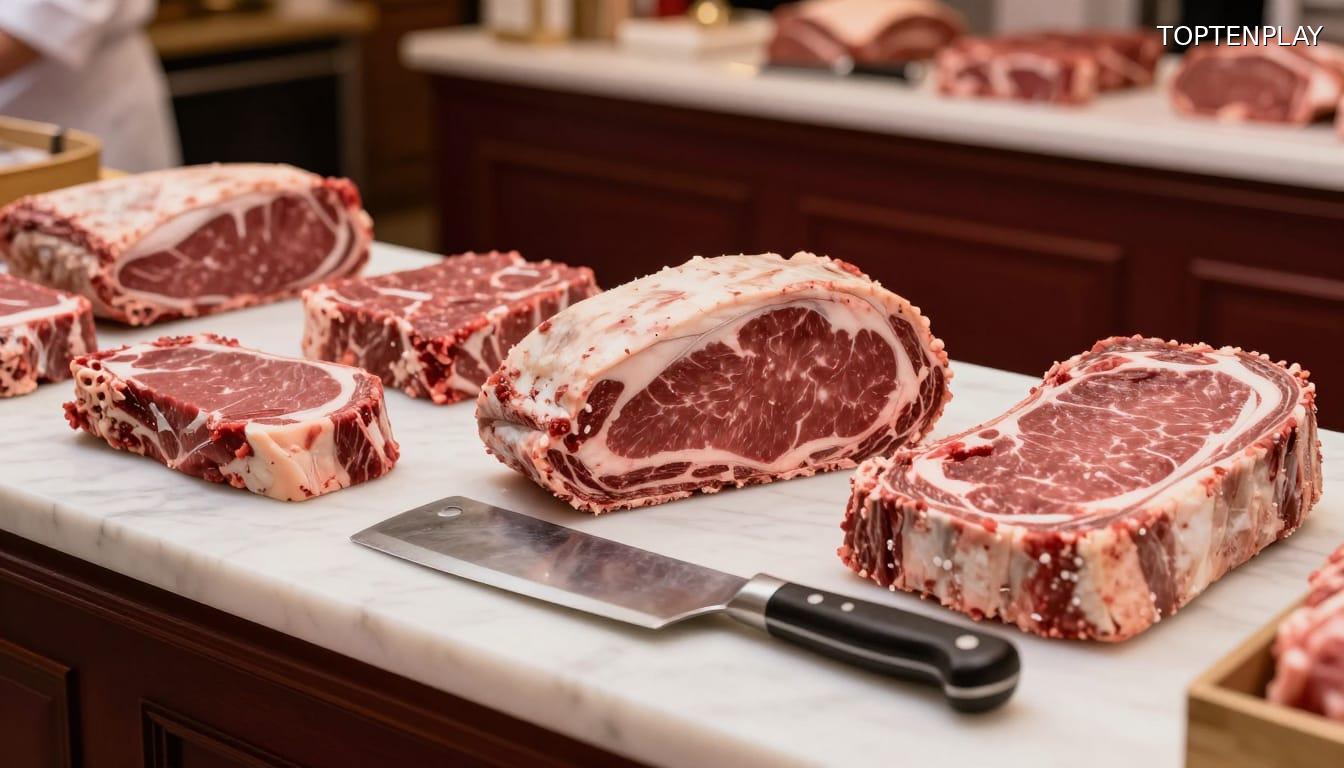
Even before lighting the fire, the tenderness of meat is determined long before — at your butcher’s. This is the first lesson shared by Samuel Le Boch, a Parisian chef, and he immediately challenges a well-anchored misconception: no, it is not systematically the butcher’s fault if your meat ends up as tough as a shoe sole.
The reality is more nuanced. Tenderness depends on a combination of precise factors: the choice of cut, the slaughter date, storage conditions, and the quality of supply. All elements that only a professional fully masters — provided they are given the right information.
Because that is where everything is decided: your request. Too vague, and it dooms the result before the meat even touches the pan. Be precise: “beef for braising, pork for the oven, cutlets for the pan”. These details immediately guide the butcher to the appropriate cut for your cooking method. In return, they will guide you, share their current tips, and perhaps even point out that bouquet of aromatic herbs lying on their workbench.
This simple dialogue between consumer and professional transforms the purchase of meat into a real culinary strategy. Once the right piece is in your basket, the tenderizing techniques — as effective as they may be — only have to enhance what quality has already begun.
Mechanical and Dry Techniques: Salt, Baking Soda, Honey, and Hammer
The right piece in hand, now for the gestures. And the first ones are often those we don’t dare to do — because they seem too simple to be true.
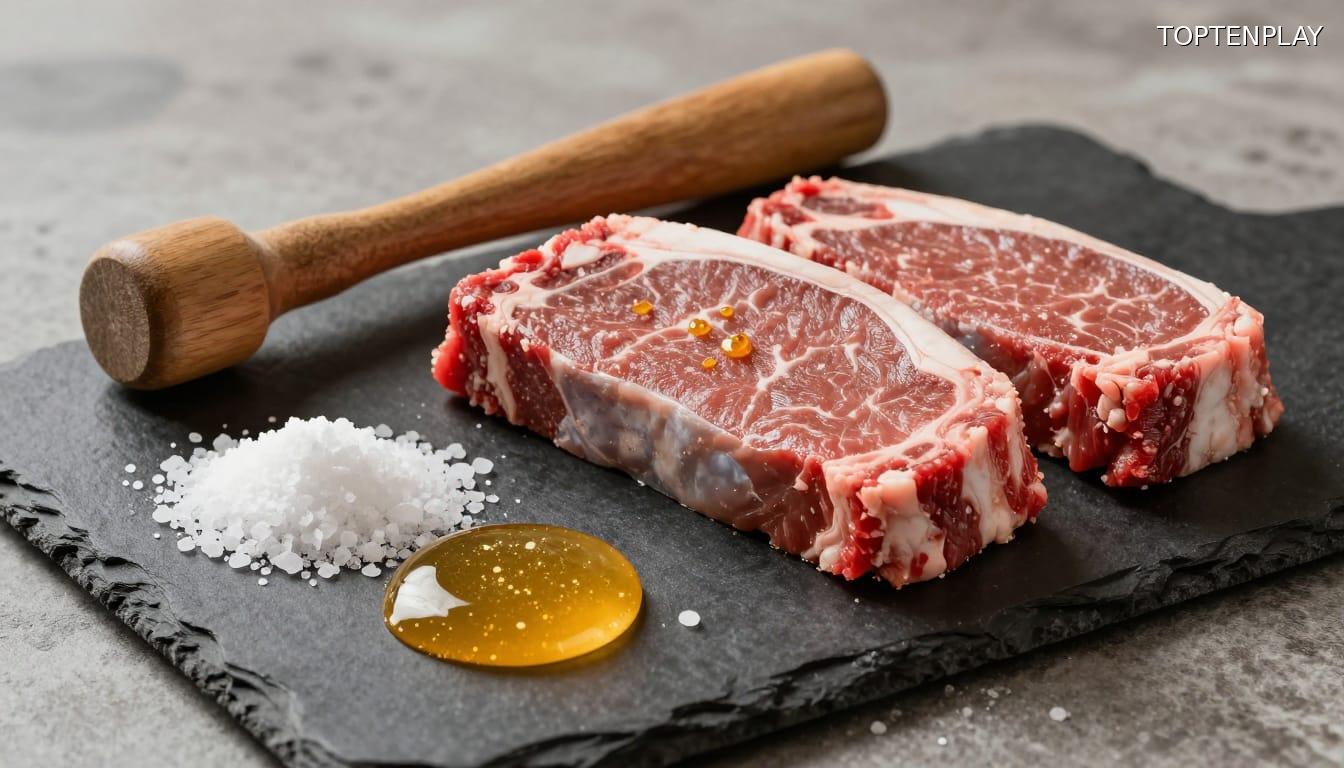
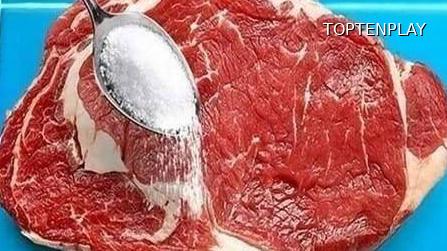
Rolling your meat in coarse salt, baking soda, or honey before cooking is not a whim of a whimsical cook: it is a proven technique. These ingredients act directly on the muscle fibers, gradually softening them. A careful rinsing after a few hours of contact is enough to reveal a transformed texture. Effective, economical, accessible.
The same logic applies to crust cooking: generously coat the meat with these three ingredients, then put it in the oven. The heat then creates natural steam trapped under the crust, which deeply tenderizes even the toughest cuts — legs of lamb, thick pieces of beef — while offering them a beautiful golden browning. Only vigilance: monitor the cooking time.
For truly recalcitrant meats, there is a more… physical approach. Hammering consists of hitting the piece to mechanically destroy its fibers. Without a mallet, wrap the meat in a clean cloth and tap firmly on your work surface for a few minutes. With a mallet, the principle remains identical. In both cases, the result is immediate and unequivocal.
These raw and direct gestures contrast with the subtlety of the following methods, where chemistry — and not force — takes over.
The Marinade and Acidity: The Old Secret of Grandmothers Confirmed by Science
Where force gives way to patience, chemistry operates. And in this field, grandmothers have always been a step ahead of Michelin-starred chefs.
Marinating tough meat is first and foremost about giving it what it lacks: moisture and acids capable of penetrating muscle fibers to relax them deeply. Lemon, red wine vinegar, or cider vinegar are the most effective natural allies. 3 to 6 hours of marination are often enough to radically transform the texture of a piece reputed to be tough.
Less known, tomato, pineapple, and papaya nevertheless deserve their place in this list: their natural enzymes exert a remarkable tenderizing action without altering the flavor of the meat.
For those who prefer a gentler approach, dairy products offer an equally formidable alternative. Milk, cream, or yogurt contain lactic ferments with powerful enzymes, capable of overcoming the most resistant pieces. The rule is simple: fully submerge the meat in these nutrients and let it rest for between 5 and 8 hours — or even an entire night in the refrigerator.
What popular tradition had discovered empirically, professional practice confirms today. But some of the most effective techniques are still jealously guarded in the kitchens of great restaurants.
Slow Cooking: Patience as the Ultimate Secret Weapon
These marinating techniques reveal a fundamental truth: time is the ingredient that no one buys, but that every professional chef uses. And this logic reaches its most accomplished expression in the art of slow cooking.
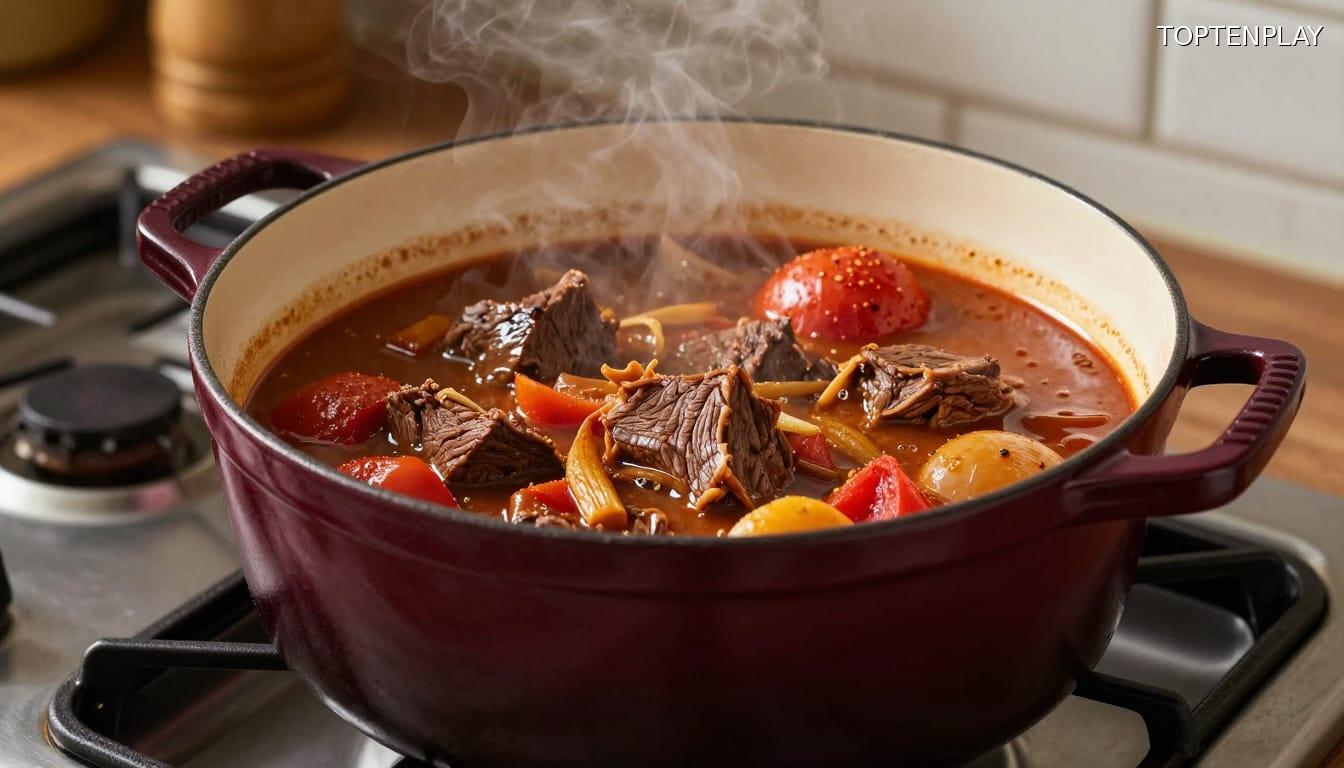
Cooking on low heat for a long time is not a concession to laziness — it is a deliberate strategy. The gradual heat penetrates the muscle fibers, softens them, and releases the collagens that transform the most resistant pieces into melt-in-the-mouth meats. Pot-au-feu, beef bourguignon, braised cheeks: these iconic dishes owe their reputation to this single discipline.
But slow cooking hides its own requirements. Monitoring the water level, dosing the salt with precision, and not neglecting the tomato sauce are reflexes that too many amateur cooks forget. The tomato, thanks to its natural acidity and water content, plays a structuring role here in the success of casserole dishes.
And that’s where Chef Samuel Le Boch’s confidential tip comes in: discreetly slip one to two spoons of baking soda into the tomato sauce during cooking. A seemingly trivial gesture, but one that amplifies the tenderizing action of the acidity while balancing the flavors.
Shhh, it’s a secret — and now, it’s in your hands.