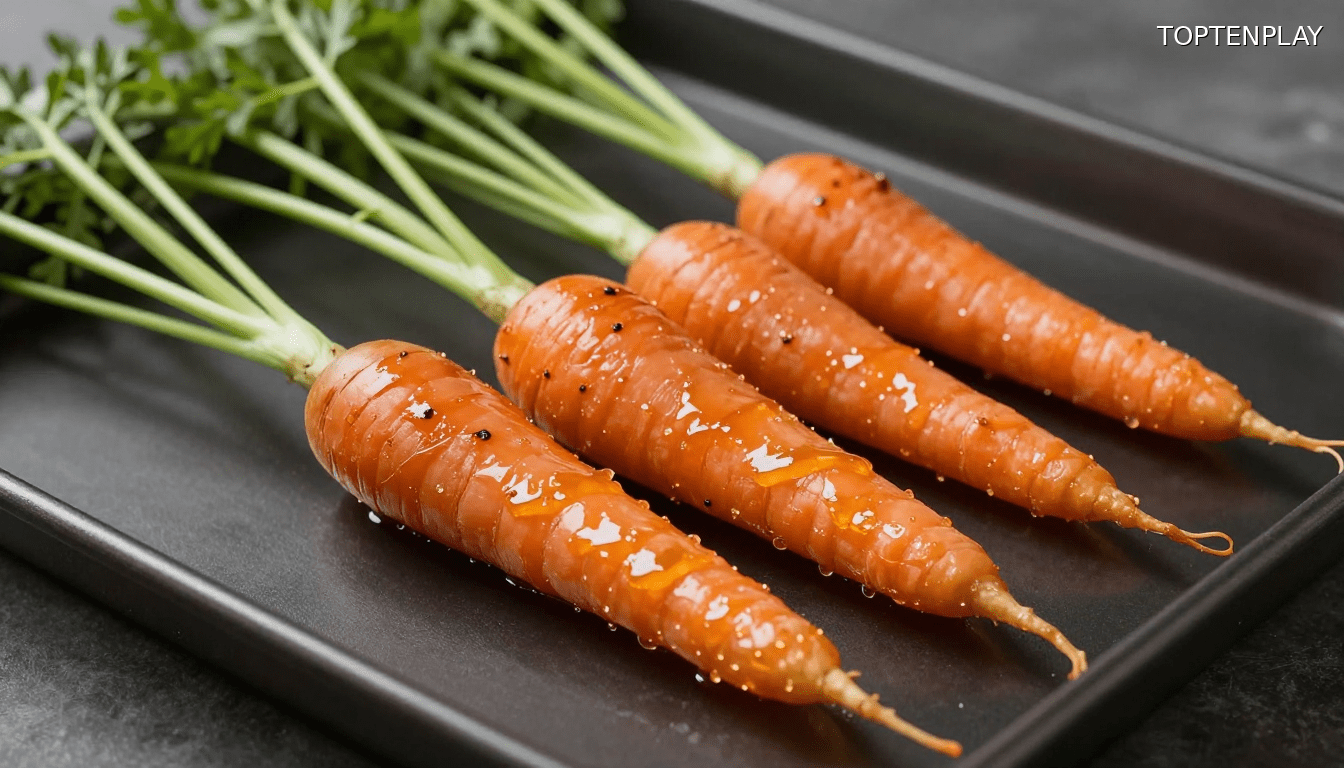
Preparing Honey-Confited Carrots
The transformation of a root vegetable into a gourmet side dish relies on a precise technique. The carrots, carefully peeled, retain part of their tops for a striking visual effect. This aesthetic approach immediately distinguishes amateur plating from professional work.
Cutting them in half ensures even cooking and maximizes the caramelization surface. Arranged on a tray, the carrots receive a light veil of olive oil before seasoning. Salt and pepper lay the taste foundations, but it is the honey that works the culinary magic.
Baking at 190° for exactly 30 minutes is not arbitrary. This temperature allows the honey to penetrate the vegetable fibers without burning, creating that characteristic confit texture. The constant heat transforms the carrot’s natural sugars, which combine with the honey to develop complex caramelized notes.
The honey coating before cooking is the secret to this garnish. Unlike a simple final glaze, this method infuses the vegetable deeply. The carrots emerge tender at the core, slightly crispy on the surface, with a sweet-savory balance that already heralds the harmony of the spices to come.
This sweet base prepares the palate for the spicy contrast of the main dish, creating a controlled taste progression.

Tandoori Coating of the Scallops
Scallops from the Bay of Saint-Brieuc embody the excellence of Breton seafood. This precise geographical designation guarantees firm, briny flesh, whose superior quality supports the boldness of a spicy preparation without being dominated.
The oiling technique reveals a crucial subtlety: only one side receives the olive oil. This unilateral application is not an oversight but a deliberate choice. The oiled side comes into direct contact with the hot pan, creating an instant golden crust that seals in the juices. The opposite side, left dry, cooks more gently with indirect heat, preserving the mollusk’s pearly heart.
The sprinkling of tandoori spices occurs after oiling, on the side intended for the pan. This Indian blend of coriander, cumin, paprika, and garam masala adheres to the oil, forming an aromatic crust during cooking. The spices toast directly in contact with the hot metal, releasing their essential oils and developing that characteristic smoky complexity.
This French-Indian culinary fusion transforms a noble Breton product into a transcultural creation. The natural sweetness of the scallop absorbs the warm notes of the tandoori without losing its marine identity, creating a taste dialogue between Atlantic terroir and the heritage of the Indian subcontinent.

Cooking and the Creamy Sauce
The pan heated over high heat welcomes the scallops, spiced side against the metal. The contact triggers an immediate reaction: the tandoori spices sizzle, caramelize, and form that aromatic crust in seconds. Searing lasts only one to two minutes per side, just enough to sear the outside while preserving a translucent and melting heart.