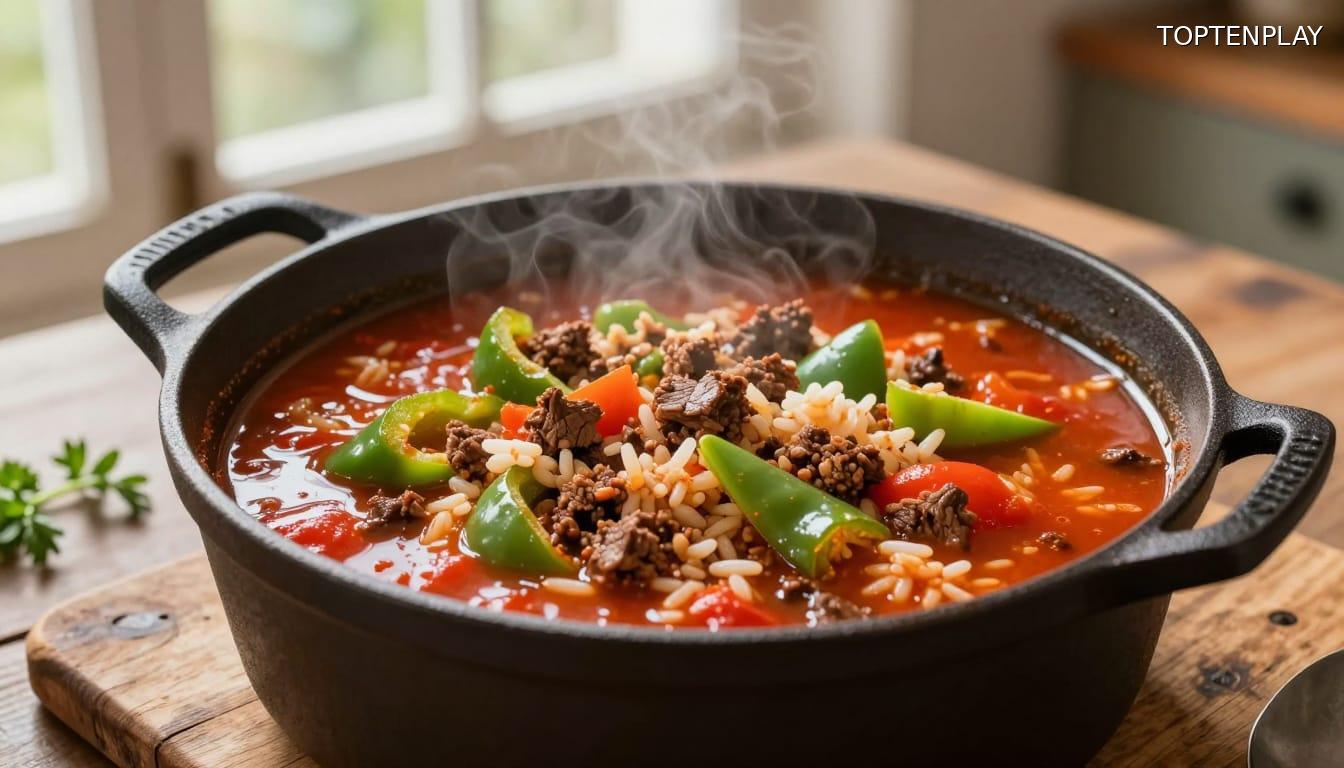
Stuffed Pepper Soup: A Classic Reinvented in an Express Version
There are recipes that permanently change our relationship with everyday cooking. Stuffed pepper soup is one of them — not because it revolutionizes flavors, but precisely because it preserves them by cutting preparation time in half.
The principle is as elegant as it is incredibly effective: take the DNA of the traditional dish — savory beef, tender rice, generous tomato base — and transpose it into a single pot. No more tedious hollowing out of peppers, delicate stuffing, or oven cooking monitored minute by minute. What once required an hour of sustained attention becomes a quiet, almost autonomous simmer.
Yet this culinary trick sacrifices nothing essential. The same recognizable aromas, the same comforting texture, that taste that instantly brings back Sunday family meals. The soup maintains the authenticity of the original dish while adapting to the pace of busy weeks.
It is precisely this balance between gustatory nostalgia and modern practicality that explains the immediate enthusiasm this recipe generates from the very first spoonful. And this enthusiasm always begins with the quality of what goes into the pot.
The Ingredients That Make All the Difference
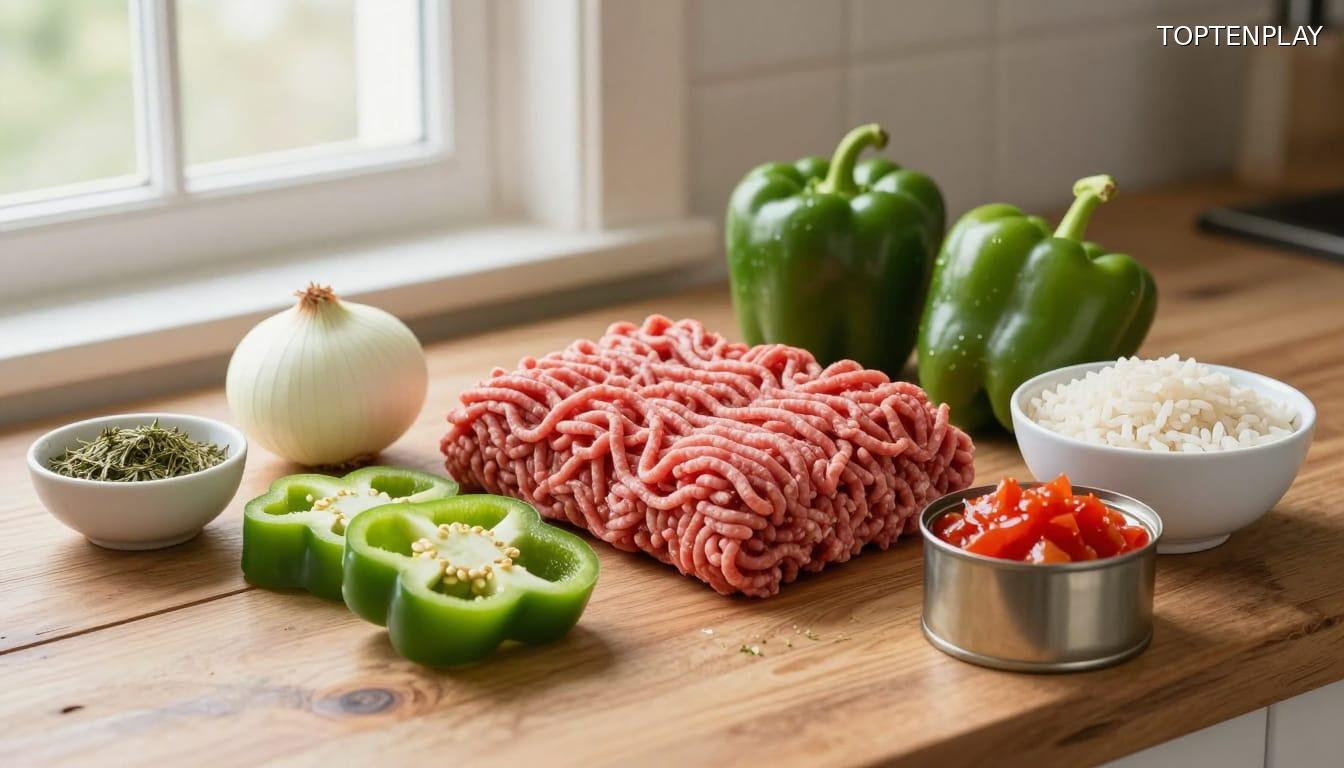
The success of this soup relies on a short list of ingredients — barely a dozen — but precisely balanced. Each element has its purpose.
First pillar: ground sirloin, a high-quality ground beef that offers more texture and less fat than ordinary meat. Degreasing during cooking ensures a clean broth without heaviness. Combined with green bell pepper and finely sliced white onion, it forms a clear aromatic base that structures the entire dish.
Next comes the tomato duo: a large 29 oz can of crushed tomatoes combined with a 15 oz tomato sauce. This double presence creates a base that is both textured and enveloping — neither too liquid nor too dense. Chicken broth completes the balance by providing additional depth without weighing it down.
The often underestimated element? Raw white rice, incorporated directly into the soup at the end of simmering. One cup is enough to transform a broth into a complete, nourishing, and satisfying meal.
Finally, only two dried herbs — thyme and sage, at a quarter teaspoon each — provide that discreet but recognizable gustatory signature. An apparent sobriety that actually hides a cleverly calculated balance.
Once these ingredients are gathered, they must still be assembled in the right order and at the right pace.

The Step-by-Step Technique: Why It Works Every Time
These combined ingredients only have value in the right order. This is precisely where the secret of this recipe lies.
It all starts with browning the beef over high heat. This step is not trivial: it develops the meat’s aromas while allowing for immediate degreasing. The result — a clean broth, without a greasy film, which leaves full room for the flavors.
Next come the green pepper and onion, added directly into the same pot. The goal is not to brown them, but to soften them: gentle cooking until the onion becomes translucent is enough to release their aromas without burning the natural sugars. A simple nuance, but decisive for the dish’s finesse.
The final — and most transformative — step is simmering. Crushed tomatoes, tomato sauce, chicken broth, thyme, sage, salt, and pepper join the pot. Lid on, heat reduced to minimum. Between 30 and 45 minutes then pass, during which the chemistry silently happens: the flavors merge, the broth thickens, the rice gradually absorbs the liquid while binding everything together.
It is this slow and patient phase that turns an ordinary soup into something deeply comforting — and explains the reaction this dish invariably provokes around the table.
The “More!” Effect: What Makes This Recipe Irresistibly Addictive
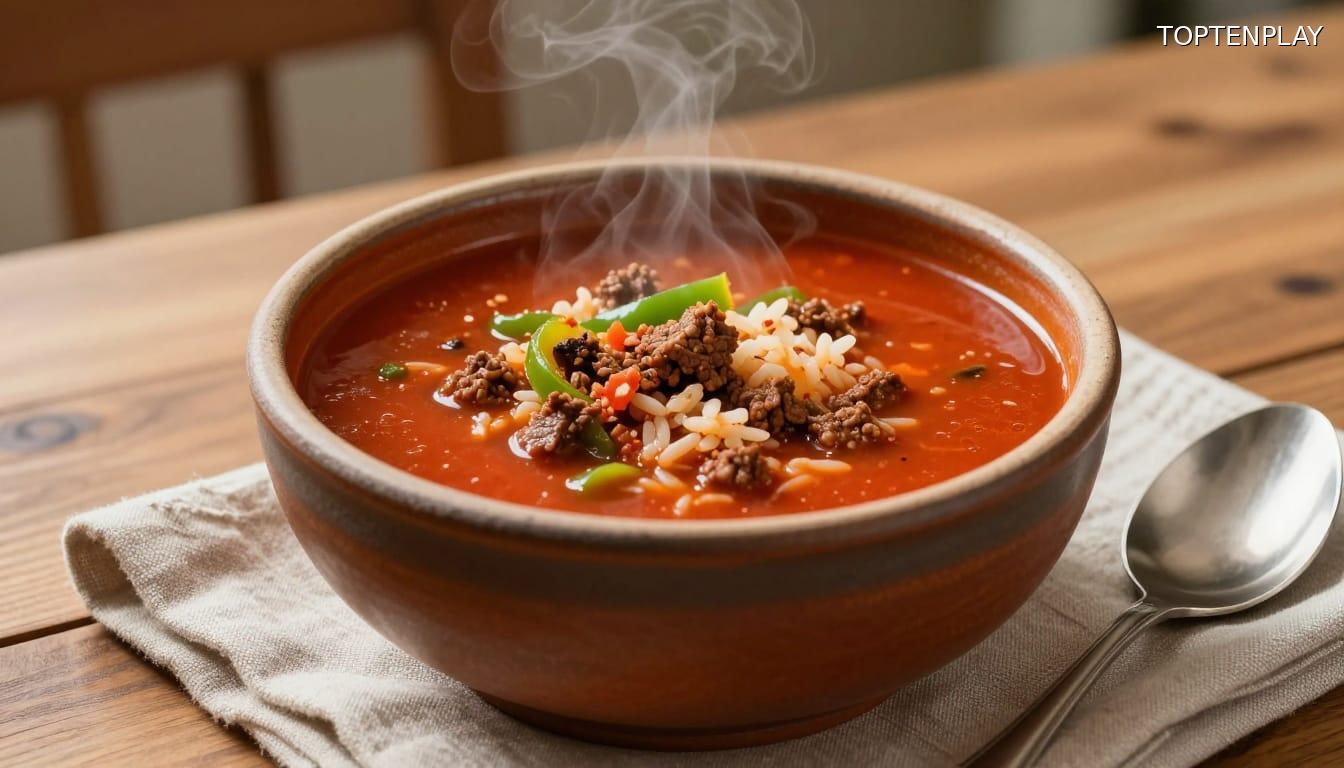
This silent transformation in the pot leaves no one indifferent at the time of serving. The most eloquent proof comes from a testimony as spontaneous as it is revealing: « My hubby is completely hooked on this! We finish one serving and he’s already asking when I can make it again » — a reaction that says everything about the comforting power of this dish.
This type of feedback is not accidental. It points to something specific: the exceptional ratio between the effort provided and the result obtained. Less than 45 minutes of active preparation, only one pot to wash, and a dish that rivals infinitely more complex recipes.
The versatility of the soup further strengthens its appeal. Prepared on Sunday, it gets better the next day, as the flavors continue to intensify while resting. Leftovers reheat perfectly — just add a splash of broth if the rice has absorbed too much liquid. A concrete advantage for families who cook in advance.
In short, this dish checks all the boxes of a successful family meal: generous, accessible, reproducible, and tasty enough to spark the same anticipation every time. It is precisely the kind of recipe that one shares instinctively — because a good soup, like a good story, deserves to be passed on.