📌 Spaghetti with clams: why the Neapolitan white sauce version surpasses the classic red recipe
Posted 22 January 2026 by: Admin
The Origins Of A Neapolitan Classic
In the pantheon of Italian cuisine, certain dishes embody the soul of a region with disarming accuracy. Spaghetti with clams are among those creations where simplicity becomes culinary art. Born on the shores of Campania, this seafood dish has established itself as a traditional starter whose authenticity suffers no compromise.
Chef Michele Ghedini developed this recipe by scrupulously respecting the original Neapolitan codes. His white version, coated in a sauce of olive oil, garlic, and parsley, captures the very essence of Mediterranean gastronomy: few ingredients, excellence of products, irreproachable technique. This minimalist approach represents precisely what distinguishes great Italian cuisine: the ability to sublimate each component rather than masking flavors under artifices.
A red version also exists, enhanced with cherry tomatoes. Both preparations coexist in the Campanian repertoire, testifying to the richness of local traditions. Whether white or red, this specialty remains faithful to a fundamental principle: letting the clams, the true stars of the dish, speak, supported by aromatics that reveal their briny character without ever stifling it.
This culinary philosophy finds its purest expression in the selection of ingredients that make up the authentic recipe.
The Authentic White Version: Ingredients And Proportions
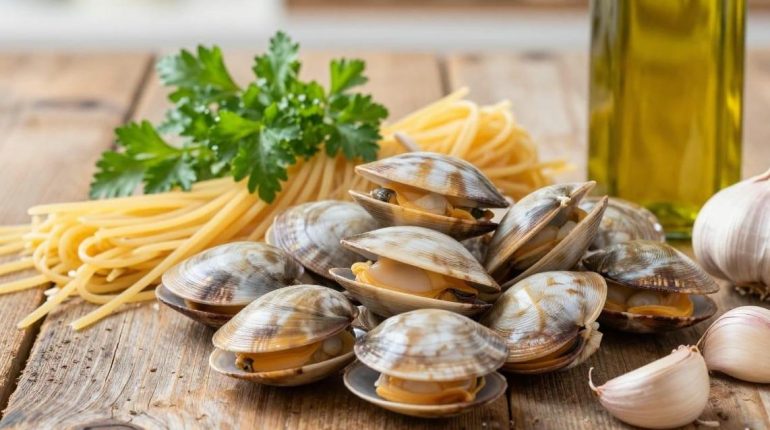
Chef Ghedini’s recipe is based on a precise equation: 500 grams of clams for 200 grams of spaghetti. This ratio guarantees the perfect balance between seafood and pasta, allowing each bite to deliver the promise of a harmonious marriage between land and sea.
The inventory is intentionally restricted. Two cloves of garlic are enough to flavor the whole without dominating. A glass of white wine brings the necessary acidity for deglazing and enhances the briny flavors. Fresh parsley, in a generous bunch, gives its characteristic vegetal touch. Extra virgin olive oil constitutes the aromatic backbone of the preparation, while a liter of water ensures the ideal cooking of the pasta.
Red chili, optional, allows for adjusting the intensity according to the palate. Its discreet presence is not intended to mask flavors but to awaken them, creating a gustatory tension that makes the whole dish vibrate. This minimalist list perfectly illustrates the Neapolitan philosophy: prioritizing the absolute quality of each component rather than multiplying the elements.
These carefully measured ingredients only take on their full meaning once assembled according to the rules of tradition, where olive oil plays a decisive role.
The Secrets Of The White Clam Sauce
This aromatic base radically distinguishes the Neapolitan version from approximate imitations. The total absence of tomato defines the identity of the white sauce, where extra virgin olive oil becomes the sole binder between the clams and the pasta. White wine plays a surgical role: deglazing the concentrated juices at the bottom of the pan while exalting the briny notes of the shellfish.
Garlic, finely sliced, infuses gently in the hot oil without ever browning. This crucial step releases the volatile aromatic compounds that permeate every molecule of the dish. Fresh parsley, chopped at the last moment, brings its invigorating chlorophyll and counterbalances the fatty richness of the emulsion.
Red chili constitutes the element for personal adjustment. A pinch is enough to create that vibration in the mouth characteristic of Campanian trattorias, without ever masking the delicacy of the clams. Chef Ghedini insists on a technical point: the emulsion must remain light, almost translucent, proof that the oil has perfectly bound the cooking juices without turning into a thick mixture.
This original Neapolitan technique respects a precise timing where each ingredient intervenes at its optimal moment. However, Campanian tradition allows an alternative that still divides purists.
The Cherry Tomato Alternative
This culinary division reveals an unexpected flexibility in a repertoire otherwise known for being intransigent. The red version with cherry tomatoes stands as a legitimate variant, particularly in coastal regions where the fruity acidity of the tomatoes compensates for the pronounced salinity of freshly caught clams.
Cherry tomatoes, quickly sautéed in oil after the garlic, burst under the heat and release their sweet pulp. This transformation creates a naturally smooth sauce that coats the spaghetti in a brilliant red, contrasting radically with the golden transparency of the white recipe. White wine remains present, as does parsley, but their role fades slightly behind the aromatic power of the fruit.
This white-red duality is by no means a betrayal. It rather testifies to the adaptability of a dish rooted in territories with variable resources. Some Campanian chefs fiercely defend white purity, others embrace the Mediterranean generosity of the tomato version. Both schools coexist peacefully in trattorias, each finding its loyal followers.
The choice ultimately depends on the sought-after taste profile: mineral refinement or sun-drenched robustness. Whichever option is chosen, success rests on irreproachable technical execution, from the selection of the clams to the precise moment the pasta meets its sauce.