📌 Shingles: The Varicella Virus Hiding in Your Spine for Decades Can Reactivate and Attack Your Nerves—Why the 72-Hour Treatment Window Is Critical
Posted 13 December 2025 by: Admin
The Silent Invader: How A Childhood Virus Becomes Your Body’s Permanent Resident
Nearly everyone over the age of 40 carries a biological time bomb—the invisible residue of a childhood illness most have long forgotten. If you ever had chickenpox, you unknowingly host a viral shadow that has taken up permanent, silent residence deep within your body.
That shadow is the Varicella-Zoster Virus (VZV), and it is far more sinister than the itching rash that defined your childhood suffering.
The moment chickenpox clears from your skin, VZV does not vanish. Instead, it retreats into the most fortified sanctuary your body offers: the dorsal root ganglia (DRG), clusters of nerve cells nestled near your spinal cord and brain. Here, in this neurological fortress, the virus enters a state of suspended animation called latency—a protective hibernation that can last 50 years or longer.
During these decades of silence, your immune system stands guard, keeping the dormant virus contained. But this biological détente remains fragile. The moment your immune shield weakens—whether through aging after 50, prolonged stress, serious illness, or medical treatments like chemotherapy—VZV senses its opportunity. The virus awakens, hungry and ready to travel.
What most people fail to understand is that shingles is not simply a skin infection. The visible rash is merely the surface evidence of a much deeper, more devastating neurological event unfolding beneath the skin. The virus does not randomly attack; it follows a deliberate, agonizing pathway through your nervous system, leaving nerve damage in its wake long after the blisters fade.
The Nerve Highway: VZV’s Agonizing Journey From Spine To Skin
Awakened from its decades-long slumber, VZV embarks on a destructive mission that transforms your nervous system into a war zone. The virus does not remain confined to the ganglia where it stirred to life. Instead, it travels down the sensory nerve fibers that radiate outward from the dorsal root ganglia, following neural pathways toward the skin’s surface like an invader mapping enemy terrain.
This journey is far from instantaneous. The pain—that distinctive, burning, one-sided sensation—often arrives days before any visible sign appears. Patients frequently report intense tingling or a searing ache in a specific region of their body, only to watch the telltale blisters emerge three to five days later. This temporal gap reveals the virus’s silent progress through nerve tissue, damaging delicate nerve fibers as it advances.
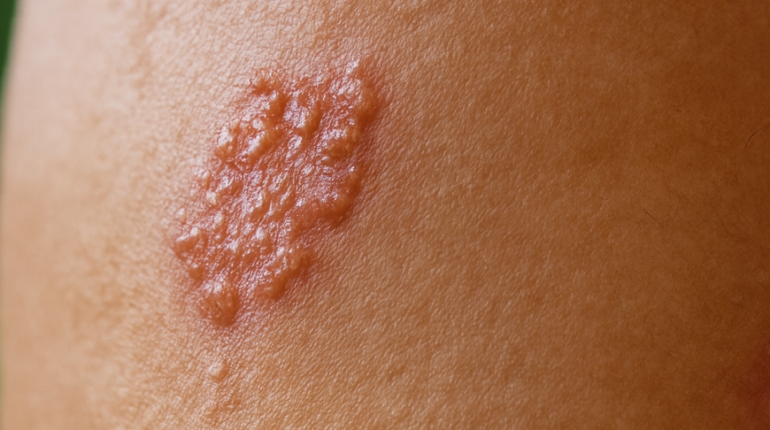
When VZV finally erupts on the skin, the pattern it creates is unmistakable and diagnostic: a dermatomal stripe, typically confined to one side of the body. These blisters do not scatter randomly across your skin. They follow the exact territory of the single nerve cluster from which they emanated—a unilateral belt or band of vesicles that traces the virus’s precise neurological pathway. This distinctive signature is nature’s visible confirmation of a nervous system under siege.
This is the crucial revelation most overlook: the rash is not the disease itself. The rash is merely where the real damage becomes visible. Beneath that stripe of blisters lies inflamed, injured nerve tissue—damage that often persists long after the skin heals.
Beyond The Rash: The Hidden Complications That Destroy Quality Of Life
The rash may fade within weeks, but for many sufferers, the true ordeal begins once the blisters disappear. VZV’s assault on nerve tissue often leaves lasting damage that transforms shingles from an acute illness into a chronic, life-altering condition.
Post-Herpetic Neuralgia (PHN) emerges as the most common and devastating complication. Even after the skin heals completely, the injured nerve fibers continue transmitting distorted pain signals—a burning, throbbing, or shooting agony that persists for months or even years. Unlike typical pain responsive to standard painkillers, PHN is nerve pain that resists conventional treatment, leaving patients trapped in relentless discomfort that erodes both physical function and mental health.
Another sinister variant reveals the virus’s true deception: Zoster sine herpete, or shingles without the rash. Patients experience all the hallmark symptoms—deep neurological pain, fever, fatigue—yet the characteristic stripe of blisters never appears. This invisible form creates a diagnostic nightmare, as physicians may misdiagnose nerve damage as muscle strain or migraine while the underlying neurological injury progresses undetected.
Perhaps most alarming is ophthalmic zoster, occurring when VZV reactivates in the trigeminal ganglion within the head. The rash erupts near the eye, constituting a medical emergency. Without urgent high-dose antiviral treatment, the virus can invade eye tissue itself, causing permanent vision loss.
These complications underscore a critical reality: shingles threatens far more than temporary discomfort. The nerve damage it inflicts demands immediate intervention to prevent irreversible consequences.
The 72-Hour Defense: Your Critical Window To Prevent Permanent Damage
Understanding shingles’ neurological pathway reveals a sobering truth: once VZV awakens, the damage unfolds with brutal speed. Yet this urgency carries an unexpected advantage. The virus’s reactivation follows a predictable timeline, and medical science has engineered a precise counter-attack—but only if deployed within a critical window.
The moment symptoms emerge—even before the rash visibly erupts—the clock begins. Antivirals such as Valacyclovir, Acyclovir, and Famciclovir work not by eliminating the virus entirely, but by forcefully limiting its replication and the cascade of nerve fiber damage it inflicts. The decisive factor is timing. Treatment initiated within 72 hours of the first physical sign dramatically reduces viral progression and, critically, minimizes the risk of Post-Herpetic Neuralgia.
Most people delay seeking treatment, waiting for the unmistakable rash to appear. This hesitation proves catastrophic. The burning, tingling, or stabbing sensation that precedes visible blisters signals the virus’s journey down the nerve—precisely when intervention matters most. Medical attention at this stage, before the dermatomal stripe materializes, can prevent months or years of chronic pain.
Beyond acute treatment, a recombinant vaccine now offers a defensive shield for those aging past 50. Shingrix significantly reduces shingles incidence and, equally important, drastically diminishes PHN severity if reactivation still occurs. This vaccine rebuilds the immune protection that naturally deteriorates with age.
The pathway forward is unambiguous: recognize early neurological signs, seek immediate medical evaluation, and ensure vaccination. The nerve damage VZV threatens is irreversible—but its onset is preventable.