📌 Scallop Pad Thai: the 3-step technique for perfectly tender scallops
Posted 1 March 2026 by: Admin
The Secrets of a Gourmet Scallop Pad Thai
The marriage between Asian rice noodles and scallops is a culinary boldness that pays off. This fusion recipe transforms the classic Pad Thai into an accessible gastronomic experience, orchestrated around Jom Bao noodles and eight to ten perfectly golden scallops.
The balance relies on a differentiated cooking technique. While the scallops require a lightning-fast sear of one minute per side in hot neutral oil, the noodles follow a progressive assembly process in the wok. This temporal distinction guarantees the melt-in-the-mouth texture of the noble French product while preserving the softness of the rice pasta coated in Pad Thai sauce.
The apparent sophistication masks a delightful reality: twenty-five minutes flat is enough, including fifteen for preparation. The key to success lies in a counter-intuitive gesture revealed by Thai chefs: incorporating the scallops off the heat, just before serving. This precaution preserves their pearly heart and avoids the fatal overcooking that would turn the shellfish into rubbery gum.
Traditional ingredients (fresh cilantro, crushed roasted peanuts, lime) dialogue with the iodized nobility of the shells. This democratization of high-end Thai cuisine relies on Jom Bao products from Léa Nature, guarantors of uncompromising authenticity accessible in supermarkets.
The Step-by-Step Preparation Technique Deciphered
Success begins by soaking the Jom Bao rice noodles in lukewarm water, for the duration specified on the packaging. This step determines their final texture: too short, they remain rigid; excessive, they become mushy.
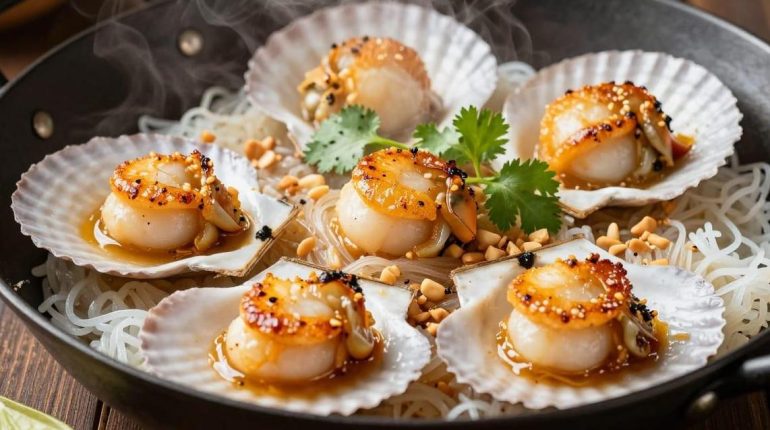
The searing of the scallops takes place in a white-hot pan with a drizzle of neutral oil. One minute per side is enough to obtain that golden caramelization on the outside contrasting with a translucent heart. The secret lies in the extreme temperature that instantly sears the proteins without penetrating the interior. Once set aside, it’s time for the wok orchestration.
The sliced onion starts the dance, heated until transparent. Then come the julienned carrots and drained noodles, coated with four to five tablespoons of Pad Thai sauce. The mixture must coat the pasta uniformly. If it sticks, a drizzle of water loosens the bottom without diluting the flavors.
Then comes the little-known technical gesture: momentarily set aside the noodles, crack the egg in the center of the pan, scramble it, then incorporate it into the rest. This sequence guarantees a silky texture avoiding raw egg lumps. The bean sprouts join the ensemble at the very end, just warmed through to keep their crunch.
The finish follows the golden rule stated above: scallops added off the heat, crushed peanuts, chopped cilantro, and squeezed lime compose the ultimate aromatic layer.
The Star Ingredients of This Recipe for 2 People
This composition is based on calculated proportions to guarantee taste balance. The 200 grams of Jom Bao rice noodles constitute the structural base, generous enough without overwhelming the other components. Their neutral texture absorbs the sauce while maintaining a distinct bite.
The eight to ten scallops stand out as the centerpiece. Their iodized, slightly sweet flesh dialogues with the acidity of the lime and the heat of the chili. This precise number ensures four to five scallops per plate, the ideal ratio between noble protein and starch.
The Jom Bao Pad Thai sauce is used at a rate of four to five tablespoons. This quantity deserves attention: it already contains tamarind, palm sugar, and nuoc-mâm, the characteristic triptych of Thai authenticity. Less, and the dish lacks body; more, and it turns into syrup. The Jom Bao brand, belonging to the Léa Nature group, guarantees a faithful formulation to Asian standards without requiring complex sourcing.
The whole is completed by its fresh garnish. Crushed roasted peanuts provide the crunch, fresh cilantro the herbal note, lime the final acidity. The chili, fresh red or in flakes, remains optional but determines the intensity of the result. This final layer transforms a stir-fried noodle dish into a multi-layered sensory experience.
Personalization and Spicy Variants
This recipe tolerates personal adjustment without losing its identity. Red chili, fresh or in flakes, offers the first variable of intensity. A simple pinch is enough for sensitive palates; heat lovers can triple the dose. This modulation does not affect the structural balance of the dish.
The premium tip lies in the Jom Bao sriracha sauce. A few drops transform the taste profile: its spiciness is accompanied by a typically Thai garlic note, absent from the basic recipe. This double contribution reinforces authenticity without upsetting the proportions. Unlike raw chili which only brings heat, sriracha enriches the aromatic complexity.
For those who dislike heat, Sambal Manis chili paste reverses the logic. This Indonesian variant favors sweet mildness over intensity. It maintains the characteristic red color while sweetening the experience, an ideal compromise for guests hesitant about spice.
Lime is the final adjustment lever. Half a fruit is listed in the ingredients, but its use is part of the final seasoning. A light drizzle accentuates the freshness; a generous squeeze shifts towards dominant acidity. This final touch allows for correcting the balance before serving, a necessary compensation if the Pad Thai sauce proves more or less concentrated depending on the batch.