The smell coming from the oven — melted sugar, rhubarb gently stewing in butter — is enough to convince anyone that something interesting is happening in the kitchen. This rhubarb upside-down cake is one of those recipes that impresses without requiring much effort. One hour, one pan, one flip at the right moment.
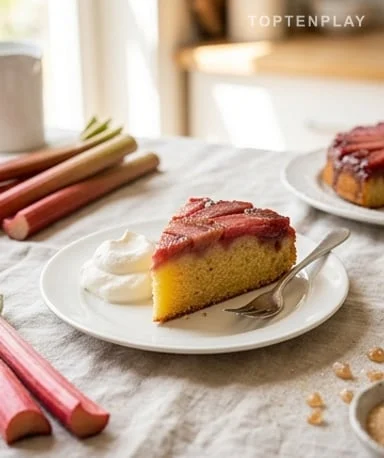
When you unmold this cake, the first surprise is the color — a deep pink leaning toward coral, as if the rhubarb decided to be beautiful. The surface is glossy, slightly sticky to the touch, and the slices arranged during preparation form a neat pattern. Beneath, the sponge is tender and soft, with that subtle nutmeg flavor that lingers after the first bite. The acidity of the rhubarb is still there, but tamed by the buttery caramel that formed during baking.
Why you’ll love this recipe
Ingredient Notes

Everything you need for a perfect upside-down — fresh rhubarb, brown sugar, salted butter, and a pinch of nutmeg that makes all the difference.
- Rhubarb : Fresh or frozen, the key is that the stalks are firm — crisp, not limp. Color matters little: baking evens everything out to pink.
- Brown sugar : It softens the acidity without completely overpowering it. Its naturally slightly caramelized character fits better here than white sugar, which would give a too-neutral background.
- Salted butter : The salt balances the sugar and slightly draws out the residual bitterness of the rhubarb. It forms that shiny sticky base you won’t want to miss at flipping time.
- Nutmeg : Present both in the base and the batter, it adds a warm spicy undertone that doesn’t dominate but would be missed if absent.
- Baking powder : Just one teaspoon is enough to lift this sponge in 35 minutes without weighing down the texture or making it rubbery.
Take time to arrange the rhubarb
This step seems trivial but makes all the difference when it comes out of the oven. Cut the stalks into even pieces — about two centimeters — and arrange them in the bottom of the pan, covering the surface without leaving too many gaps. When you add the sugar-flour-nutmeg mixture on top and drizzle with melted butter, everything will slowly caramelize during baking, forming a sticky, glossy layer that smells of caramel and jam. This layer becomes the top of the cake when flipped, so make it pretty.

Work the batter just enough
Start by whisking the softened butter with the sugar until pale and slightly airy — no need for a mixer, a hand whisk works fine. Add the egg, then add the dry ingredients and milk alternately, without overmixing. Overworked batter yields a dense sponge. As soon as there are no visible lumps and the batter falls from the spoon in a thick ribbon, it’s done. It should be thick but pourable, and it will gently spread over the rhubarb when you pour it into the pan.
Don’t miss the flipping moment
When it comes out of the oven, ten seconds make the difference. Immediately run a spatula around the edges to loosen them — while the caramel is still hot and fluid. Place your serving plate on the pan, flip in one swift motion, and lift the pan gently. If you wait for the cake to cool, the caramel sets and the rhubarb sticks to the bottom. The dull thud of unmolding, followed by the crackling of caramel solidifying on the cold plate, is the signal that everything went well.

Tips & Tricks
- If using frozen rhubarb, thaw it first and spread the pieces on paper towels for 10 minutes — excess water dilutes the caramel and prevents caramelization.
- For an even more caramelized base, melt a knob of butter with two tablespoons of brown sugar directly in the pan over medium heat before adding the rhubarb. The layer solidifies during baking and releases cleanly on flipping.
- Plain whipped cream is the ideal accompaniment — its neutral freshness cuts the residual acidity without masking the cake’s aromas.

Can I use frozen rhubarb?
Yes, frozen rhubarb works very well in this recipe. Just thaw it completely and drain on paper towels for about ten minutes to remove excess water — otherwise the caramel base will be too runny and won’t stick.
How to prevent the cake from sticking when flipping?
The secret is timing: flip the cake immediately after taking it out of the oven, while the caramel is still hot and fluid. First run a thin spatula around the entire edge to loosen it, then flip onto your serving plate with a swift motion. If the cake cools in the pan, the caramel solidifies and the rhubarb sticks.
What pan to use if I don’t have a cast-iron skillet?
Encore une histoire pour vous
Pan-Seared Beef Entrecôte
Prep Time 10 minutes Cook Time 15 minutes Total Time 25 minutes Servings 2 servings We often imagine pan-seared entrecôte as a chef’s dish,…
Encore une histoire pour vous
Jacket potatoes with turkey ham and raclette cheese
Prep Time 10 minutes Cook Time 60 minutes Total Time 70 minutes Servings 4 portions When it’s chilly…
Voir ici
Hard-Boiled Egg Gratin with Golden Béchamel
Prep Time 15 minutes Cook Time 25 minutes Total Time 40 minutes Servings 4 servings A weeknight when…
Voir ici
Cowboy Butter Steak Bites
Prep Time 10 minutes Cook Time 20 minutes Total Time 30 minutes Servings 4 servings Have you ever…
Voir ici