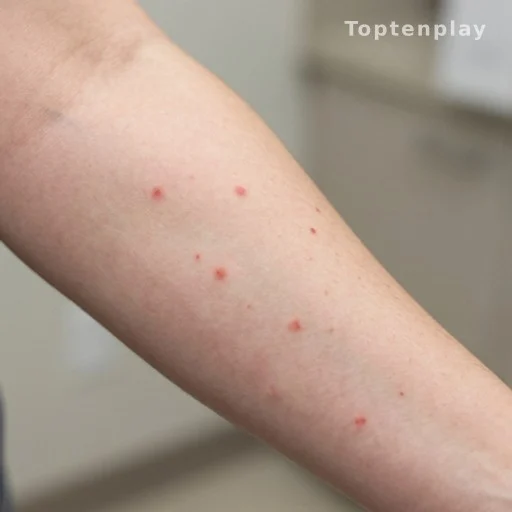
These spots are directly linked to the natural aging process and become increasingly common from the age of 30 onward. They can appear anywhere on the body and tend to multiply over time, though they cause no pain or discomfort.
From a medical standpoint, cherry angiomas are entirely benign. No treatment is required unless the patient chooses to have them removed for cosmetic reasons, in which case laser therapy or electrocautery are standard dermatological options.
Petechiae: when tiny dots signal something deeper
Petechiae are flat, pinpoint-sized red or purple dots that share one defining characteristic: they do not blanch—that is, they do not turn white when pressed. This distinguishes them immediately from other red marks caused by surface irritation or allergic reactions.
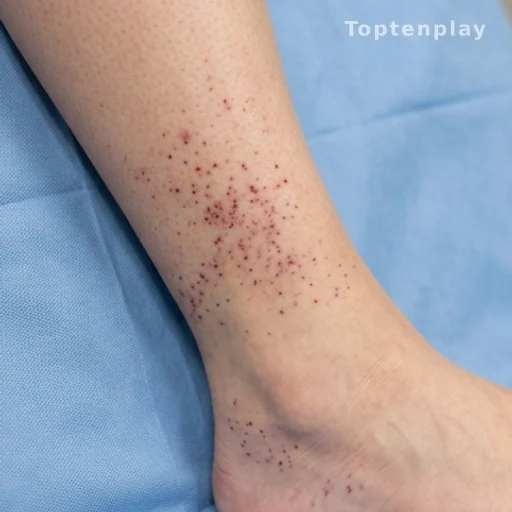
They form when small capillaries beneath the skin rupture and leak blood into the surrounding tissue. In many cases, the trigger is mechanical and temporary: intense coughing, vomiting, heavy lifting, or physical straining can all produce petechiae in localised areas, particularly around the face and neck.
However, petechiae warrant closer attention when they appear in large numbers, spread rapidly, or are accompanied by other symptoms such as fever, unusual bruising, or fatigue. These combinations can indicate a low platelet count—a condition known as thrombocytopenia—or an underlying infection, including in some cases sepsis. Anyone presenting with widespread petechiae alongside systemic symptoms should seek medical consultation without delay.
Why skin dots are so often misidentified
The skin is the body’s largest organ and one of the most visible indicators of internal health. Red dots in particular are frequently self-diagnosed incorrectly because dozens of conditions share similar visual characteristics. Dermatologists use a combination of visual inspection, the blanch test, patient history, and in some cases a biopsy to reach an accurate diagnosis.
Heat rash and other common skin reactions
Heat rash, medically known as miliaria, is another well-documented cause of red dots on the skin. It develops when sweat ducts become blocked, trapping perspiration beneath the surface. The result is a cluster of small red bumps or blisters, typically appearing in areas where skin rubs together or where clothing traps heat.
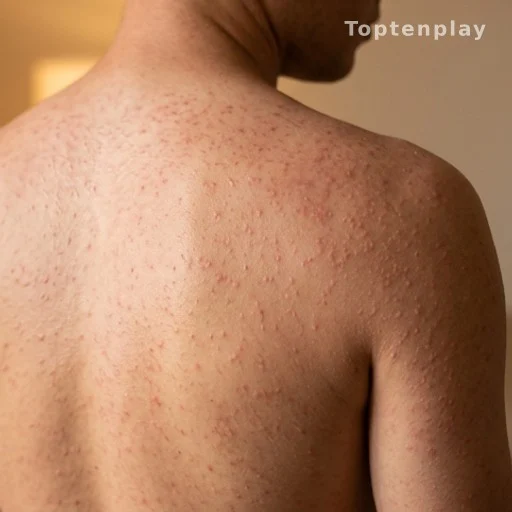
This condition is particularly common in hot, humid environments and affects both children and adults. It generally resolves on its own once the skin cools down and is kept dry, without requiring specific dermatological treatment.
Suggested Posts

Can you spot the large dog hiding in this kitchen photo?
A photo shared by Christina Suvo and reported by 7 News Perth has been fooling viewers around the world: what looks like a perfectly…